
 EN
EN EN
EN CN
CN ES
ES PT
PT SV
SV DE
DE TR
TR FR
FR AR
AR BG
BG HR
HR CS
CS DA
DA NL
NL FI
FI EL
EL HI
HI IT
IT JA
JA KO
KO NO
NO PL
PL RO
RO RU
RU CA
CA TL
TL IW
IW ID
ID LV
LV LT
LT SR
SR SK
SK SL
SL UK
UK VI
VI SQ
SQ ET
ET GL
GL HU
HU MT
MT TH
TH FA
FA AF
AF MS
MS GA
GA BE
BE UZ
UZ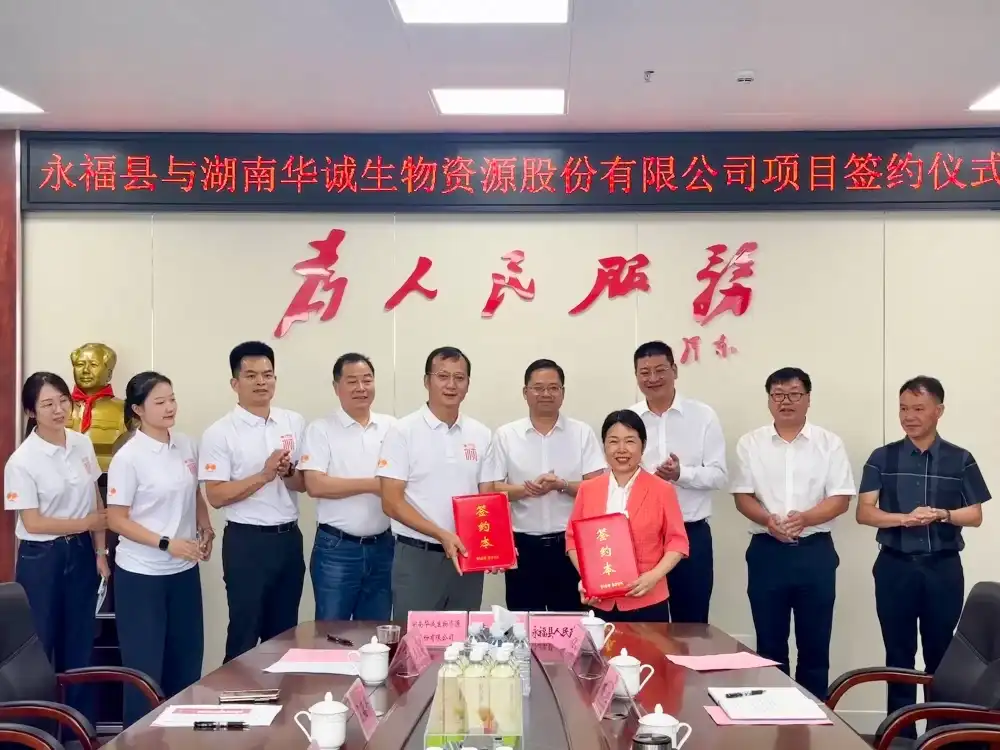
Huacheng Bio: Building Momentum for the Future, Sharing New Beginnings
Huacheng Bio has officially entered a new chapter with the formal establishment of its new...
What Drives Bilberry Extract Price? A Technical Perspective
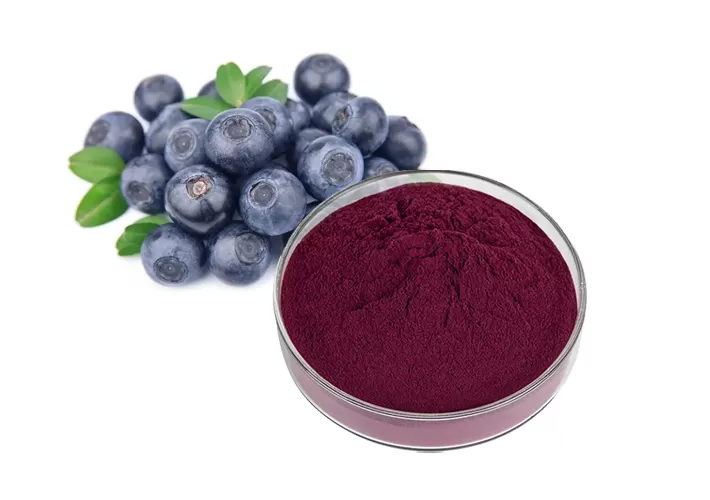
Bilberry extract pricing often raises more questions than answers. The number on a quote can vary by 30–50% between suppliers, and it’s rarely just a matter of raw material cost. Standardized anthocyanin content—typically 25% by UV or HPLC—makes a direct comparison possible, but extraction method, purity profile, and supplier reliability all feed into the final figure. Huacheng Biotech approaches this from a different angle: instead of treating price as a fixed tag, we look at what drives it within our own supply chain. That starts with the fruit source, moves through solvent choice and solvent recovery, and ends with quality checks that avoid costly rework. For buyers, the goal isn’t the lowest price per kilo; it’s the extract that meets spec without hidden costs. The following breakdown explains what influences bilberry extract cost and how a streamlined operation translates into a practical budget.
Technical Detail
When evaluating bilberry extract price, it’s easy to overlook the production layers that shape a quote. At Huacheng Biotech, we handle the full industry chain, from planting bases to final extract powder. That integration matters. It means we don’t outsource intermediate steps, which is where markups often creep in. Our bilberry extract is processed under GMP and HACCP controls, backed by FDA, BRC, and CE registrations. These aren’t just paperwork—they indicate a system where batch records, solvent residues, and microbial limits are monitored, so the extract you receive matches the sample you approved. Standard specs include 25% anthocyanins (HPLC), 5:1 ratio concentrates, or water-soluble grades for functional beverages. Since we control the extraction parameters, we can adjust particle size, carrier, or anthocyanin profile to align with your formulation, without sending the bill through the roof. Many clients come to us after dealing with inconsistent lots. A common pain point is receiving extract that’s off-spec in color or solubility, which either halts production or forces blending. By maintaining a single integrated supply, we reduce those risks. That’s how budget-conscious buyers get reliable material—not by cutting quality, but by removing redundancies. If you’re accustomed to verifying price against anthocyanin content and purity, the numbers typically hold up. Our team can share typical batch data so you can model cost-in-use before a purchase order. In a market where bilberry extract fluctuates with crop yield and extraction solvents, having a supplier with its own cultivation and processing facilities is a quiet advantage.
News
Huacheng Bio has officially entered a new chapter with the formal establishment of its new...
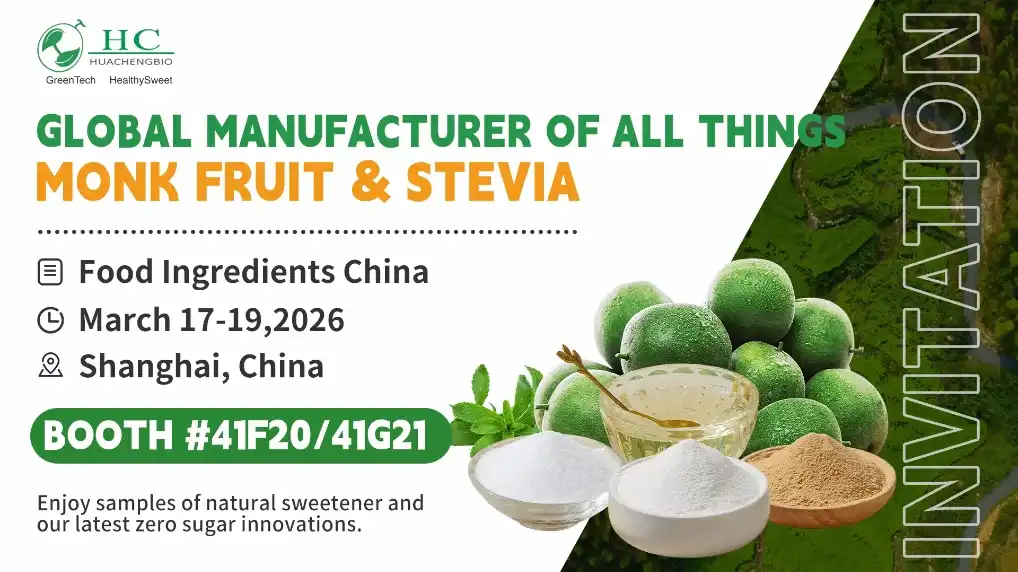
Join Us at Food Ingredients China (FIC) 2026! March 17–19, 2026 Hall 4.1 | Booth...
As a global leader in natural, health‑forward sweetening solutions, we will be present at ...
Products
FAQ
Anthocyanin standardization level is the biggest factor. A 25% HPLC extract costs significantly more than a 5:1 powdered extract because it requires more fruit and tighter processing. Extraction solvent choice (ethanol vs. acetone/water) and purification steps also matter. Plus, suppliers with full chain control can mitigate seasonal crop price spikes.
Start by defining your actual needs—do you really need 25% anthocyanins, or would a 15% extract work? Ordering in full drum quantities rather than split shipments often lowers logistics and handling costs. Also, lock in annual pricing with a supplier who operates their own planting bases, so you aren’t subject to mid-year raw material surges.
Yes, volume pricing applies. Since we manage cultivation and extraction in-house, larger orders align with our production scheduling and reduce unit cost. We can provide a precise quote once we confirm the spec and annual estimated quantity.
Look beyond the per-kilo price. Check the anthocyanin testing method (HPLC is more reliable than UV), the extract solvent, mesh size, and burn-off residue. A slightly higher price may actually be cheaper in use if it eliminates blending steps or microbial fails. Always request a COA against your target spec, and ask for a sample that you can test in your own matrix.
Share your product type, target capacity, and application requirements. Our team can review the details and recommend a practical next step.