
 EN
EN EN
EN CN
CN ES
ES PT
PT SV
SV DE
DE TR
TR FR
FR AR
AR BG
BG HR
HR CS
CS DA
DA NL
NL FI
FI EL
EL HI
HI IT
IT JA
JA KO
KO NO
NO PL
PL RO
RO RU
RU CA
CA TL
TL IW
IW ID
ID LV
LV LT
LT SR
SR SK
SK SL
SL UK
UK VI
VI SQ
SQ ET
ET GL
GL HU
HU MT
MT TH
TH FA
FA AF
AF MS
MS GA
GA BE
BE UZ
UZ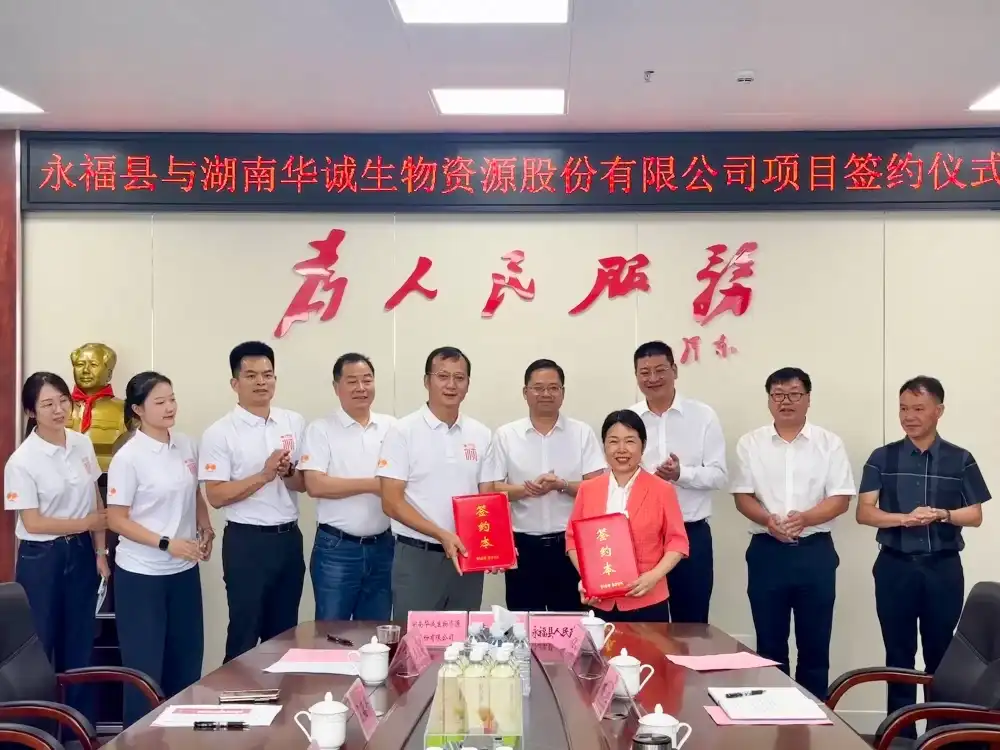
Huacheng Bio: Building Momentum for the Future, Sharing New Beginnings
Huacheng Bio has officially entered a new chapter with the formal establishment of its new...
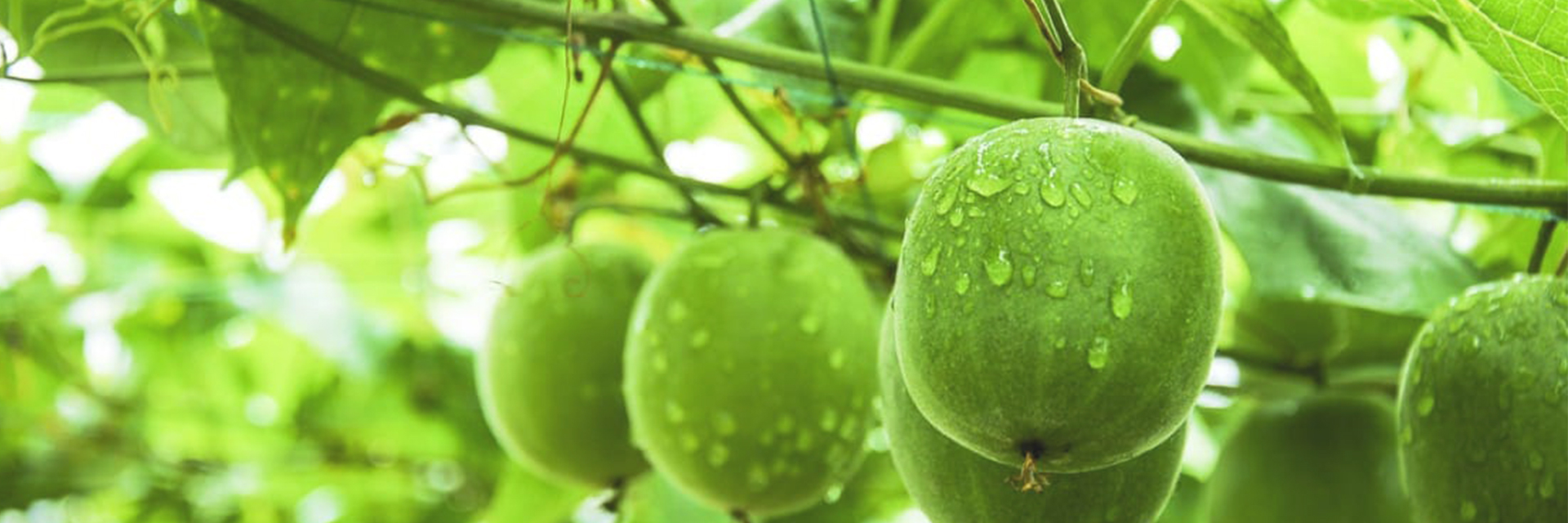
China Concentrated Blueberry Extract from Huacheng Biotech
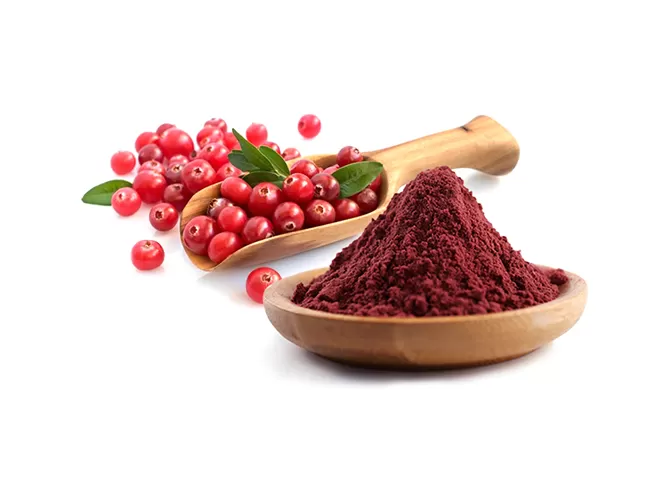
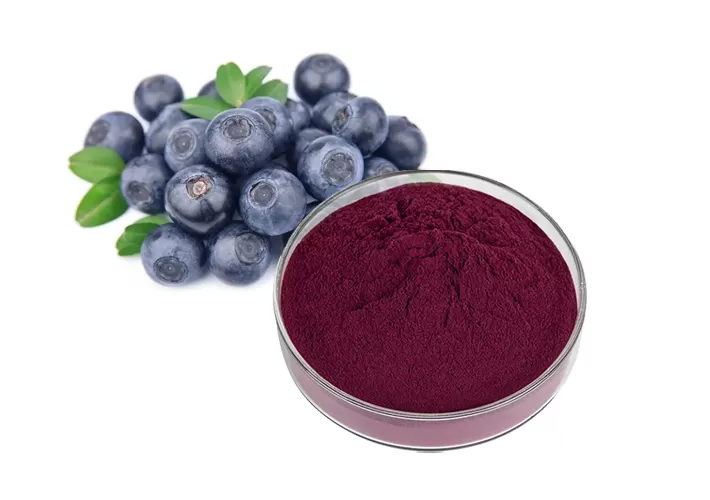
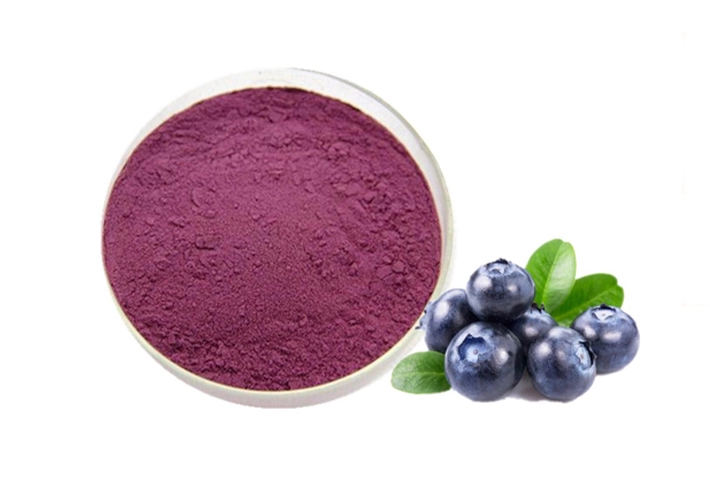
Formulators who search for concentrated blueberry extract out of China often brace for a trade-off: tight budget or tight specs. Huacheng Biotech built its supply chain so you don’t have to choose. We run our own extraction site in Hunan province, where wild blueberries from Northeast China move through a single, vertically integrated line. Fewer intermediaries keep the price lean, and a set of certifications—FDA, HACCP, GMP, BRC, CE—keeps batch consistency predictable. Our QA team spends more time running UV checks than soothing re-qualification headaches, which is why repeat customers keep their R&D spend pointed forward instead of backward. The extract itself starts as a deep-purple powder, typically standardized to 25% anthocyanins, and dissolves easily in water-based systems. We do not treat that as a premium feature; it is just how the process should work. For a budget supplier, documentation is often the weak link. Here, every shipment leaves with a COA that matches the retained sample in our stability chamber, and we keep a three-year lot record as a matter of habit. The result is a blueberry extract that slots into capsules, functional beverages, or gummies without last-minute reformulation calls. If your project needs a different ratio or carrier, the R&D pipeline can accommodate it—at extraction scale, small adjustments do not carry big cost penalties. The factory itself runs on a continuous-improvement cycle that we never put into marketing slides: fewer solvent cycles per ton, tighter multi-stage filtration, and a drying step that preserves the darker polyphenol fractions most processors lose. That is where the budget positioning gets its backbone, not from shortcuts but from process repetition and in-house analytics.
Technical Detail
When a buyer looks for China concentrated blueberry extract, the first real question is not the spec sheet—it’s whether the plant can keep making the same powder six months later. Huacheng Biotech’s operation sits on a full industry chain: raw material grading, extraction, concentration, spray drying, and final micronization happen under one quality system. That means the blueberry extract leaves the site with a certificate signed off against live batch data, not a templated promise. Our standard product is a water-soluble purple powder concentrated at about a 10:1 fruit-to-extract ratio, with anthocyanins typically sitting at 25% by UV. We can dial that up if a customer’s label needs a higher number, and because we control the upstream material flow—wild blueberries arrive in controlled lots during the short harvest window—the adjustment is just a recipe change, not a sourcing crisis. The certifications on file are what a supplement or food brand expects: FDA registration, HACCP, GMP, BRC, and CE. Auditors tend to comment on the paperwork discipline rather than the equipment, which is exactly how a budget-focused factory should present itself. Storage runs cool and dry in a bonded warehouse that turns inventory every few weeks, so the extract arrives with at least 18 months of shelf life remaining. Solvent residues stay well below ICH limits, and the microbial load is consistently under 1,000 CFU/g—routine numbers that matter when a QC manager is clearing incoming raw materials. Powder flowability is managed through a standardized agglomeration step that makes the extract easy to scoop and blend at the bench, another detail that saves time during formulation. For more demanding applications, we offer a micronized grade that disperses without grittiness in clear beverages, though the coarse grade works fine for opaque capsules. Because our extraction lines run multi-ton batches, the per-kilo cost drops quickly for orders above 100 kg, and we pass that curve through to pricing. That is what “budget” means in practice: capacity that matches commercial runs, not a sample lab.
News
Huacheng Bio has officially entered a new chapter with the formal establishment of its new...
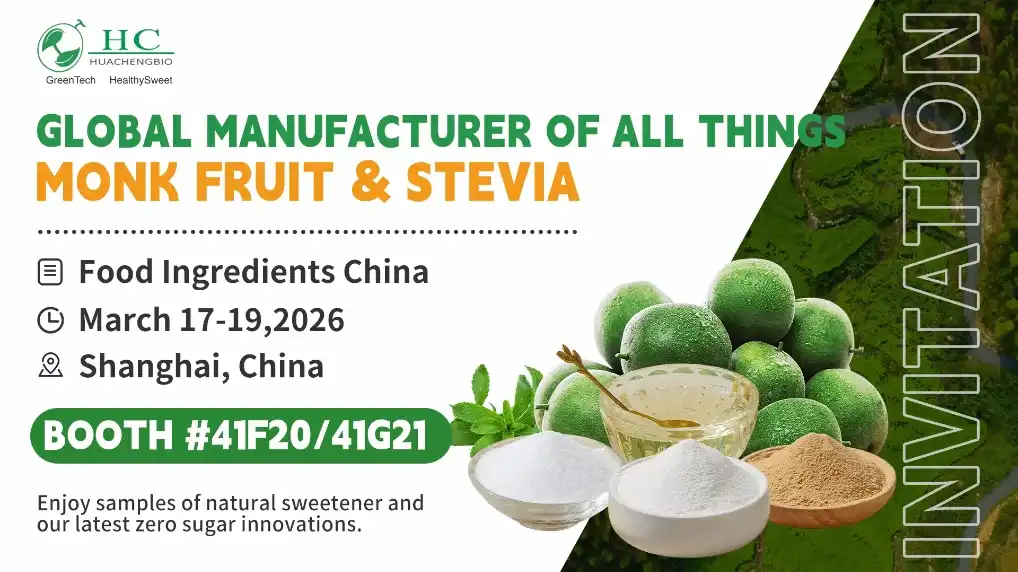
Join Us at Food Ingredients China (FIC) 2026! March 17–19, 2026 Hall 4.1 | Booth...

As a global leader in natural, health‑forward sweetening solutions, we will be present at ...
Products
FAQ
The standard grade is UV-standardized to 25% anthocyanins. We can also produce 10%, 15%, or custom levels, which mainly changes the extraction ratio—higher anthocyanin percentages use more fruit per kilo of extract. Our R&D group usually recommends starting with the 25% for capsules or tablets because it keeps the daily dose small.
Yes. The extract is fully soluble in room-temperature water and disperses without sediment in clear liquids. If you’re formulating a transparent beverage or a jelly, the micronized grade can be a better choice because it hydrates faster.
Our Hunan facility holds FDA registration, HACCP, GMP, BRC, and CE certificates. Each batch ships with a certificate of analysis that cites the relevant certification framework, and we keep a three-year document trail that gets reviewed during routine FDA inspections.
We typically ask for a 25 kg trial, which is one bag. For bench-scale work we can send 1 kg samples, but the paperwork takes about the same effort, so lead time is roughly two weeks either way.
The blueberries are wild-collected in Northeast China, non-GMO by nature. Each lot receives a batch code that links back to the harvest region and extraction date, so full traceability is built into the COA.
Share your product type, target capacity, and application requirements. Our team can review the details and recommend a practical next step.