
 EN
EN EN
EN CN
CN ES
ES PT
PT SV
SV DE
DE TR
TR FR
FR AR
AR BG
BG HR
HR CS
CS DA
DA NL
NL FI
FI EL
EL HI
HI IT
IT JA
JA KO
KO NO
NO PL
PL RO
RO RU
RU CA
CA TL
TL IW
IW ID
ID LV
LV LT
LT SR
SR SK
SK SL
SL UK
UK VI
VI SQ
SQ ET
ET GL
GL HU
HU MT
MT TH
TH FA
FA AF
AF MS
MS GA
GA BE
BE UZ
UZ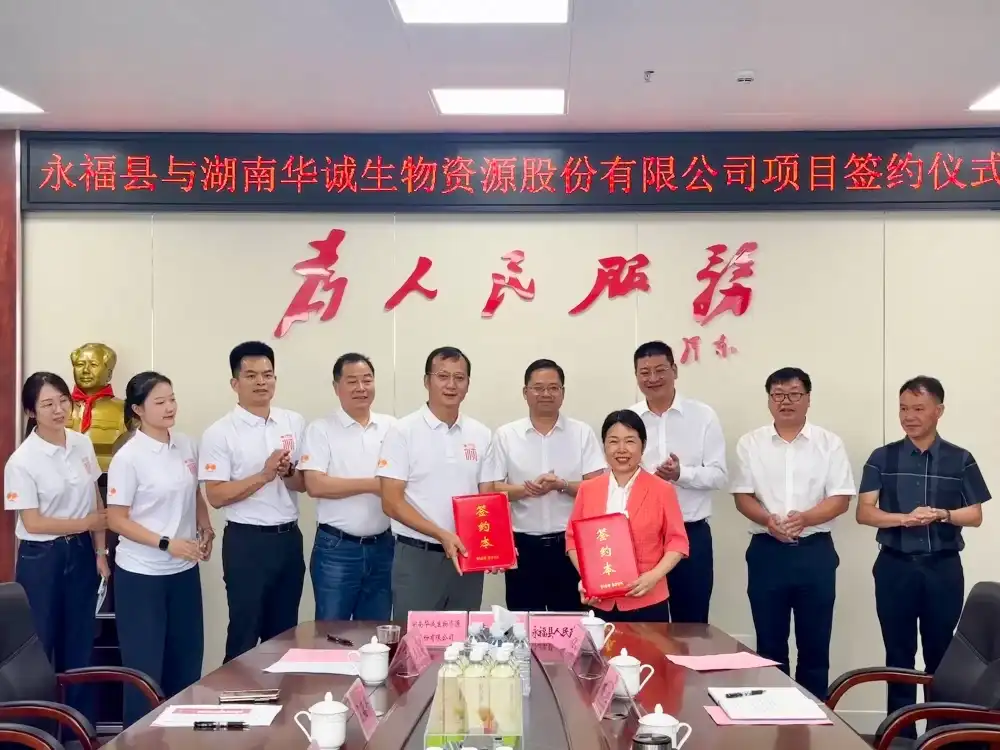
Huacheng Bio: Building Momentum for the Future, Sharing New Beginnings
Huacheng Bio has officially entered a new chapter with the formal establishment of its new...
Sourcing Natural Blueberry Extract from China: A Technical Buyer’s Guide
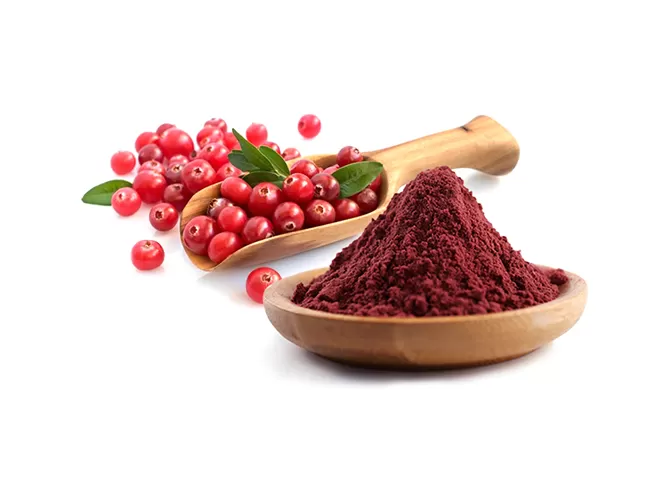
Ordering natural blueberry extract from China often means choosing between quality claims and real batch consistency. Hunan Huacheng Biotech approaches this differently. They don’t grow blueberries themselves, but they’ve built a supply chain where raw berry sourcing, extraction, and drying happen under one audit trail. For formulators who need anthocyanin-rich powders without paying for marketing fluff, this structure keeps costs predictable. Their Changsha facility runs multiple production lines certified under GMP, HACCP, and BRC, which means the extract you spec today will match the one you reorder in six months. If you’ve dealt with spot-market volatility on berry extracts before, a supplier that owns the processing chain rather than just trading intermediates removes a few headaches.
Technical Detail
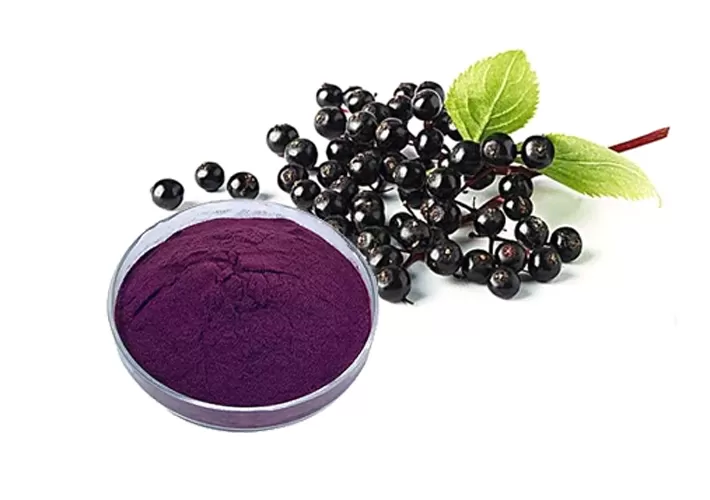
A natural blueberry extract is only as good as the fruit that goes into it – and how quickly it’s processed. At Huacheng Biotech, the extraction workflow starts with fresh or frozen berries sourced from contracted farms in China’s major blueberry regions. By coordinating harvest schedules with extraction capacity, they keep the time from field to powder short, which helps preserve anthocyanin levels without relying on synthetic stabilizers. The facility uses water-ethanol extraction and low-temperature spray drying, standard enough methods, but the difference is in the in-house quality checks at each stage: raw material pesticide screening, heavy metal analysis, and microbial limits are verified before the batch moves forward. The final powder typically standardizes to 5%, 10%, or 25% anthocyanins by UV, though custom specifications are available for large volumes. Their certifications – FDA registration, HACCP, GMP, CE, and BRC – mean the plant is audited regularly for traceability and hygiene. Buyers looking for a budget-friendly extract often worry about corners being cut; here, the cost advantage comes from skipping unnecessary middlemen and running lean, high-volume campaigns. Shipping is arranged in foil-lined drums or vacuum-sealed bags, with typical lead times of 10–15 working days after confirmation of documentation. For R&D teams formulating gummies, capsules, or powdered drink mixes, the extract’s free-flowing, deep purple particle size is consistent enough to blend uniformly without pre-sieving. They’ll send a sample against a signed NDA so you can run your own HPLC check before committing to a container load.
News
Huacheng Bio has officially entered a new chapter with the formal establishment of its new...
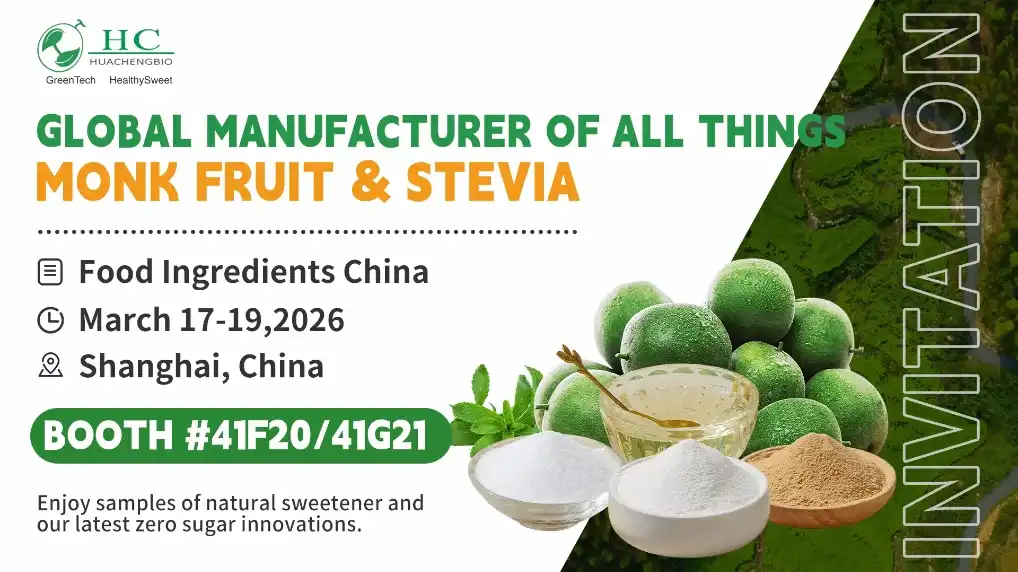
Join Us at Food Ingredients China (FIC) 2026! March 17–19, 2026 Hall 4.1 | Booth...

As a global leader in natural, health‑forward sweetening solutions, we will be present at ...
Products
FAQ
Each batch comes with a third-party certificate of analysis from an ISO 17025 lab, plus our own internal retention sample that we keep for two years. If you test independently and the spec is off, we cover the cost of returning or replacing the material.
For standard 5% and 10% grades, we usually start at 25 kg. Trial orders of 1–2 kg are possible, but the per-kilo cost is higher because of handling and documentation. If you need 25% anthocyanin powder, the MOQ is often 10 kg due to the extra purification steps.
Our standard extract is conventional, but we can source organic-certified berries and run a separate organic-compliant production campaign. Lead times will be longer and there’s a minimum lot size, typically 100 kg. We already hold FDA, BRC, and GMP, so the facility is ready for organic audits.
It’s generally lower because we’re close to berry sources and our labor and utility costs are competitive. The exact difference depends on the grade and order size. We’re transparent – ask for a CIF quote and you can compare it directly. There’s no hidden fee for documentation or palletizing.
We’ve done accelerated stability studies at 40°C/75% RH for six months. Anthocyanin retention was above 90% in sealed, light-protected packaging. We recommend storing below 25°C and avoiding humidity above 60% for best shelf life. Shelf life is 24 months from the date of manufacture.
Share your product type, target capacity, and application requirements. Our team can review the details and recommend a practical next step.