
 EN
EN EN
EN CN
CN ES
ES PT
PT SV
SV DE
DE TR
TR FR
FR AR
AR BG
BG HR
HR CS
CS DA
DA NL
NL FI
FI EL
EL HI
HI IT
IT JA
JA KO
KO NO
NO PL
PL RO
RO RU
RU CA
CA TL
TL IW
IW ID
ID LV
LV LT
LT SR
SR SK
SK SL
SL UK
UK VI
VI SQ
SQ ET
ET GL
GL HU
HU MT
MT TH
TH FA
FA AF
AF MS
MS GA
GA BE
BE UZ
UZ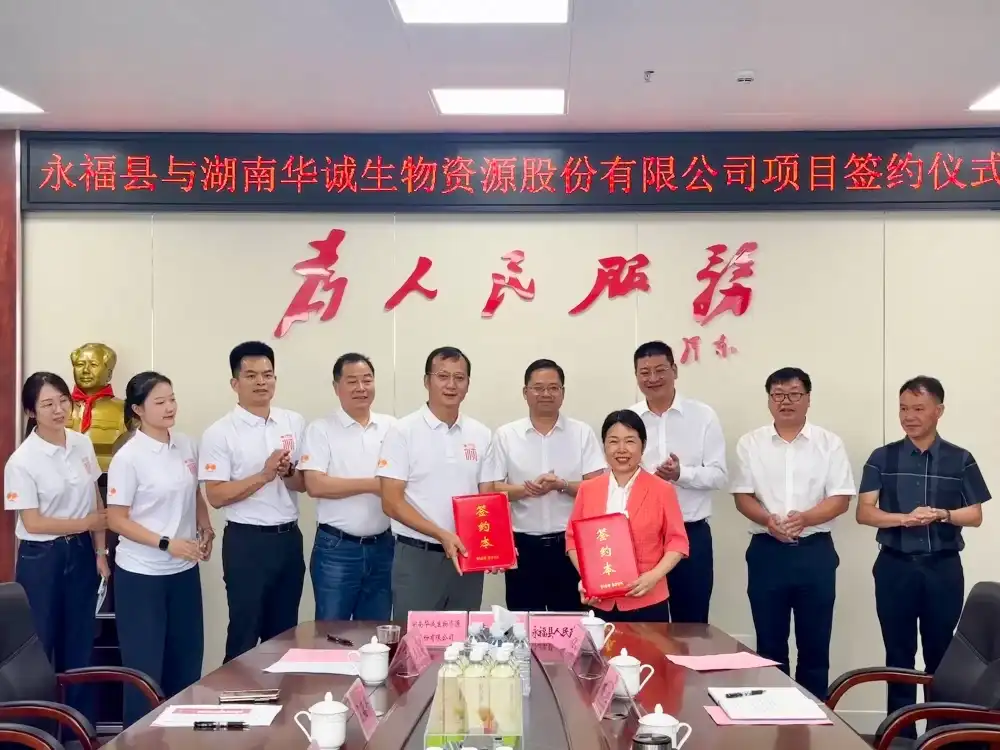
Huacheng Bio: Building Momentum for the Future, Sharing New Beginnings
Huacheng Bio has officially entered a new chapter with the formal establishment of its new...
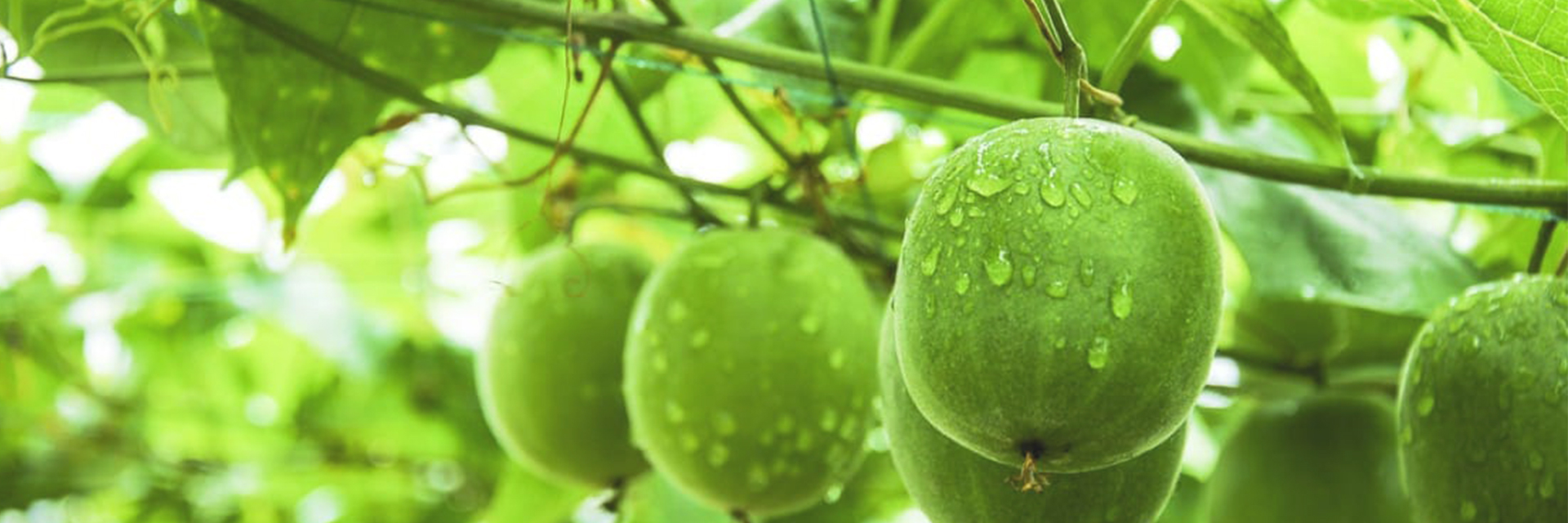
Natural Monk Fruit Sweetener for Cost-Sensitive Formulations
In most industrial sweetener discussions, cost and clean-label demands often pull in opposite directions. Huacheng Biotech runs its own monk fruit extraction chain in Hunan, which trims middlemen and keeps natural monk fruit sweetener prices workable for mid-volume brands. The team has been refining mogroside V concentration and bitterness masking for over a decade, and the current offering hits 60–65% mogroside V with a sensory profile that doesn't demand expensive blending tricks. For R&D or procurement people tired of juggling supplier minimums and inconsistent batches, it's worth a look.
Technical Detail
The natural monk fruit sweetener from Huacheng Biotech starts with fruit grown under long-term contracts in Guangxi and Hunan. Fresh fruit gets processed within 48 hours of harvest at the Hengyang facility—a detail that shows up in the final color and off-note levels. The plant runs five Mogroside V grades (50%, 55%, 60%, 65%, and a 70% premium cut), all kosher and halal. The workhorse 60% version dissolves clear at 10% concentration, withstands UHT and baking above 180°C, and replaces about 150–200 times its weight in sugar depending on the formulation. Because Huacheng owns the column chromatography systems and doesn't farm out refining, batch sizes and pricing stay flexible. Their technical support team also provides free bitterness-masking guidance for low-pH beverages and protein bars—a practical perk that often shortcuts weeks of bench work.
News
Huacheng Bio has officially entered a new chapter with the formal establishment of its new...
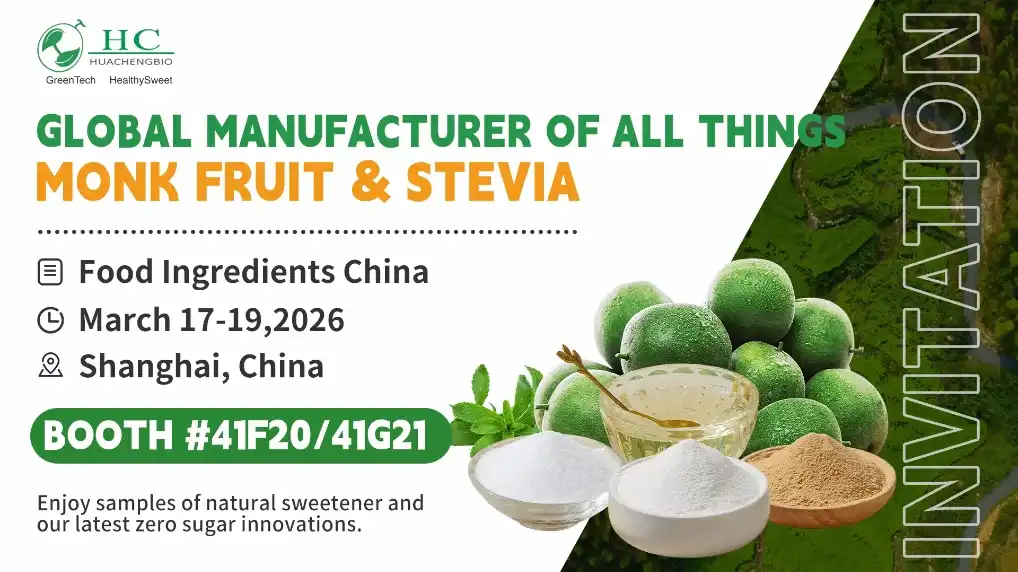
Join Us at Food Ingredients China (FIC) 2026! March 17–19, 2026 Hall 4.1 | Booth...

As a global leader in natural, health‑forward sweetening solutions, we will be present at ...
Products
FAQ
Most developers start with 60% or 65% mogroside V. Higher purity gives a cleaner sweetness with less lingering aftertaste, but the jump from 60% to 65% adds about 15–20% to the raw material cost. Huacheng's application lab often suggests trying the 60% first, then blending with a pinch of steviol glycosides if you need to round off the profile.
The extraction line runs on dedicated HPLC monitoring at three stages—crude extract, resin eluate, and spray drying inlet. Every lot gets a certificate that includes mogroside V assay, arsenic, lead, and standard plate count. Because the raw fruit comes from contracted growers using the same cultivar, the seasonal variation stays under 3% in most years.
Yes, the 60% and 65% powders hold up past 180°C. Browning usually comes from any residual protein or carbohydrate, not the mogrosides themselves. If your recipe uses a low-DE carrier, ask the team to check the non-sugar solids spec for your lot—it's typically below 0.5%.
Huacheng keeps a 500-kg stock of the common grades, with 1-kg sample shipments available for evaluation. Commercial orders usually start at 25 kg for standard packaging. If you need a specific granulation or agglomerated form, the team can match it from a reference sample.
Share your product type, target capacity, and application requirements. Our team can review the details and recommend a practical next step.