
 EN
EN EN
EN CN
CN ES
ES PT
PT SV
SV DE
DE TR
TR FR
FR AR
AR BG
BG HR
HR CS
CS DA
DA NL
NL FI
FI EL
EL HI
HI IT
IT JA
JA KO
KO NO
NO PL
PL RO
RO RU
RU CA
CA TL
TL IW
IW ID
ID LV
LV LT
LT SR
SR SK
SK SL
SL UK
UK VI
VI SQ
SQ ET
ET GL
GL HU
HU MT
MT TH
TH FA
FA AF
AF MS
MS GA
GA BE
BE UZ
UZ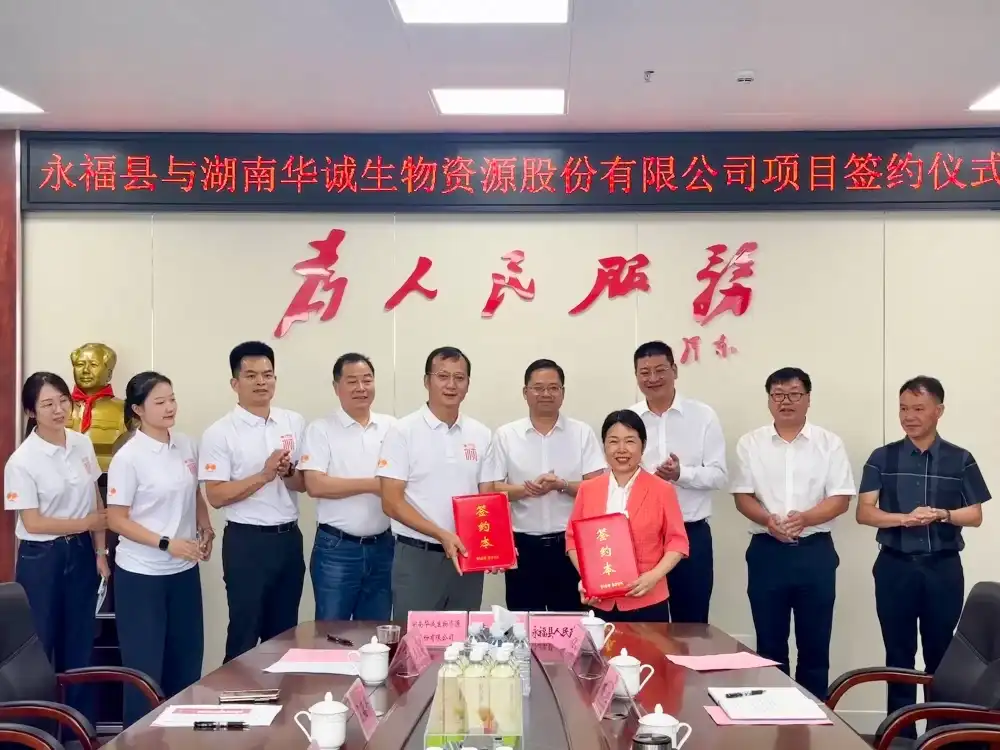
Huacheng Bio: Building Momentum for the Future, Sharing New Beginnings
Huacheng Bio has officially entered a new chapter with the formal establishment of its new...
Red Ginseng Premium Extract: Technical Breakdown for Budget-Conscious Buyers
You might be sourcing red ginseng extract and running into two common headaches: inconsistent ginsenoside levels and prices that don’t align with the actual raw material costs. At Huacheng Biotech, we approach this differently. Instead of marketing fluff, we offer a technical look at our red ginseng premium extract, backed by an integrated supply chain that keeps spending in check without cutting corners on the active marker compounds you actually care about. Our team works directly with Panax ginseng growers in established cultivation zones, handling extraction and standardization in facilities that follow HACCP and GMP protocols. This setup lets us track the root from the field to the final powder, cutting out middlemen and giving you a clearer cost structure. If you’re tired of sifting through vague product descriptions and want to discuss HPLC profiles, column specifications for the key ginsenosides Rg1, Re, and Rb1, or simply need a reliable supply that matches your formulation’s budget, we can walk you through it.
Technical Detail
Huacheng Biotech supplies red ginseng premium extract with a focus on technical transparency, even at budget-level pricing. The extract is produced through a water-ethanol process followed by low-temperature concentration, a method widely used to preserve heat-sensitive ginsenosides. Typical specifications for this grade include a total ginsenoside content of 4–8% (by HPLC, depending on the agreed-upon marker), with Rg1, Re, and Rb1 making up the primary profile. We can also provide a higher 10% option for projects needing a bit more punch, though most functional food and supplement applications perform well within the 4–5% range. Our quality control goes through a series of checks: raw ginseng root identity by macroscopic and microscopic methods, heavy metal and pesticide residue screening per USP <561> or equivalent, and final ginsenoside quantification using validated HPLC protocols. Each batch ships with a certificate of analysis listing these results. Because we operate the extraction line ourselves—rather than trading on the spot market—we can hold inventory at the specification you need and keep lead times predictable. The extract is spray-dried onto a maltodextrin carrier to improve flowability and handling in production. For manufacturers of liquid shots, capsules, or functional teas, this format blends easily and reduces dusting. Custom sieving is available if your equipment is sensitive to particle size. We hold FDA registration and carry BRC, GMP, and HACCP certifications, which, along with our in-house extraction capability, help keep compliance costs off your bill. If you’re planning a large order, we can discuss dedicated production runs, private labeling, or adjusting the extraction ratio to hit a target ginsenoside content more precisely.
News
Huacheng Bio has officially entered a new chapter with the formal establishment of its new...
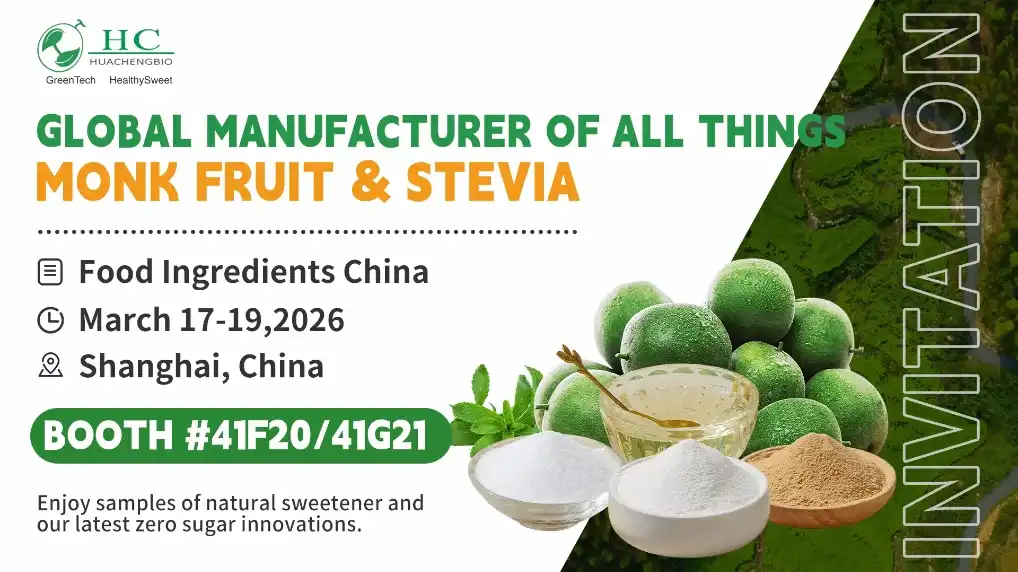
Join Us at Food Ingredients China (FIC) 2026! March 17–19, 2026 Hall 4.1 | Booth...

As a global leader in natural, health‑forward sweetening solutions, we will be present at ...
Products
FAQ
Our default specification uses Rg1+Re alongside Rb1 as markers, with a typical total of 4% by HPLC. We can align the profile to EP or USP methods if your lab requires a different set of reference standards. The chromatograms are consistent batch to batch because we control extraction time and alcohol strength tightly.
It comes down to owning large parts of the chain. We manage sourcing of four-year-old roots from contracted farms in Jilin Province, run our own extraction workshop, and skip the distributor markup. That doesn’t mean lowest possible quality—we still do three rounds of heavy metal testing per lot—but we eliminate costs that don’t add value for your purchase.
Yes, we send a free sample of the current production lot for your internal testing first. Once you approve the spec, a small pilot order of 25 kg is usually the minimum to confirm scalability. We cover the sample freight by sea or air courier, and you can request a copy of the full CoA in advance.
Ginsenosides are stable under mildly acidic conditions. Our standard powder dissolves well in water with gentle agitation, though at very low pH you may want to pre-hydrate it in a small amount of warm water. We haven’t seen degradation issues in stability studies run by clients for 12-month shelf life at ambient temperature, but we always recommend running your own accelerated test to confirm.
We don’t hold NOP or EU organic certificate for the standard red ginseng line at present. If your volume can support it, we can set up a dedicated processing line using certified organic roots. The conversion usually takes one growing season to audit the farm and segregate production, so it’s something we plan together a year ahead.
Share your product type, target capacity, and application requirements. Our team can review the details and recommend a practical next step.