
 EN
EN EN
EN CN
CN ES
ES PT
PT SV
SV DE
DE TR
TR FR
FR AR
AR BG
BG HR
HR CS
CS DA
DA NL
NL FI
FI EL
EL HI
HI IT
IT JA
JA KO
KO NO
NO PL
PL RO
RO RU
RU CA
CA TL
TL IW
IW ID
ID LV
LV LT
LT SR
SR SK
SK SL
SL UK
UK VI
VI SQ
SQ ET
ET GL
GL HU
HU MT
MT TH
TH FA
FA AF
AF MS
MS GA
GA BE
BE UZ
UZ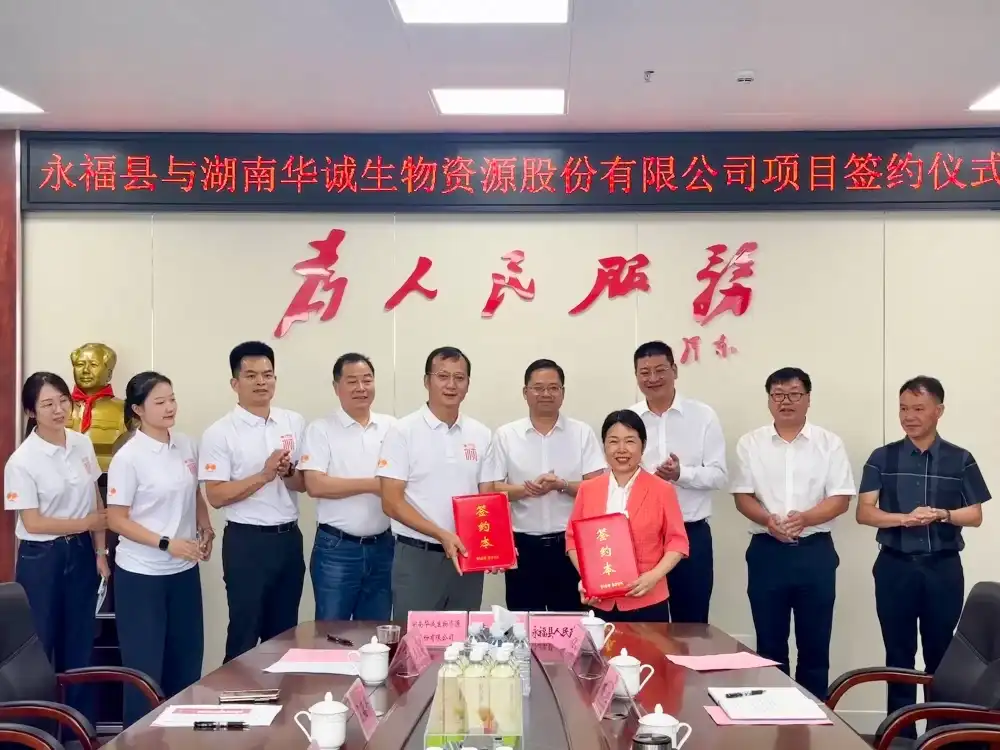
Huacheng Bio: Building Momentum for the Future, Sharing New Beginnings
Huacheng Bio has officially entered a new chapter with the formal establishment of its new...
Sweet Tea Leaf Extract: Technical Quality, Budget-Friendly
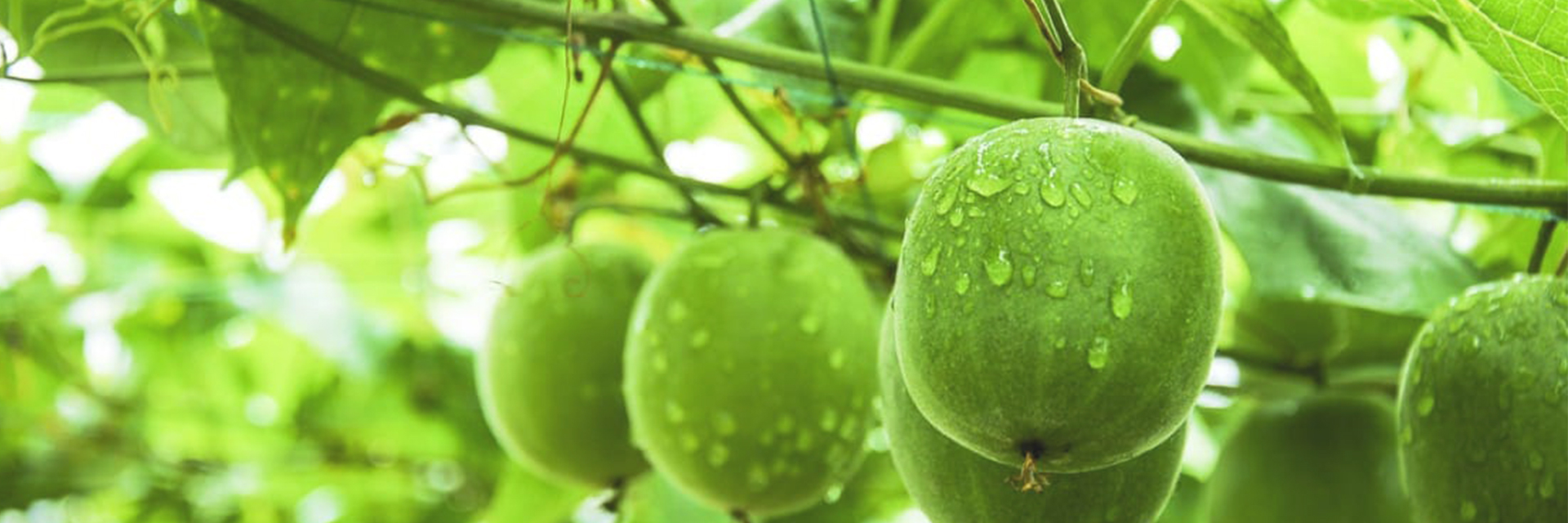
Sweet tea leaf extract, derived from Rubus suavissimus, delivers a sweetness about 200 times stronger than sugar without the calories. It's been used traditionally in China and is now gaining interest as a natural, zero-calorie sweetener for global markets. At Hunan Huacheng Biotech, we approach this ingredient from a supply chain perspective—controlling sourcing, extraction, and purification to keep costs predictable. That means you get a material that fits tight formulation budgets without constant requalification. Our plant handles the extraction in-house under HACCP and GMP systems, with every batch accompanied by a typical CoA covering purity, heavy metals, and microbiology. Whether you're working on ready-to-drink teas, functional beverages, or sugar-free confectionery, we can offer grades from 80% to 98% rubusoside to match your sweetness and cost profile. And since we've been in the natural sweetener business for over a decade (notably monk fruit), we understand the stability and taste challenges—so we provide practical support, not just a bag of powder.
Technical Detail
Sweet tea leaf extract's main sweet component is rubusoside, a steviol glycoside analogue with a clean sweetness profile and slight delay but no lingering bitterness when used correctly. As a technical supplier, Huacheng Biotech usually provides it as a pale white to off-white powder, water-soluble at room temperature up to around 20% w/v, and heat-stable at typical pasteurization temperatures. Typical specification: rubusoside content by HPLC ≥90%, loss on drying ≤5%, ash ≤0.5%, and standard heavy-metal limits compliant with FDA and EU regulations. Our extraction process uses water and ethanol only—no harsh solvents—which keeps the extract eligible for clean-label applications. We manage the entire chain, from sourcing the dried leaves in Hunan mountain areas to final spray-dried powder in our ISO-certified facility. This vertical integration is why we can offer prices that often beat brokers without sacrificing consistency. Certifications on file include FDA registration, HACCP, GMP, and BRC, so the paperwork for your quality audit is already in order. Applications span dairy alternatives, flavored waters, mouthwash, and bakery where partial sugar reduction is the goal. Because rubusoside can enhance fruit flavors, it's also used in fruit preparations and syrups. If you need organic or specific particle sizes, we can accommodate with MOQs that are usually lower than market average, since we run small-scale pilot batches regularly. For product developers, we can share sensory data and recommended usage levels—typically starting at 0.01–0.05% in final product, adjusted for synergy with other bulk sweeteners like erythritol.
News
Huacheng Bio has officially entered a new chapter with the formal establishment of its new...
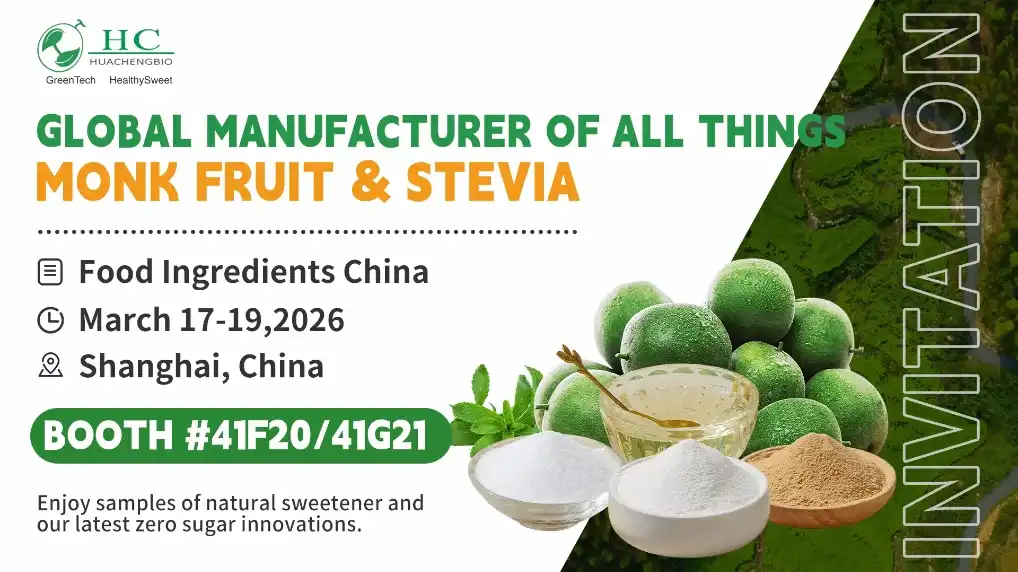
Join Us at Food Ingredients China (FIC) 2026! March 17–19, 2026 Hall 4.1 | Booth...

As a global leader in natural, health‑forward sweetening solutions, we will be present at ...
Products
FAQ
Our typical extract at 90% rubusoside is about 200 times sweeter than sucrose by weight. Practically, 1 gram of extract can replace roughly 200 grams of sugar, though you'd need a bulking agent to make up the lost volume.
Not exactly. Both contain steviol glycosides, but sweet tea leaf extract's main compound is rubusoside, which has a faster sweetness onset and less lingering aftertaste than some stevia extracts. It can work alongside stevia to improve overall taste.
Yes, rubusoside is heat-stable up to typical pasteurization and even UHT processes (around 120°C for short periods). We've tested it in tea drinks with no significant degradation.
Keep it in a cool, dry place, sealed from moisture. Under recommended conditions (below 25°C, low humidity), shelf life is typically 24 months from the date of manufacture.
We do. For first evaluations, we can send 50–100g samples, along with a CoA and safety data sheet. Just let us know your target application so we can recommend the appropriate grade.
Share your product type, target capacity, and application requirements. Our team can review the details and recommend a practical next step.