
 EN
EN EN
EN CN
CN ES
ES PT
PT SV
SV DE
DE TR
TR FR
FR AR
AR BG
BG HR
HR CS
CS DA
DA NL
NL FI
FI EL
EL HI
HI IT
IT JA
JA KO
KO NO
NO PL
PL RO
RO RU
RU CA
CA TL
TL IW
IW ID
ID LV
LV LT
LT SR
SR SK
SK SL
SL UK
UK VI
VI SQ
SQ ET
ET GL
GL HU
HU MT
MT TH
TH FA
FA AF
AF MS
MS GA
GA BE
BE UZ
UZ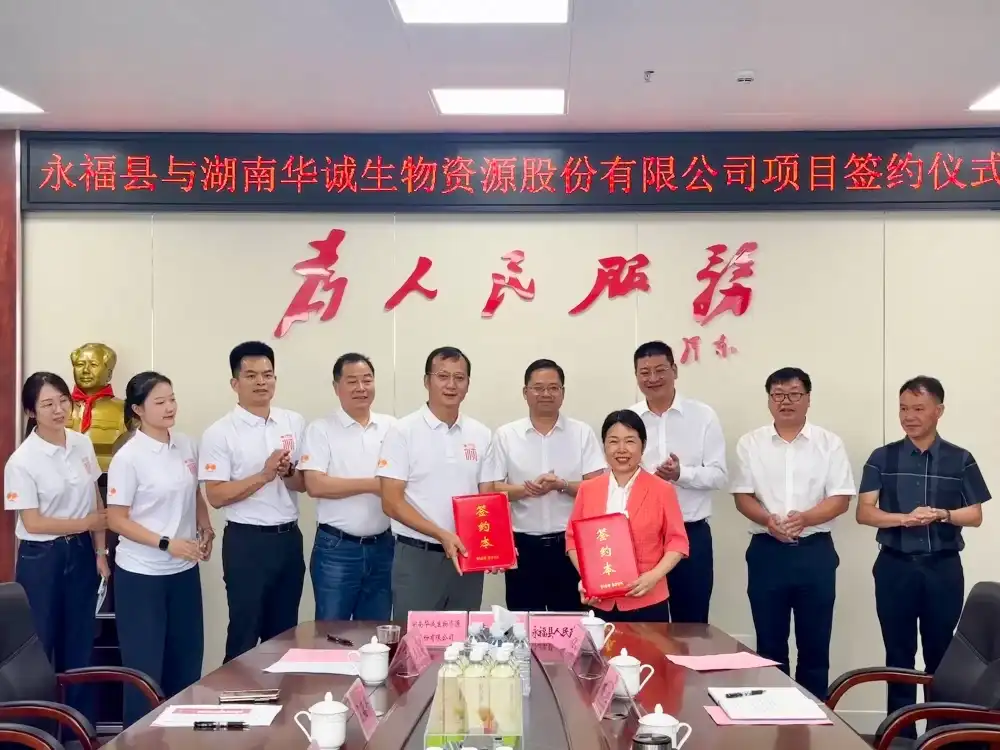
Huacheng Bio: Building Momentum for the Future, Sharing New Beginnings
Huacheng Bio has officially entered a new chapter with the formal establishment of its new...
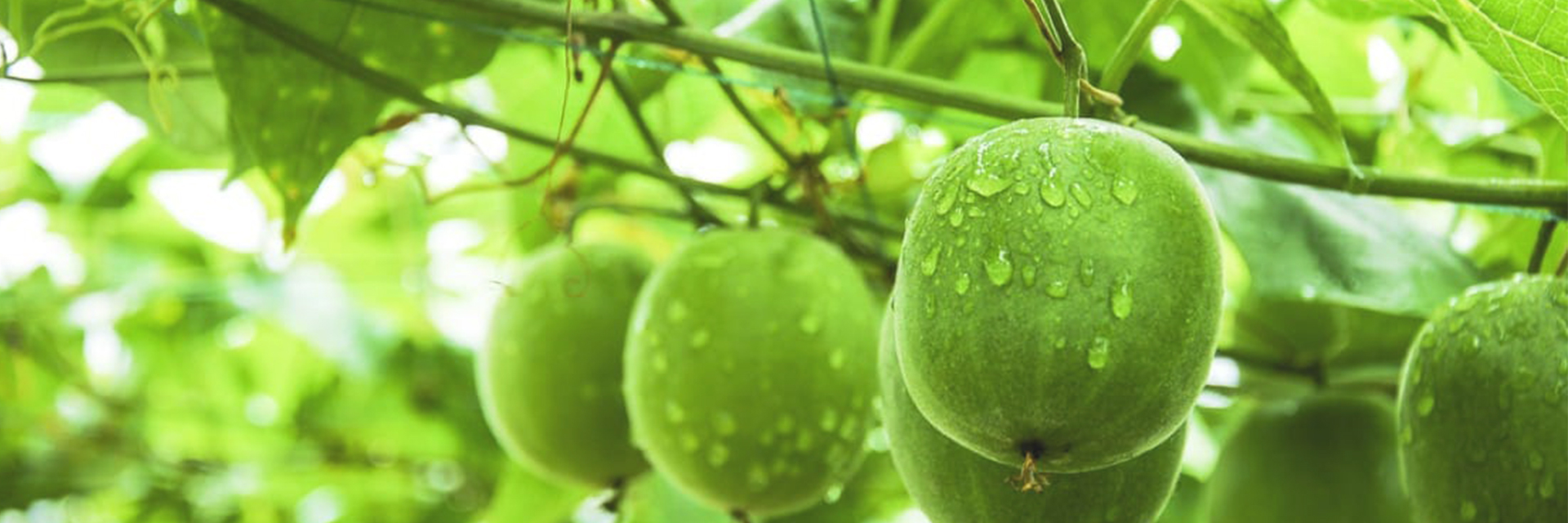
Wholesale Sweet Tea Extract – Zero-Calorie Sweetener
Sweet tea extract, derived from Rubus suavissimus leaves, is finding its place in product formulations that need clean-label sweetness without the calories. For manufacturers looking to cut sugar costs without sacrificing taste, it offers a direct path: a plant-based ingredient that sweetens like sugar but adds no caloric load. Hunan Huacheng Biotech supplies this extract at bulk scale, with pricing that reflects control over the full supply chain – from leaf sourcing in China’s southern mountains to final processing in GMP-certified facilities. This vertical integration removes middlemen, which keeps per-kilo costs predictable even as order volumes grow. The extract’s primary sweet compounds, rubusoside and suaviosides, deliver a clean sweet profile with minimal aftertaste, making it a practical option for teas, dairy, and functional drinks. Because it’s 200–300 times sweeter than sucrose, formulators use tiny amounts, which further drives down in-product cost. For companies balancing R&D budgets against ingredient quality, working directly with a producer who handles everything from harvest to freight simplifies logistics and shortens lead times.
Technical Detail
Hunan Huacheng Biotech operates under strict certifications – FDA, HACCP, GMP, CE, BRC – which reflect a production environment geared toward consistent supply for industrial buyers. The company’s sweet tea extract comes from the same integrated chain that supports its monk fruit and stevia lines: raw leaves are processed in-house, with water extraction and membrane filtration preserving the natural sweet glycosides. Buyers receive a pale brown powder that dissolves clear in water, standardized to a minimum rubusoside content – important for reproducibility in production runs. Because the extraction and refinement happen under one roof, batch-to-batch variation stays low, and the per-unit cost benefits from economies of scale. This matters for contract manufacturers and private label bottlers who need stable input costs across quarters. The extract itself is heat-stable and pH-tolerant, performing reliably in pasteurized or carbonated products without bitter notes. Some customers blend it with other sweeteners to round out sweetness curves in low-pH applications like fruit teas or kombucha. Since the product is shipped direct from the producer, minimum order quantities are flexible, and smaller trial shipments are possible for lab-scale testing. That practical flexibility aligns with a budget-conscious procurement approach: pay for what you need when you need it, without excess inventory carrying costs.
News
Huacheng Bio has officially entered a new chapter with the formal establishment of its new...
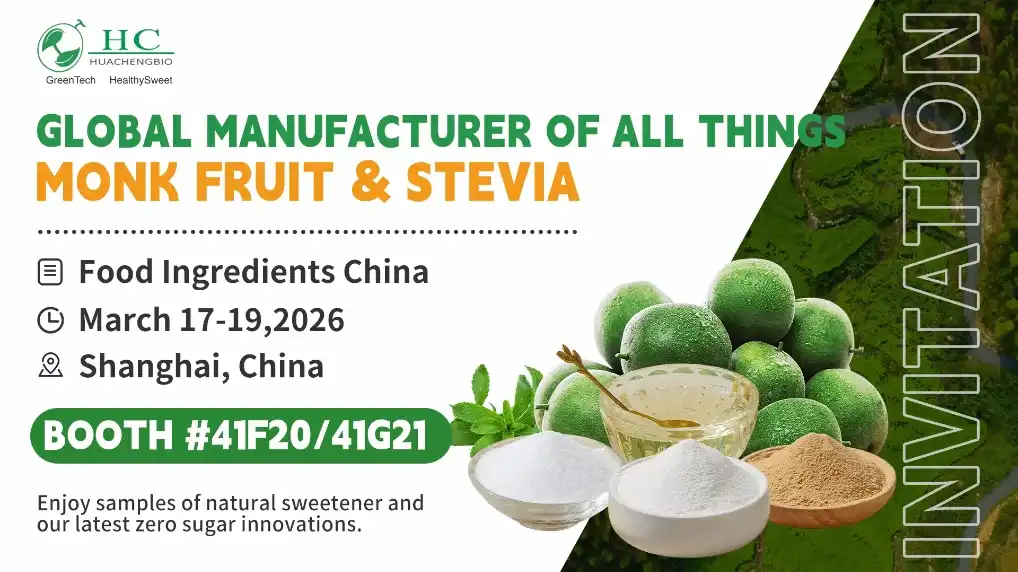
Join Us at Food Ingredients China (FIC) 2026! March 17–19, 2026 Hall 4.1 | Booth...

As a global leader in natural, health‑forward sweetening solutions, we will be present at ...
Products
FAQ
Orders typically start at 25 kg, which aligns with small-to-mid-scale production trials. Larger volumes unlock better per-kilo pricing, but the baseline MOQ keeps entry accessible for growing brands.
Cost-wise, sweet tea extract often sits at a slight premium to raw stevia extracts when purchased in bulk, but its cleaner sweetness profile can reduce the need for masking agents – net cost per finished product can be similar or even lower. Taste tends to be less bitter, with a more sucrose-like onset, which works well in lightly flavored beverages.
It can, but most formulators use it in part, combined with bulking agents or fibers to recreate mouthfeel. Because it’s so potent, a direct 1:1 sugar replacement would need a carrier to maintain texture. The extract itself supplies only sweetness and no bulk.
The production line holds FDA registration, GMP, HACCP, CE, and BRC certifications. These cover food safety management, hygienic processing, and traceability from raw material intake to final packaging.
Yes, the sweet glycosides remain stable under typical pasteurization temperatures and in baked goods up to around 200°C. It’s been tested in industrial settings for both hot-fill and UHT processes without significant sweetening loss.
Share your product type, target capacity, and application requirements. Our team can review the details and recommend a practical next step.