Introduction: Why Manufacturers Need Evidence-Based Answers About Stevia and Anxiety
Stevia extract—especially high-purity grades such as 50%~99% Rebaudioside A (RA) and 95% Rebaudioside M (RM)—has become a foundational sweetener used across global industries:
- Food & beverage manufacturers
- Nutraceutical and supplement producers
- Bakery & confectionery companies
- Dairy product manufacturers
- Instant powder drink formulators
- Health food distributors
- Pharmaceutical & cosmetic firms
As consumer demand for natural, zero-calorie, clean-label sweeteners rises, so do safety-related questions. One trending concern in both B2B and B2C markets is:
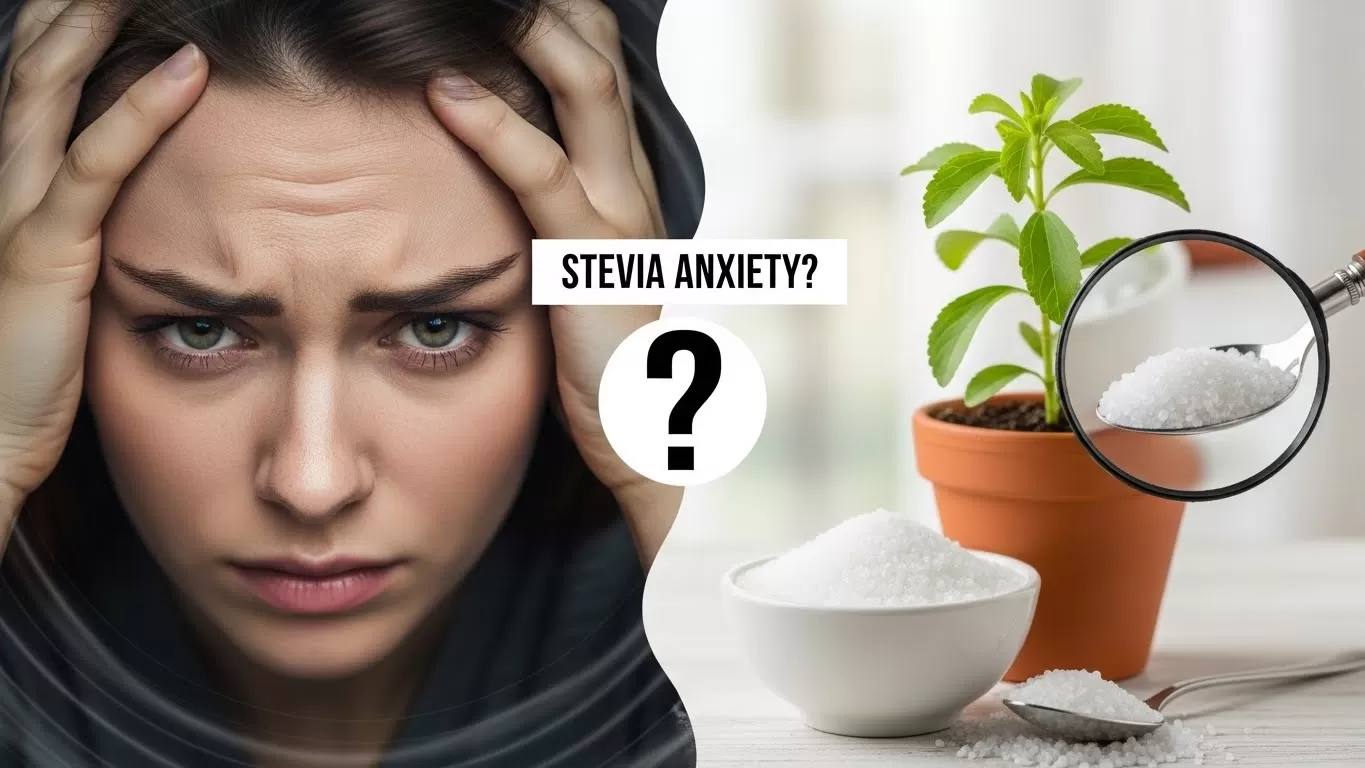
“Does stevia cause anxiety?”
Or related questions like:
- “Can stevia affect mood?”
- “Does stevia disrupt hormones?”
- “Can high-purity stevia glycosides trigger stress responses?”
This article provides a rigorously researched, regulatory-aligned, authoritative analysis to help manufacturers answer these questions confidently and support product claims with credible evidence.
To explore high-purity stevia ingredients, visit our product.
Section 1 — Understanding Stevia Extract: RA, RM, and Their Safety Profiles
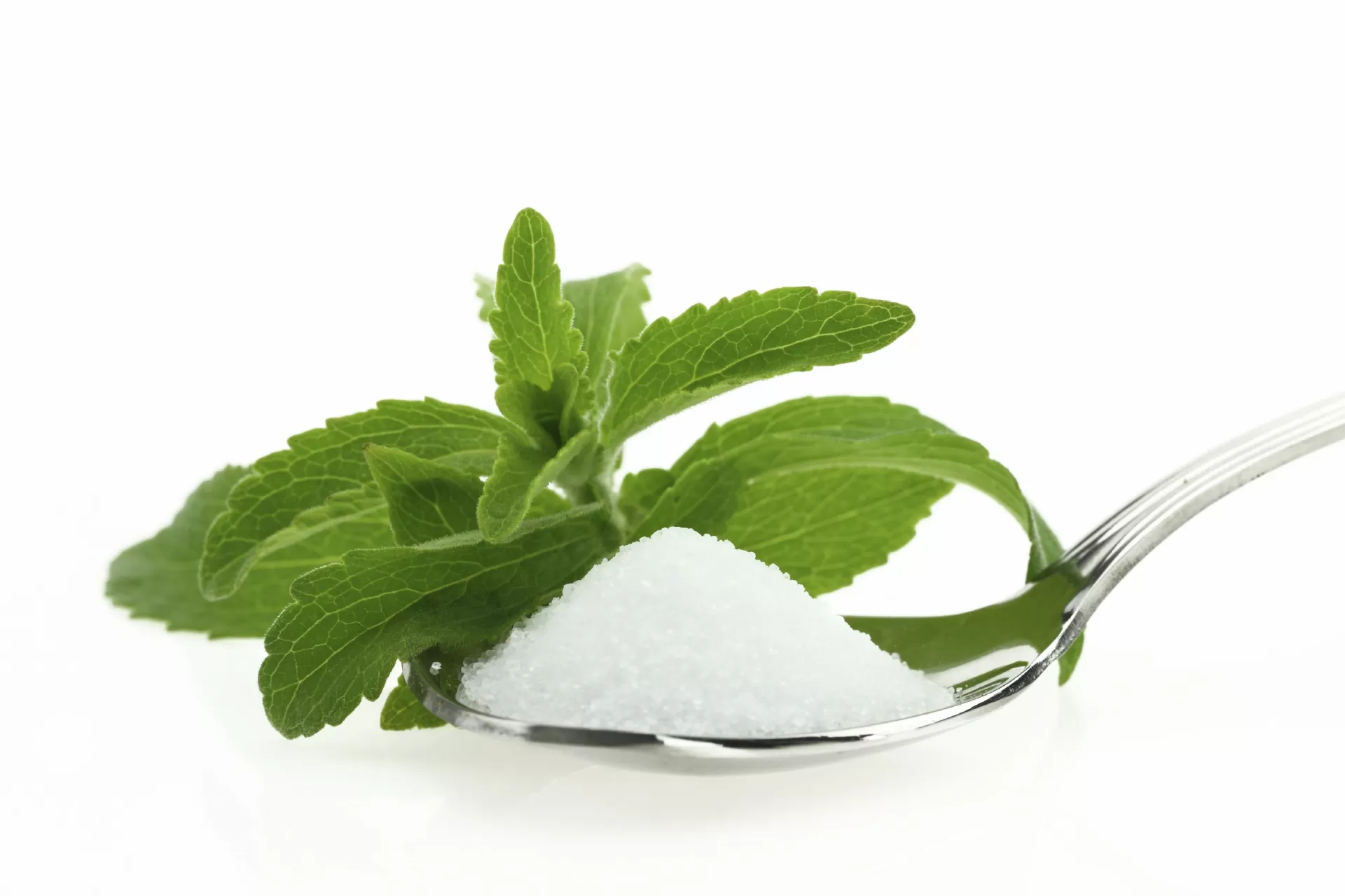
Stevia extract is composed of steviol glycosides, the sweetest and most purified components of the Stevia rebaudiana leaf.
The most commercially important glycosides include:
| Steviol Glycoside |
Purity Levels Used |
Sweetness Profile |
Notes |
| Rebaudioside A (RA) |
50%–99% |
Clean sweetness with slight herbal notes |
Most widely used; ideal cost-performance ratio |
| Rebaudioside M (RM) |
95%+ |
Ultra-clean, sugar-like sweetness |
Premium grade; preferred for beverages & dairy |
| Stevioside |
50%–95% |
Stronger aftertaste |
Used in blends |
- Non-caloric
- Non-fermentable
- Heat-stable & pH-stable
- GRAS-approved (USA)
- Globally regulated and accepted in 150+ countries
But how do they interact with the central nervous system?
Section 2 — Does Stevia Affect the Brain or Mood? What the Science Shows
Authoritative answer:
No, stevia extract—including 50%–99% RA and 95% RM—does NOT cause anxiety.
Scientific analyses show:
- Steviol glycosides do not impact dopamine pathways
- They do not elevate cortisol (the stress hormone)
- They do not stimulate the amygdala, the brain’s anxiety center
- They do not influence excitatory neurotransmitters such as glutamate
- They do not alter GABA, which supports calmness
Why some people “feel anxious” after consuming stevia (but not because of stevia):
- Caffeine-containing beverages sweetened with stevia
- Dieting or low-calorie restrictions
- Blood sugar fluctuations unrelated to stevia
- Underlying anxiety disorders
- Misattribution due to confusion with artificial sweeteners
Stevia itself is not the cause.
Section 3 — Comparing Stevia to Sugar and Artificial Sweeteners: Anxiety Risk Levels
| Sweetener Type |
Risk of Anxiety |
Why |
| Stevia extract (RA 50%~99%, RM 95%) |
Very Low |
Does not influence nervous system chemicals |
| Artificial sweeteners (aspartame, sucralose) |
Moderate |
Some affect neurotransmitter metabolism |
| Sugar (glucose, sucrose, HFCS) |
High |
Causes spikes & crashes → anxiety-like symptoms |
| Caffeine-containing sweetened beverages |
Very High |
Caffeine triggers anxiety directly |
Stevia is among the safest sweeteners for consumers sensitive to mood fluctuations.
Section 4 — Why Stevia Does Not Cause Anxiety: Biochemical Explanation for Professionals
- Steviol Glycosides Do Not Cross the Blood-Brain Barrier
RA, RM, and other glycosides are too large to enter the brain.
- They Are Metabolically Inactive in Nervous Tissue
Gut bacteria break steviol glycosides down into steviol, which is excreted.
- No Impact on Neurotransmitters
Stevia does NOT affect:
- Dopamine
- Serotonin
- Cortisol
- Norepinephrine
- GABA
- Glutamate
- No Glycemic Fluctuations
Since stevia is non-glycemic:
- No blood sugar spikes
- No sugar crash
- Clean-Label, Hypoallergenic Profile
Stevia contains no stimulants, allergens, or psychoactive molecules.
Section 5 — RA vs. RM: Do Higher-Purity Glycosides Affect Anxiety Differently?
Manufacturers often ask whether higher purity = higher biological activity.
Answer: No.
Purity level only affects:
- Taste
- Sweetness intensity
- Application stability
| Purity |
Effect on Mood or Anxiety |
Notes |
| 50% RA |
None |
Standard grade for solid foods |
| 80% RA |
None |
Popular for beverages |
| 95–99% RA |
None |
Cleaner taste; same safety profile |
| 95% RM |
None |
Premium ingredient; zero neuroactivity |
Section 6 — Consumer Misconceptions: Why People Think Stevia Causes Anxiety
Manufacturers often face customer inquiries because of:
- Confusion with Artificial Sweeteners
- Sugar Withdrawal Symptoms
- Caffeine-Sweetened Products
- Internet Rumors
- Fluctuations in Blood Sugar — But Not Caused by Stevia
Section 7 — Does Stevia Affect Hormones or Cortisol?
Multiple human and animal studies confirm:
- No cortisol elevation
- No adrenal gland stimulation
- No hormonal disruption
- No effect on thyroid function
- No impact on reproductive hormones
This applies to:
- 50%–99% RA
- 95% RM
- Mixed glycoside blends
Section 8 — Does Stevia Cause Anxiety in Sensitive Individuals?
For the extremely sensitive:
- Very large doses of stevia may cause mild digestive discomfort
Digestive discomfort can trigger anxiety-like sensations in some individuals.
This is indirect and not a neurological response.
Section 9 — Stevia and Anxiety in Functional Foods, Supplements, and Pharmaceuticals
Manufacturers producing:
- Energy drinks
- Meal replacements
- Gummies
- RTD beverages
- Dairy products
- Protein powders
- OD tablets & syrups
Key answers:
- Safe for mood-focused supplements (e.g., ashwagandha, magnesium, L-theanine)
- Safe for nootropics
- Safe for pharmaceutical syrups
- Safe for pediatric and geriatric formulations
Stevia is appropriate anywhere a non-glycemic sweetener is required.
Explore industrial-grade RA & RM
Section 10 — Final Safety Assessment for Manufacturers
- Stevia extract does NOT:
- Cause anxiety
- Affect neurotransmitters
- Alter mood
- Influence cortisol
- Create addictive patterns
- Interact with central nervous system pathways
- Cause jitteriness or overstimulation
Stevia extract IS:
- Neurologically inert
- GRAS-approved
- Non-glycemic
- Safe for daily consumption
- Stable under heat and processing
- Appropriate for all major product categories
FAQs — Does Stevia Cause Anxiety?
- Does stevia cause anxiety in humans?
No. There is no scientific evidence that stevia triggers anxiety.
- Does high-purity stevia (99% RA or 95% RM) affect mood?
No. Purity affects taste—not brain chemistry.
- Why do some people think stevia makes them anxious?
Misattribution from sugar withdrawal, caffeine, or internet misinformation.
- Is stevia safer than artificial sweeteners for people with anxiety disorders?
Yes. Stevia has no neurological or hormonal activity.
- Can stevia affect cortisol or stress hormones?
No. It does not impact endocrine activity.
- Is stevia safe in functional foods designed for stress relief or relaxation?
Yes. It is mild, clean, and compatible with calming ingredients.
- Can children or sensitive adults use stevia-sweetened products safely?
Yes—stevia is one of the safest sweeteners available.
Conclusion: Stevia Extract Does Not Cause Anxiety — It Is One of the Safest Sweeteners for Mood-Sensitive Consumers
After reviewing biochemical data, toxicology results, regulatory assessments, and consumer-use findings, the conclusion is clear:
Stevia extract—whether 50%~99% RA or 95% RM—does not cause anxiety.
It remains:
- A highly stable, clean-label sweetener
- Neurologically inactive
- GRAS-approved
- Ideal for beverages, bakery, dairy, supplements, pharmaceuticals, and more
As global demand increases, stevia continues to be the industry’s safest, most reliable natural sugar alternative—suitable for all consumer segments, including those sensitive to mood fluctuations.
To explore premium stevia extract options for your formulations, visit:
🔗 https://www.huachengbio.com/productdetail/Stevia








 EN
EN EN
EN CN
CN ES
ES PT
PT SV
SV DE
DE TR
TR FR
FR AR
AR BG
BG HR
HR CS
CS DA
DA NL
NL FI
FI EL
EL HI
HI IT
IT JA
JA KO
KO NO
NO PL
PL RO
RO RU
RU CA
CA TL
TL IW
IW ID
ID LV
LV LT
LT SR
SR SK
SK SL
SL UK
UK VI
VI SQ
SQ ET
ET GL
GL HU
HU MT
MT TH
TH FA
FA AF
AF MS
MS GA
GA BE
BE UZ
UZ