
 EN
EN EN
EN CN
CN ES
ES PT
PT SV
SV DE
DE TR
TR FR
FR AR
AR BG
BG HR
HR CS
CS DA
DA NL
NL FI
FI EL
EL HI
HI IT
IT JA
JA KO
KO NO
NO PL
PL RO
RO RU
RU CA
CA TL
TL IW
IW ID
ID LV
LV LT
LT SR
SR SK
SK SL
SL UK
UK VI
VI SQ
SQ ET
ET GL
GL HU
HU MT
MT TH
TH FA
FA AF
AF MS
MS GA
GA BE
BE UZ
UZ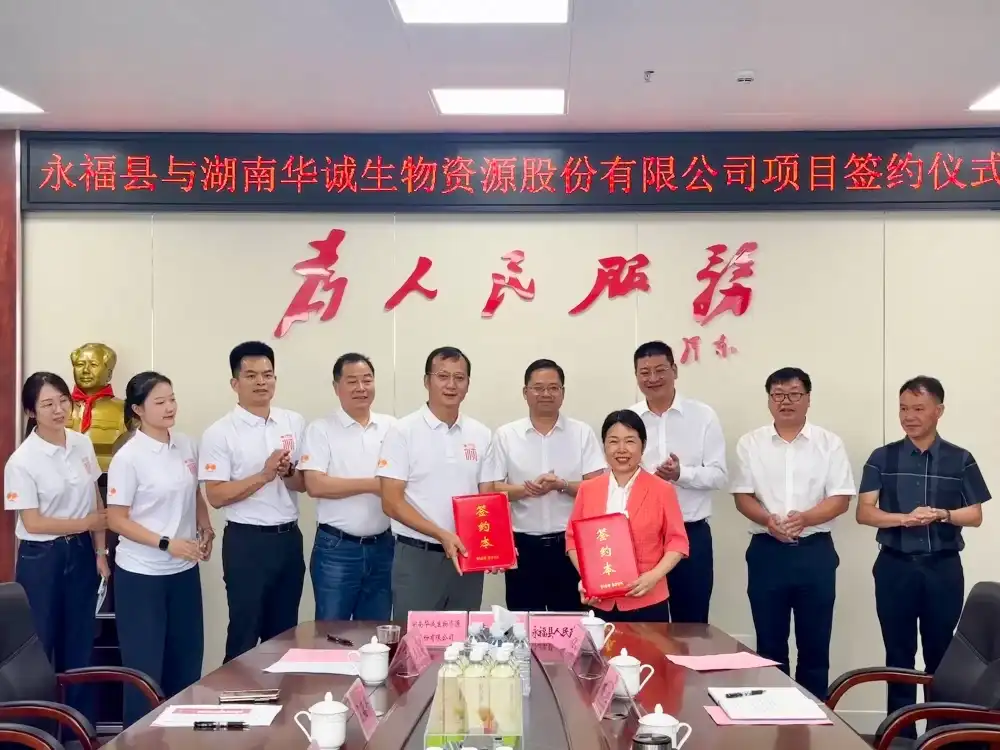
Huacheng Bio: Building Momentum for the Future, Sharing New Beginnings
Huacheng Bio has officially entered a new chapter with the formal establishment of its new...
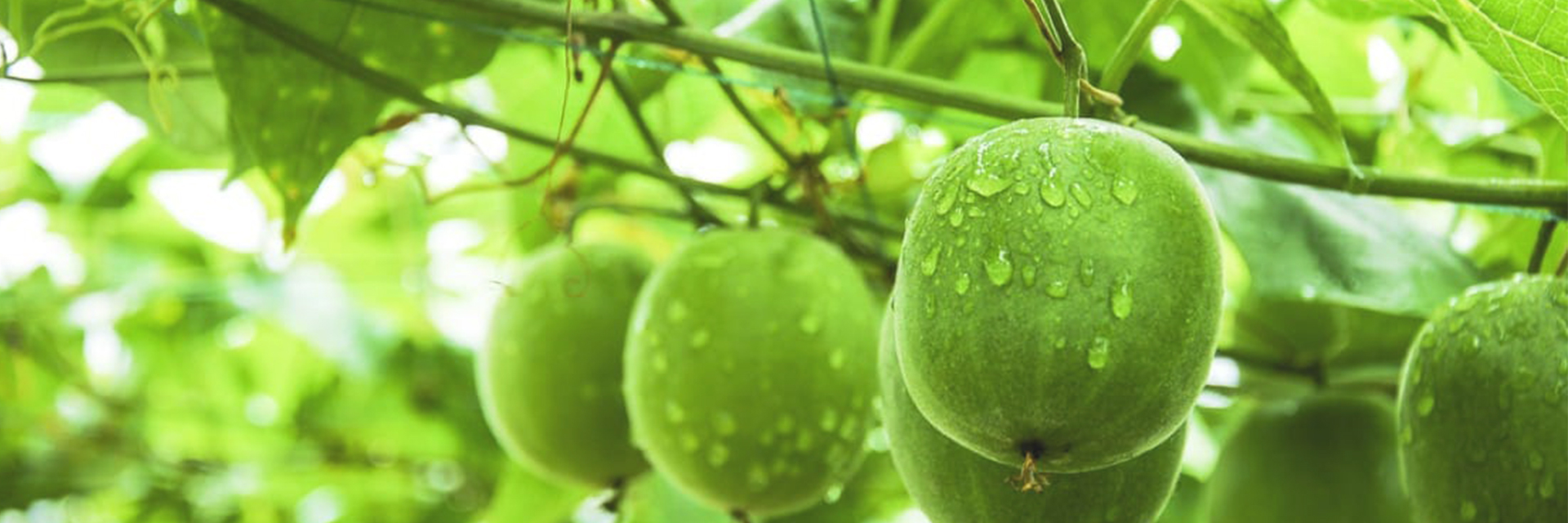
China Monk Fruit Sweetener Monk Fruit | Huacheng Biotech
Monk fruit sweetener has moved from a niche regional ingredient to a globally sought-after zero-calorie option, and much of the supply chain traces back to China’s southern growing regions. At Hunan Huacheng Biotech, we focus on monk fruit extract—handling everything from raw fruit sourcing to finished sweetener production. Our facility runs on a tightly integrated industry chain, which keeps costs in check while meeting technical specs for food and beverage manufacturers. With certifications including FDA, HACCP, GMP, CE, and BRC, the operation is built for consistent quality at scale. Whether you need standard mogroside blends or custom formulations, the team works directly with clients to align on purity and application requirements.
Technical Detail
Huacheng Biotech produces monk fruit sweetener under a model that emphasizes control over raw materials and processing. The company maintains long-term relationships with growers in key monk fruit cultivation zones, which helps stabilize both supply and active ingredient content. Inside the facility, extraction and purification lines follow GMP guidelines, with in-house labs running routine assays on mogroside V levels and microbial counts. These steps tie back to a portfolio of certifications: FDA registration for U.S. exports, HACCP hazard management, GMP compliance, CE marking for European equipment standards, and BRC global food safety certification. Such a spread of credentials means the sweetener can move into multiple regulatory environments without extra qualification rounds. The industrial setup also reflects a volume-oriented approach. Multiple production lines, backed by dedicated warehousing and logistics partnerships, enable shipment sizes from trial batches to multi-ton container loads. Research staff work on both yield improvement and application troubleshooting, so clients can get technical notes on solubility, heat stability, or synergies with other sweeteners. While monk fruit sweetener pricing fluctuates with harvest conditions, the in-house chain cuts out middlemen, helping keep costs predictable. For buyers comparing suppliers, the combination of backward-integrated farming, certified processing, and routine quality documentation tends to reduce sourcing risks.
News
Huacheng Bio has officially entered a new chapter with the formal establishment of its new...
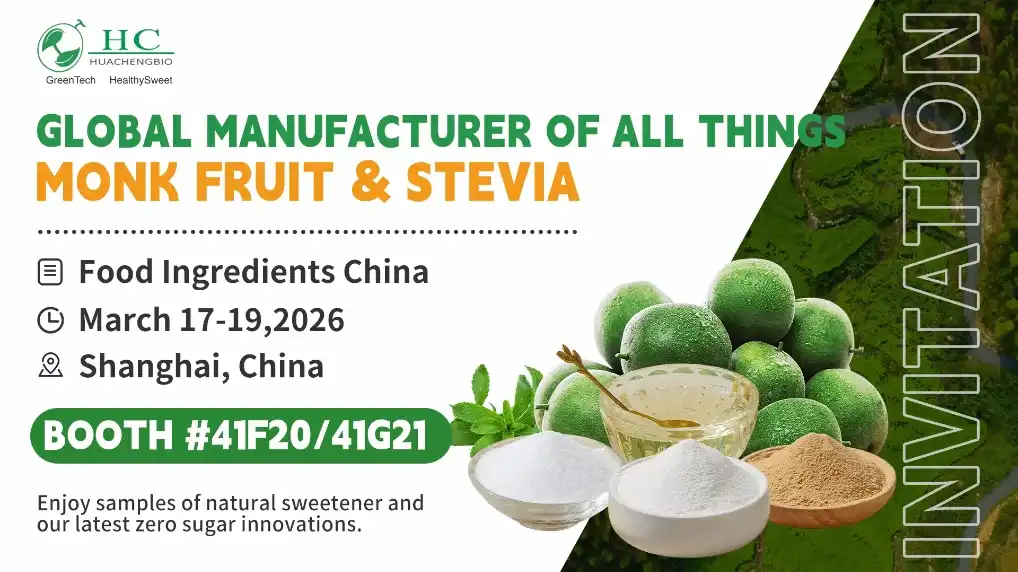
Join Us at Food Ingredients China (FIC) 2026! March 17–19, 2026 Hall 4.1 | Booth...

As a global leader in natural, health‑forward sweetening solutions, we will be present at ...
Products
FAQ
The site operates under FDA registration, HACCP, GMP, CE, and BRC certifications. Third-party audits verify these annually, covering everything from hygiene and traceability to equipment safety and food defense protocols. If your local market requires additional paperwork, the regulatory team can provide existing dossiers or support new filings.
We contract directly with growers in major producing areas of China. Fresh monk fruit goes to our extraction facility under controlled transport conditions. This cuts out intermediate traders and gives us real-time visibility on raw material quality—important when customers need to verify purity or pesticide residue limits.
It depends on the product grade. For standard powder blends, small trial orders of a few kilograms are possible. For liquid concentrates or custom granulation, the MOQ rises because of setup costs. The sales team works out flexible terms based on your development stage and annual volume projections.
Yes. Each batch comes with a certificate of analysis listing mogroside V content, moisture, ash, heavy metals, and microbiological results. If you need additional data—such as particle size distribution, dissolution curves, or stability under heat—the applications lab can run targeted studies.
We maintain buffer stocks of concentrate and negotiate long-term contracts with growers to smooth out seasonal spikes. Because we control extraction costs ourselves, we are often able to quote fixed windows of 3–6 months. For larger annual contracts, we can structure price adjustment clauses tied to documented raw material indexes.
Share your product type, target capacity, and application requirements. Our team can review the details and recommend a practical next step.