
 EN
EN EN
EN CN
CN ES
ES PT
PT SV
SV DE
DE TR
TR FR
FR AR
AR BG
BG HR
HR CS
CS DA
DA NL
NL FI
FI EL
EL HI
HI IT
IT JA
JA KO
KO NO
NO PL
PL RO
RO RU
RU CA
CA TL
TL IW
IW ID
ID LV
LV LT
LT SR
SR SK
SK SL
SL UK
UK VI
VI SQ
SQ ET
ET GL
GL HU
HU MT
MT TH
TH FA
FA AF
AF MS
MS GA
GA BE
BE UZ
UZ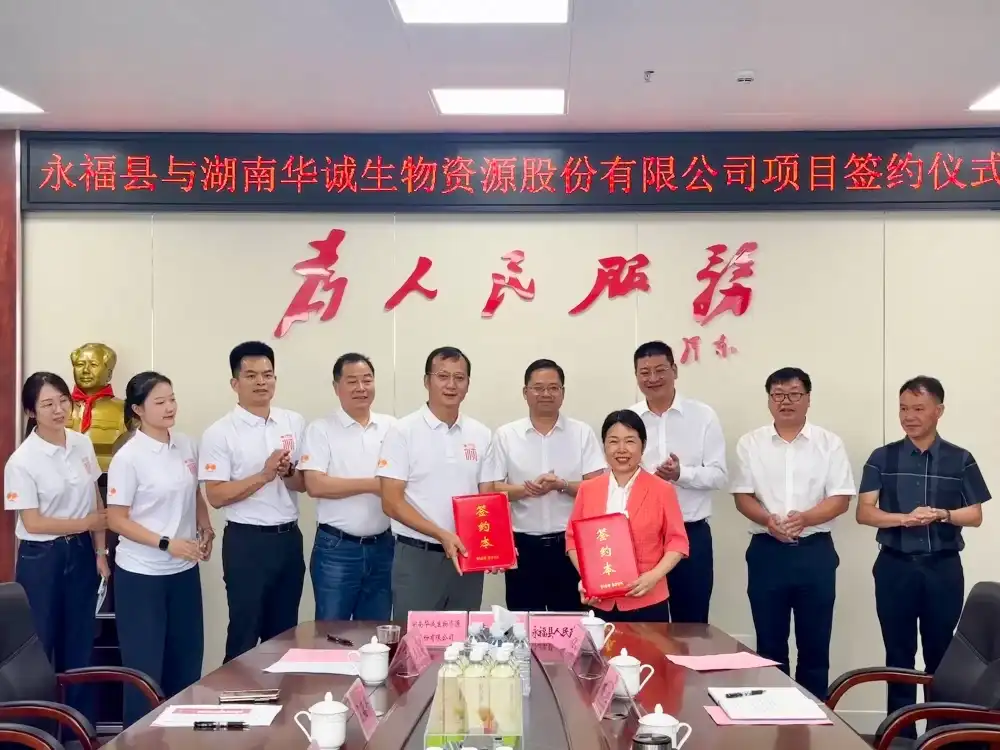
Huacheng Bio: Building Momentum for the Future, Sharing New Beginnings
Huacheng Bio has officially entered a new chapter with the formal establishment of its new...
China Sweet Tea Extract: Cost-Effective Natural Sweetener
Sourcing sweet tea extract at scale without the premium mark-up often requires looking beyond brand labels and into the supply chain itself. Huacheng Biotech manages the entire chain—from contracted Rubus suavissimus plantations in South China to final extraction in a GMP-compliant facility. This vertical integration lets us offer China sweet tea extract at prices that reflect raw material cost rather than middleman margins. The leaves are processed through water-based extraction and purified with food-grade ethanol, yielding a powder that retains the plant’s inherent sweetness from rubusoside. Each batch goes through heavy metal, pesticide, and microbiological screening under our HACCP plan, and the site holds BRC, CE, and FDA registrations. With production capacity handling over 1,000 metric tons of dry leaves annually, we maintain consistent supply for formulators of beverages, dairy alternatives, and functional foods. No artificial aftertaste, just a zero-calorie sweetener that works in a broad pH and temperature range.
Technical Detail
The Huacheng Biotech sweet tea extract is derived from the leaves of Rubus suavissimus, a perennial shrub native to Guizhou and Guangxi provinces. The key sweet component, rubusoside, is a diterpene glycoside with a sweetness intensity roughly 200 times that of sucrose. Our standard extract is offered at 80%–95% rubusoside purity, but we also supply lower concentrations for cost-sensitive projects. The powder is off-white to light yellow, fully water-soluble, and stable under typical food processing conditions—pasteurization, UHT, and acidic beverages up to pH 3. Because rubusoside has no fermentable carbohydrates, it fits clean-label and sugar-free positioning while delivering clean sweetness without the bitter or licorice notes sometimes found with stevia. Huacheng’s industry chain begins with long-term grower agreements covering over 500 hectares of certified farmland. Raw leaves are harvested between May and September, then dried and stored in climate-controlled warehouses before extraction. The extraction line uses only water and ethanol, followed by ion exchange resin purification, concentration, and spray drying. The facility operates under ISO 22000 food safety management and is audited annually for BRC, GMP, HACCP, and FDA compliance. This scale and integration let us offer China sweet tea extract at a budget-friendly price point while meeting the documentation demands of multinational buyers. Whether you need a single drum for prototyping or a full container load, the same batch-level quality applies. Every shipment comes with a certificate of analysis covering appearance, rubusoside assay (HPLC), loss on drying, ash, heavy metals (Pb, As, Cd, Hg), residual pesticides, and microbiological counts. We also provide stability data and formulation support if you are adapting an existing recipe to replace artificial sweeteners or high-intensity sweeteners that may not align with consumer preferences.
News
Huacheng Bio has officially entered a new chapter with the formal establishment of its new...
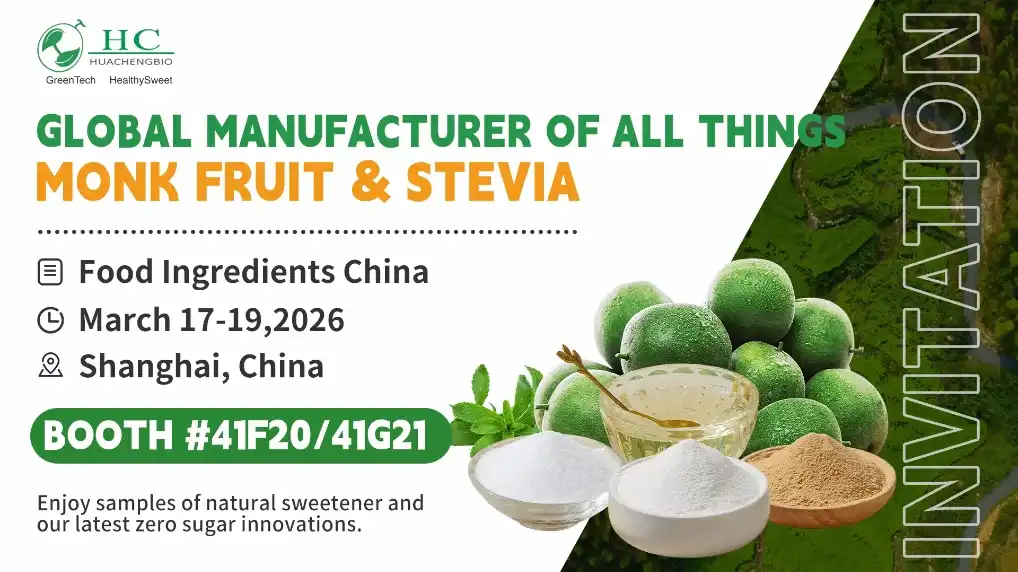
Join Us at Food Ingredients China (FIC) 2026! March 17–19, 2026 Hall 4.1 | Booth...

As a global leader in natural, health‑forward sweetening solutions, we will be present at ...
Products
FAQ
Our standard specification is 80%–95% rubusoside by HPLC. We can also supply 60% or 98% if your formula requires a different sweetness profile. Each batch is tested and the actual content appears on the COA.
Yes, the powder dissolves completely and remains clear in solution at 0.01%–0.1% usage levels. It withstands hot-fill and UHT processing and stays stable in pH 3–7 without precipitation.
Sweet tea extract has a faster sweetness onset and less lingering aftertaste than steviol glycosides. Compared to monk fruit, it is more heat-stable and generally more cost-effective per unit of sweetness. It also lacks the caramel notes sometimes associated with monk fruit, making it a neutral background for fruit flavors.
Our facility is BRC, GMP, HACCP, FDA, and CE certified. We can supply a vendor qualification packet including plant audit reports, halal/kosher certificates if needed, and full batch documentation. The paperwork matches what major CPG companies require.
Absolutely. We usually ship 100–500 g samples via courier. Let us know your project details and we can select a batch that matches your target specs. Lead time for regular orders is typically 2–3 weeks from confirmation.
Share your product type, target capacity, and application requirements. Our team can review the details and recommend a practical next step.