
 EN
EN EN
EN CN
CN ES
ES PT
PT SV
SV DE
DE TR
TR FR
FR AR
AR BG
BG HR
HR CS
CS DA
DA NL
NL FI
FI EL
EL HI
HI IT
IT JA
JA KO
KO NO
NO PL
PL RO
RO RU
RU CA
CA TL
TL IW
IW ID
ID LV
LV LT
LT SR
SR SK
SK SL
SL UK
UK VI
VI SQ
SQ ET
ET GL
GL HU
HU MT
MT TH
TH FA
FA AF
AF MS
MS GA
GA BE
BE UZ
UZ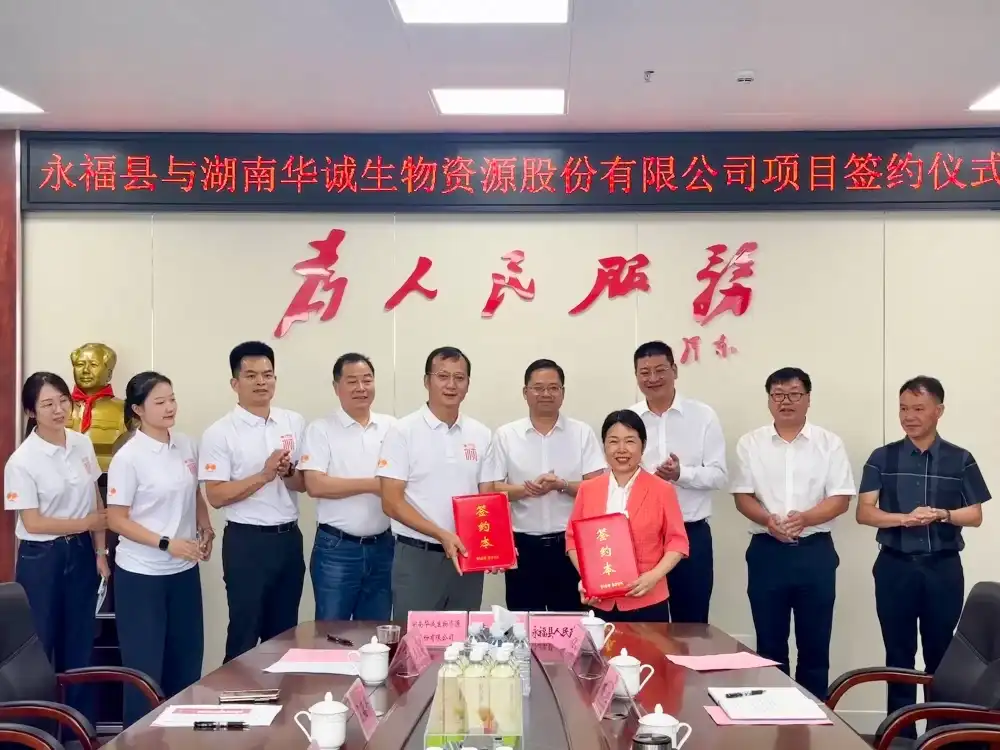
Huacheng Bio: Building Momentum for the Future, Sharing New Beginnings
Huacheng Bio has officially entered a new chapter with the formal establishment of its new...
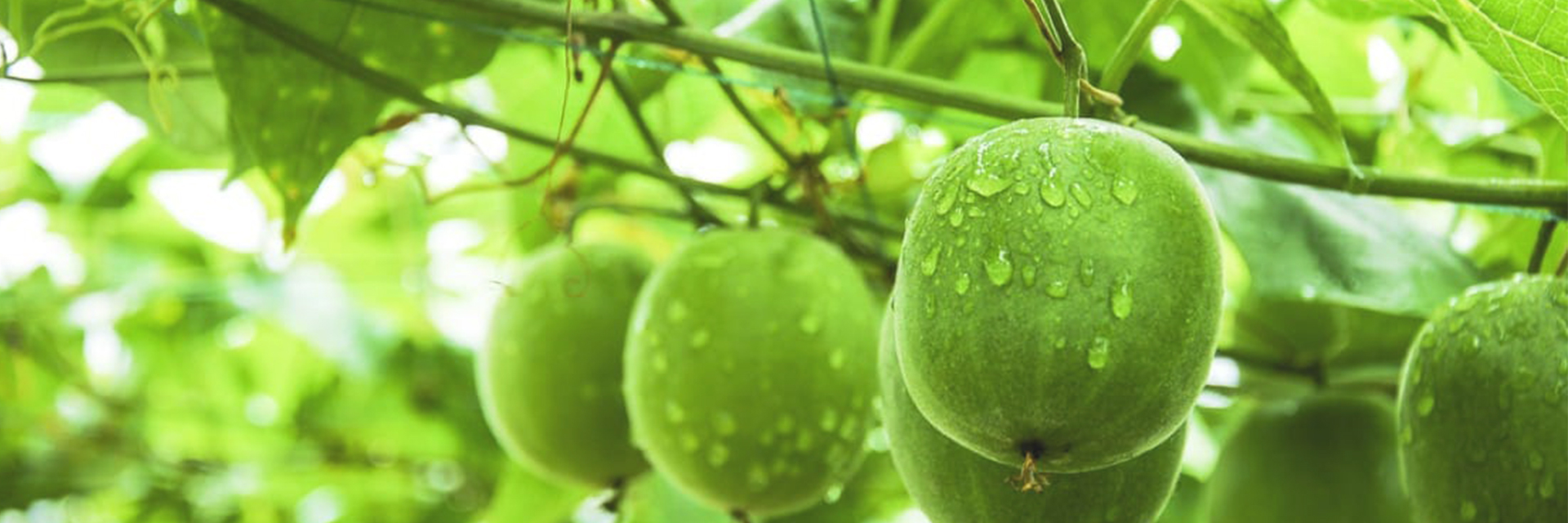
Monk Fruit Sweetener Powder – Data-Driven Sweetness
Most formulators assume that a tighter supply chain means higher costs. Hunan Huacheng Biotech flips that assumption with monk fruit sweetener powder that carries the same technical rigor as premium lines—just at a price point shaped by direct orchard-to-extract logistics. Our monk fruit extract comes from a vertically coordinated industry chain in China’s primary growing region, cutting out intermediaries that typically inflate input costs. The result is a powder with consistent mogroside profiles, zero calories, and sweetness roughly 150–200 times that of sugar, without the bitter aftertaste older extraction methods leave behind. For developers working on RTD beverages, bakery mixes, or tabletop blends where every cent per serving counts, this shifts the math. Achieving clean-label, sugar-free claims stops being a luxury and becomes a line-item decision backed by batch-specific CoA documentation. We don’t just promise affordable natural sweetening; we make it traceable from planting to shipment, so you can verify what’s on the spec sheet is what lands in your production run.
Technical Detail
This monk fruit sweetener powder is built for applications that demand zero-calorie sweetness without artificial ingredients—think protein shakes, flavored sparkling water, dry blend formulations, and low-sugar confectionery. Huacheng Biotech manufactures the powder under FDA-registered, HACCP, and BRC-compliant facilities, with GMP protocols governing every batch. The active compounds, mogrosides, are extracted using water-based processes that avoid organic solvent residues, yielding a clean taste profile that pairs well with polyols or soluble fiber when bulking is needed. The technical edge comes from our industry chain control. By managing planting bases, fresh-fruit handling, and extraction under one operational umbrella, we reduce degradation that occurs when raw monk fruit sits in transit. Mono-groside content—particularly Mogroside V—is monitored via HPLC, with typical batches ranging 40% to 80% purity depending on grade. This means you can specify a sweetness factor that aligns with your cost structure: higher purity reduces inclusion rate, lower purity works for blends where you’re layering sweeteners. Beyond standard powder, we offer micronized variants for better dispersion in dry mixes and liquid-compatible solubility profiles upon request. Packaging options from 25 kg drums to pilot-scale shippers let you test without overcommitting. Documentation includes allergen statements, non-GMO confirmation, and heavy metal test summaries. Our technical team can also provide comparative sweetness curves against sugar and stevia so your R&D doesn’t have to start from scratch. If your current monk fruit supplier quotes lead times that hold up your NPD calendar, our direct logistics setup often ships within 15 working days from order confirmation.
News
Huacheng Bio has officially entered a new chapter with the formal establishment of its new...
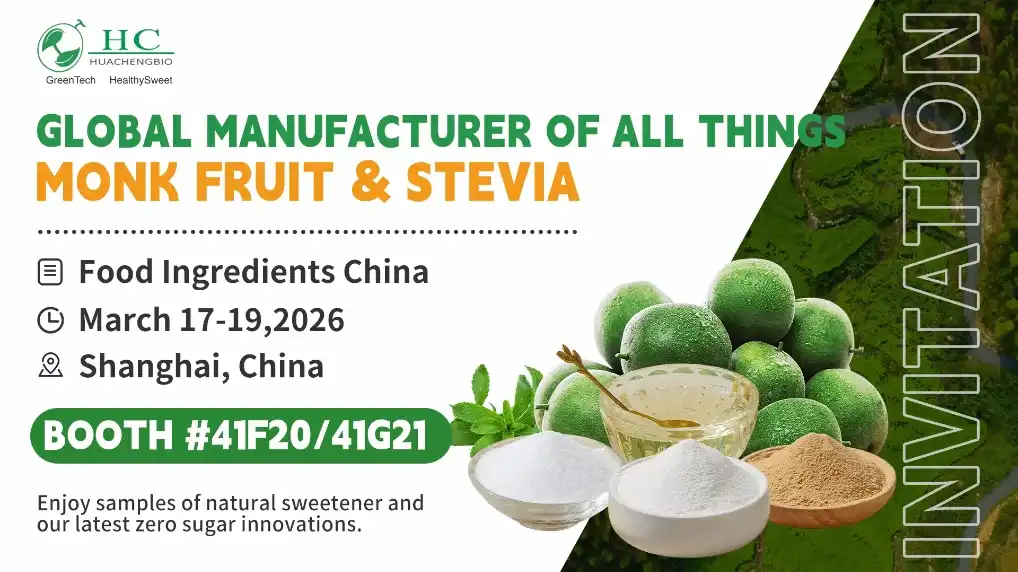
Join Us at Food Ingredients China (FIC) 2026! March 17–19, 2026 Hall 4.1 | Booth...

As a global leader in natural, health‑forward sweetening solutions, we will be present at ...
Products
FAQ
Our standard grade typically runs between 40% and 50% mogroside V. If you need higher potency—say 70% or 80%—we can provide a custom specification. The certificate of analysis that ships with each batch will list the exact HPLC result so you can plug the right sweetness factor into your formulation.
Not directly, because monk fruit sweetener powder is about 150–200 times sweeter than sugar and provides no bulk. You’ll usually combine it with a bulking agent like erythritol or inulin to approximate the sweetness and mouthfeel of sucrose. Our technical team can share starting-point ratios if you tell us the target sugar reduction.
Huacheng Biotech’s monk fruit powder is produced under FDA registration, HACCP, GMP, and BRC certifications. We maintain CE compliance for relevant markets. Each shipment includes the applicable certification documentation, along with a statement that the product is non-GMO and free from major allergens.
We control the supply chain from planting through extraction. By owning or partnering with farms in China’s main monk fruit growing region, we avoid middlemen that typically mark up raw fruit. This integrated model lets us hold acceptable margins while offering per-kilo costs that often come in below what traders quote for equivalent purity. You see the same CoA data you’d expect from a premium supplier.
Yes. We ship small-scale samples—usually 100 g to 500 g—free of charge, with freight collect. This lets your team run sensory, solubility, and stability tests before you commit to a full production lot. Just request through our contact page and reference your intended application.
Share your product type, target capacity, and application requirements. Our team can review the details and recommend a practical next step.