 EN
EN EN
EN CN
CN ES
ES PT
PT SV
SV DE
DE TR
TR FR
FR AR
AR BG
BG HR
HR CS
CS DA
DA NL
NL FI
FI EL
EL HI
HI IT
IT JA
JA KO
KO NO
NO PL
PL RO
RO RU
RU CA
CA TL
TL IW
IW ID
ID LV
LV LT
LT SR
SR SK
SK SL
SL UK
UK VI
VI SQ
SQ ET
ET GL
GL HU
HU MT
MT TH
TH FA
FA AF
AF MS
MS GA
GA BE
BE UZ
UZ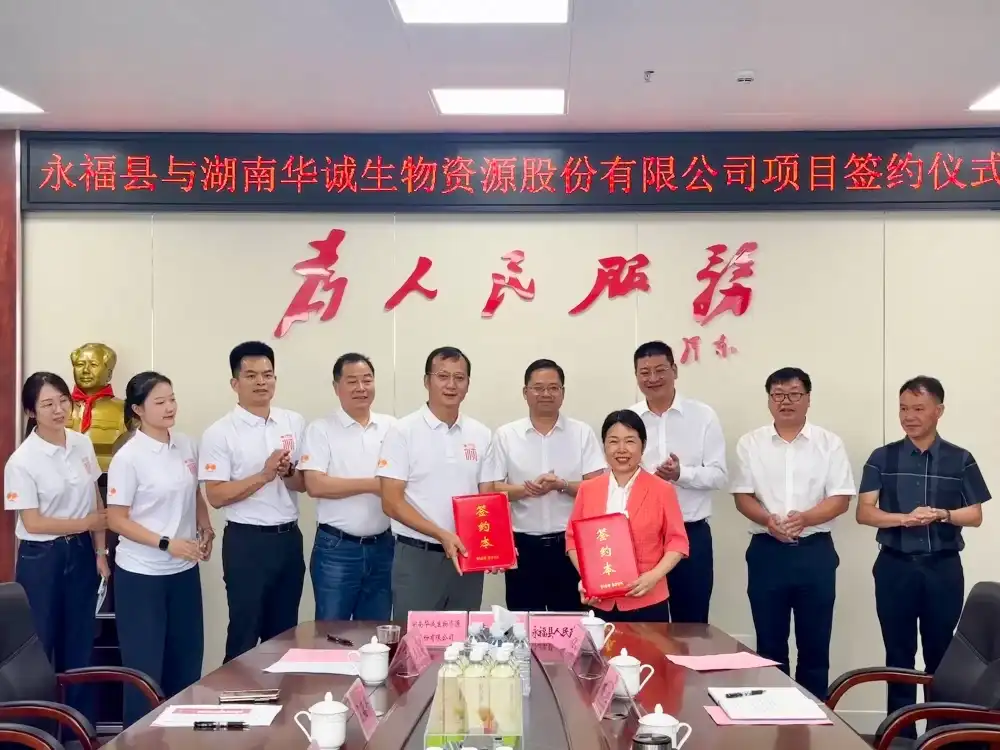
Huacheng Bio: Building Momentum for the Future, Sharing New Beginnings
Huacheng Bio has officially entered a new chapter with the formal establishment of its new...
Pure Bilberry Extract: What to Check Before You Source
When formulating an eye health supplement, the anthocyanin content in your bilberry extract doesn’t just matter—it’s the whole formula. A 25% powder behaves very differently in a capsule blend than a 2.5% powder. Yet matching the certificate of analysis to the actual material is still a common frustration for cost-sensitive manufacturers. Hunan Huacheng Biotech supplies standardized pure bilberry extract (Vaccinium myrtillus) with a practical, no-frills approach. We control the chain from berry sourcing to extraction under our FDA-registered, BRC-certified facility, which cuts out intermediary markups. The result is a specification you can count on—checked by HPLC and GMP protocols—without paying a brand premium. Whether you need powder for tablets, capsules, or functional drinks, we can adjust the anthocyanin level to your label target, so you aren’t left overspending on over-engineered ingredient claims.
Technical Detail
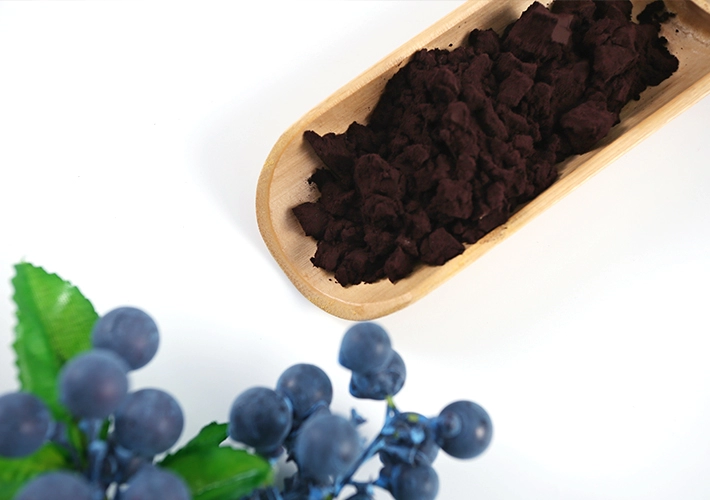
Pure bilberry extract, derived from European Vaccinium myrtillus, owes its vision-support reputation to anthocyanosides—dark-purple flavonoids. For formulators, the real-world question often isn’t whether bilberry works, but whether the powder mixes evenly, hits a declared potency, and stays within a tight ingredient budget. At Hunan Huacheng Biotech, we focus on standardization without unnecessary frills. Our bilberry extract is typically supplied at 25% anthocyanins (UV), verified by in-house HPLC. Extraction uses a water-ethanol system, avoiding harsh solvents that can complicate clean-label positioning. The liquid concentrate is spray-dried onto a maltodextrin carrier to improve flow and reduce clumping—a practical benefit for high-speed encapsulation lines. Sieve analysis data can be provided, helping you predict blend uniformity in premises. Because we manage the entire chain—from berry collection in Poland and Finland to final QA release—we can hold tighter specification windows than typical spot-market powders. Every batch ships with a straightforward COA: no vague claims, just the data your QC team needs. Applications span eye health supplements, joint care formulas, and powdered drink sticks where purple color can also serve as a visual marker of efficacy. For more demanding projects, we can discuss particle size adjustments, organic-grade raw material, or custom anthocyanin ratios. This approach is built for brands that want a reliable, budget-friendly bilberry ingredient—one where the primary value lies in consistency, not packaging.
News
Huacheng Bio has officially entered a new chapter with the formal establishment of its new...
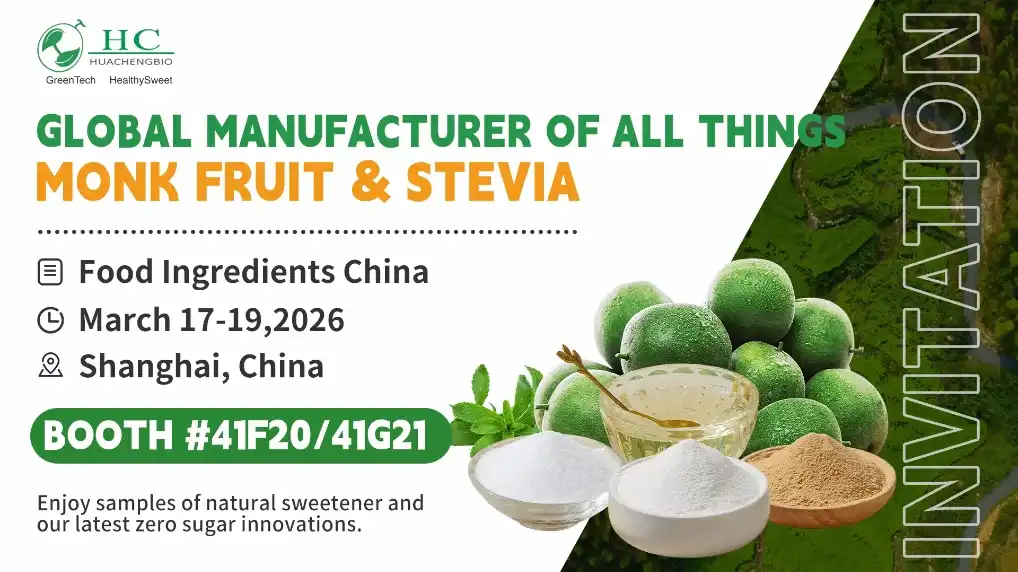
Join Us at Food Ingredients China (FIC) 2026! March 17–19, 2026 Hall 4.1 | Booth...

As a global leader in natural, health‑forward sweetening solutions, we will be present at ...
Products
FAQ
Most suppliers report a UV spectrophotometric value, but HPLC is the more specific method. Ask for a typical HPLC chromatogram and check the area percentage of identified anthocyanins. A respectable 25% UV powder often shows around 15–18% total anthocyanins by HPLC, depending on the calibration standards used.
Our standard grade uses a maltodextrin carrier, which gives it moderate flow properties suitable for semi-automatic machines. If you’re running high-speed automatic encapsulators, we can adjust the carrier or provide a granulated version. Sieve data on D10, D50, and D90 is available with batch documentation.
Yes. We can offer a low-carrier version, but the powder becomes more hygroscopic. We typically recommend it for blends where the bilberry portion is pre-mixed with other dry ingredients immediately. MOQs for non-standard carriers may be higher depending on the run.
They come from different Vaccinium species. Bilberry (V. myrtillus) has anthocyanins distributed throughout the flesh and skin, leading to a higher total anthocyanin content in whole-fruit extracts. Blueberry (V. corymbosum) has anthocyanins only in the skin, so extracts are less potent and often more expensive per active unit. For eye health formulas, bilberry remains the more studied and economical option.
Our typical MOQ for standard 25% powder is 25 kg. Lead time is around 7–10 working days after order confirmation, depending on stock availability. For larger custom runs, plan for 3–4 weeks including specification alignment and pilot testing.
Share your product type, target capacity, and application requirements. Our team can review the details and recommend a practical next step.