
 EN
EN EN
EN CN
CN ES
ES PT
PT SV
SV DE
DE TR
TR FR
FR AR
AR BG
BG HR
HR CS
CS DA
DA NL
NL FI
FI EL
EL HI
HI IT
IT JA
JA KO
KO NO
NO PL
PL RO
RO RU
RU CA
CA TL
TL IW
IW ID
ID LV
LV LT
LT SR
SR SK
SK SL
SL UK
UK VI
VI SQ
SQ ET
ET GL
GL HU
HU MT
MT TH
TH FA
FA AF
AF MS
MS GA
GA BE
BE UZ
UZ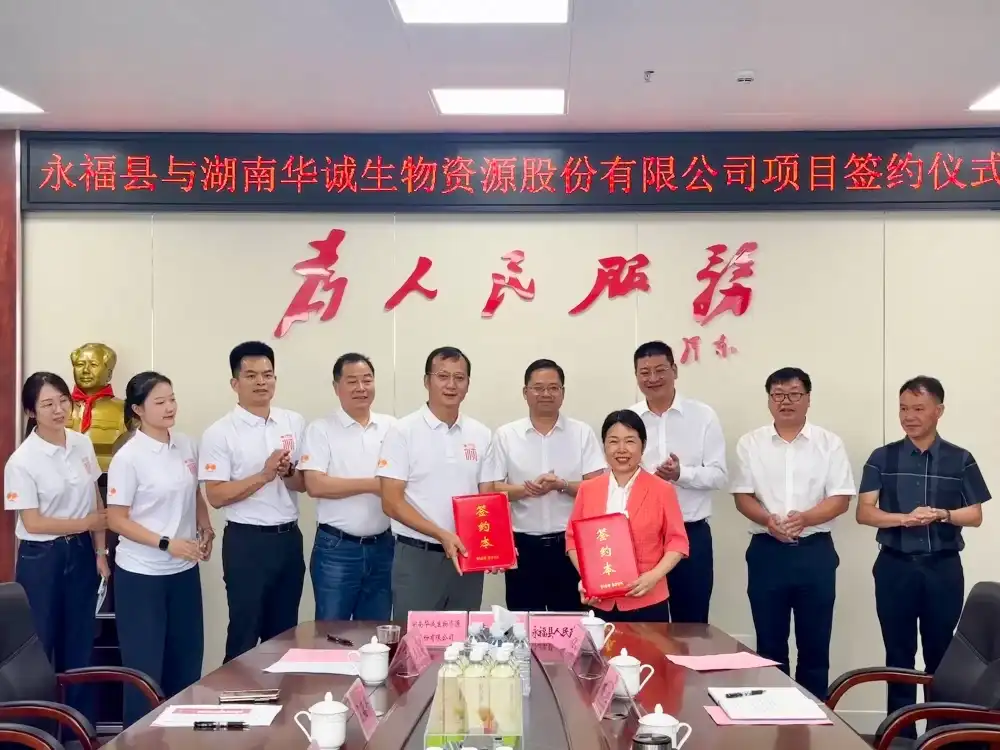
Huacheng Bio: Building Momentum for the Future, Sharing New Beginnings
Huacheng Bio has officially entered a new chapter with the formal establishment of its new...
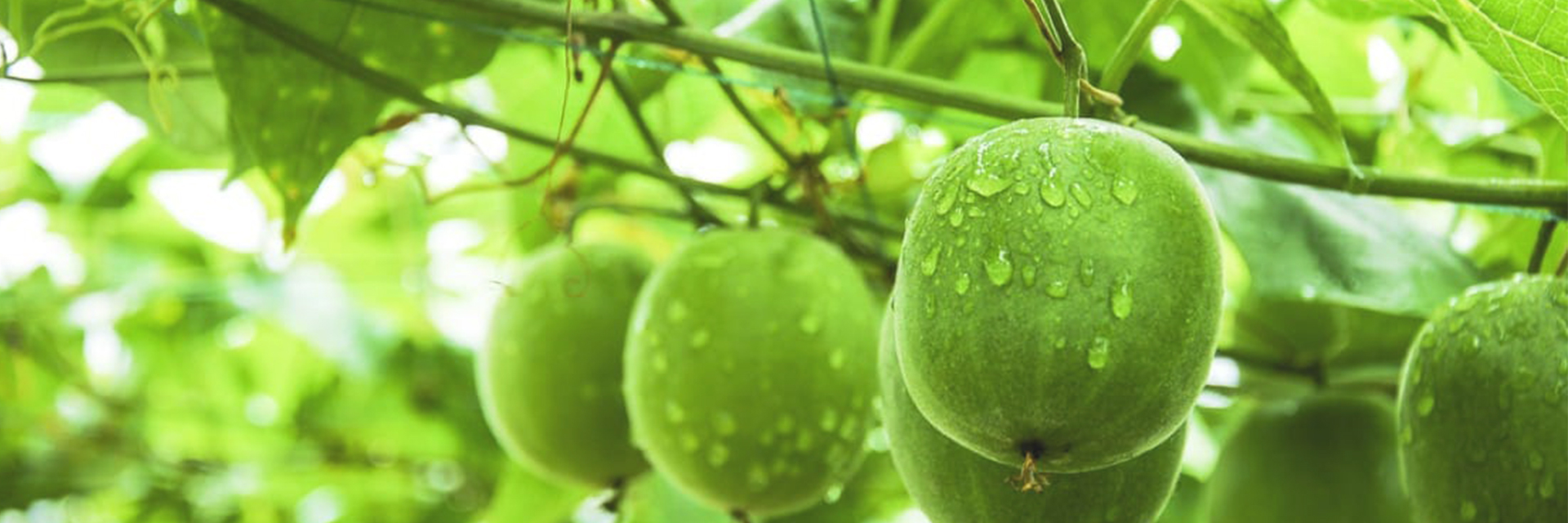
Sambucus Black Elderberry Extract: Extraction Methods and Specifications
Elderberry supplements sit in most medicine cabinets for a reason. The dark purple Sambucus nigra berries pack a high anthocyanin count, and processors now target those pigments for standardized extracts. At Hunan Huacheng, we run membrane filtration and low-temperature concentration to trap the polyphenols without cooking off the volatiles. The result runs around 5–25% anthocyanins on demand, though most bulk orders settle at 10% for a balance of potency and flowability. Industry chains here cover from berry sourcing in Eastern Europe to spray-dried powder in Changsha, which cuts out middlemen for buyers watching their ingredient budgets. We track lot-level solvent residues and heavy metals under EU limits, not because a regulation forces it every time, but because a failed test abroad costs more than a clean run. That practical focus makes the extract fit for capsules, gummies, and immune-focused powdered drinks without formulation headaches. If you need a particular extract ratio or a microencapsulated version for stability, the team adjusts parameters within existing lines instead of starting R&D from scratch.
Technical Detail
Hunan Huacheng supplies Sambucus black elderberry extract in bulk, built around a chain that starts with frozen berries and ends with a fine powder in sealed aluminium bags. The plant we operate in Changsha uses water-ethanol extraction at controlled temperatures, then passes the liquor through a series of ultrafiltration and nanofiltration steps. That process concentrates anthocyanins while stripping out sugars and pectin, which would otherwise make the powder sticky and hard to handle. Standard specs include anthocyanin content by UV-VIS, loss on drying below 5%, and particle size 80 mesh. We can push anthocyanins to 25% or pull them back to 5% depending on your label claim and cost target. For gummies, we often suggest a lower strength with a maltodextrin carrier because it disperses cleanly in syrup. For capsules, a 10% powder mixed with silica flows well through most filling machines. The extract is not just a commodity here; we run HACCP and BRC audits regularly, with documentation ready for FDA submissions. That matters when you sell into markets where a missing chain-of-custody record stalls a shipment. On the technical side, we monitor pH during extraction to minimize degradation of cyanidin-3-glucoside. The powder shelves at room temperature for 24 months if kept dry, based on forced degradation studies we do internally. Because we handle monk fruit extract as our flagship, the same QA system covers elderberry batches, so residual solvent and microbial limits mirror a sweetener-grade facility, not a loosely run herb shop. Bulk pricing scales with order volume, and we pool shipments from multiple customers to fill a container, which helps smaller brands access consistent material without paying for air freight. If your R&D team wants a sample with a specific anthocyanin profile or a custom granulation, we send a 100-gram sachet along with the COA within a week.
News
Huacheng Bio has officially entered a new chapter with the formal establishment of its new...
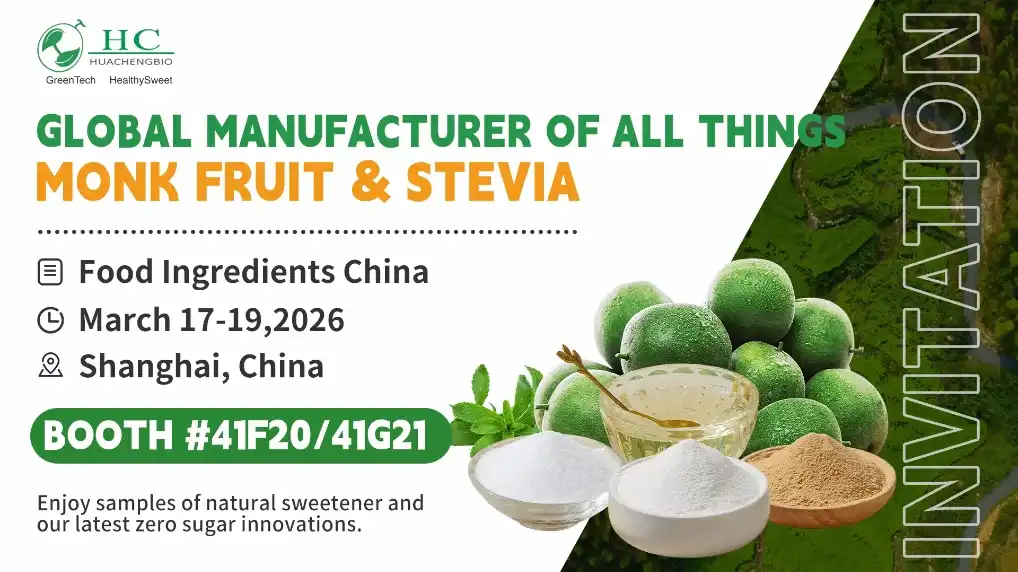
Join Us at Food Ingredients China (FIC) 2026! March 17–19, 2026 Hall 4.1 | Booth...

As a global leader in natural, health‑forward sweetening solutions, we will be present at ...
Products
FAQ
We stock a 10% anthocyanin (by UV-VIS) grade as the standard. Custom orders can range from 5% to 25%. Higher strengths get hygroscopic quickly, so we advise clients on handling and packaging.
The berries go through a hot water and ethanol extraction, and we add a pasteurization step before concentration. Regular checks under HACCP keep TPC and yeast/mold within typical dietary supplement limits, usually below 1000 CFU/g for TPC.
Our current bulk supply is conventional. Organic material is possible with a lead time and minimum volume commitment, but availability depends on the crop season and supplier certification status.
Yes, the water-soluble powder mixes into syrup easily. We recommend a grade with maltodextrin carrier for gummies because it reduces clumping. The flavor profile is tart, so most formulators pair it with a sweetener like monk fruit extract or sucrose.
A COA covering anthocyanin content, moisture, heavy metals, and microbial limits. We also supply allergen statements, GMO-free declarations, and can arrange third-party testing if you need an external lab report.
Share your product type, target capacity, and application requirements. Our team can review the details and recommend a practical next step.