
 EN
EN EN
EN CN
CN ES
ES PT
PT SV
SV DE
DE TR
TR FR
FR AR
AR BG
BG HR
HR CS
CS DA
DA NL
NL FI
FI EL
EL HI
HI IT
IT JA
JA KO
KO NO
NO PL
PL RO
RO RU
RU CA
CA TL
TL IW
IW ID
ID LV
LV LT
LT SR
SR SK
SK SL
SL UK
UK VI
VI SQ
SQ ET
ET GL
GL HU
HU MT
MT TH
TH FA
FA AF
AF MS
MS GA
GA BE
BE UZ
UZ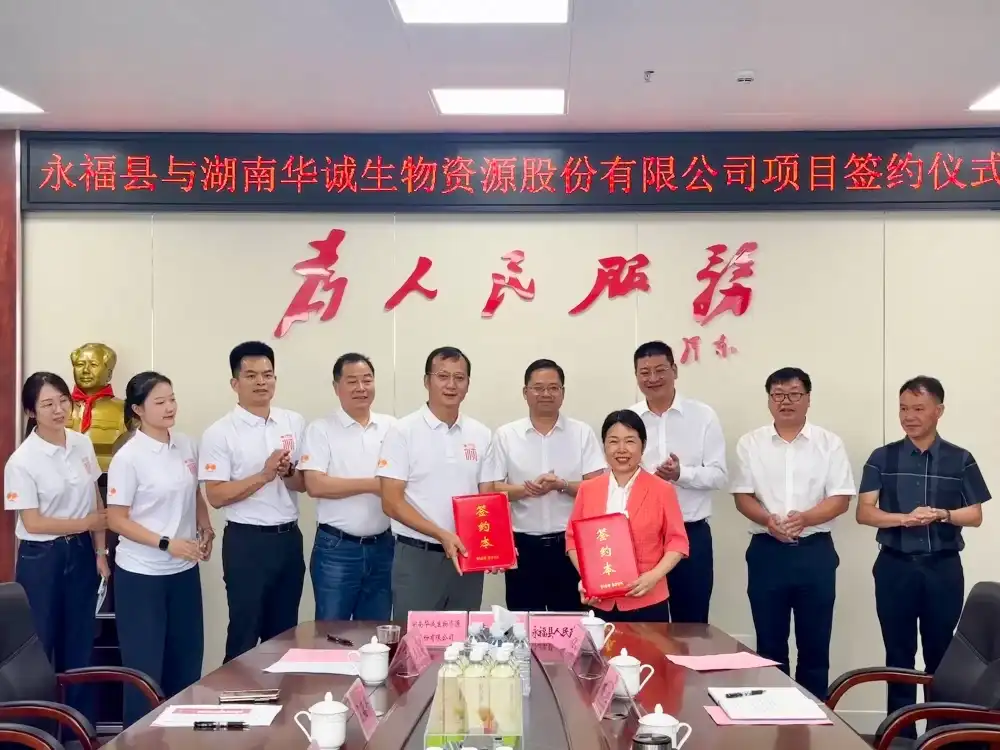
Huacheng Bio: Building Momentum for the Future, Sharing New Beginnings
Huacheng Bio has officially entered a new chapter with the formal establishment of its new...
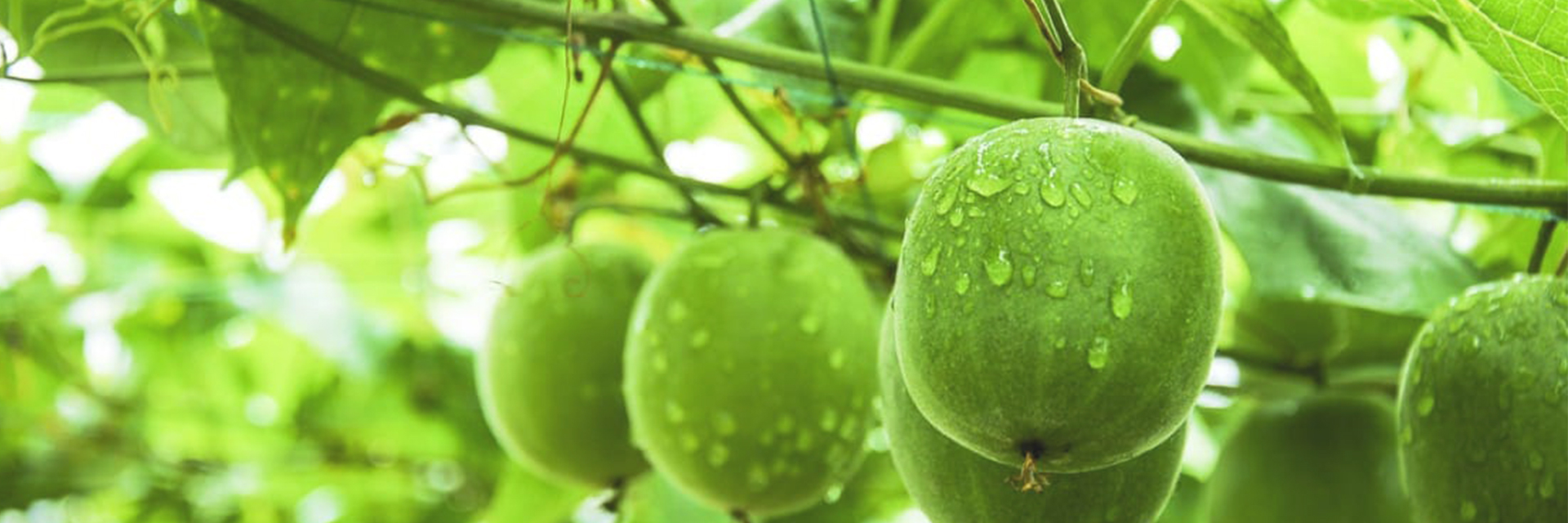
Sweet Tea Vine Leaf Extract: Technical Sweetening Without the Premium Cost
Most formulators looking at natural high-intensity sweeteners end up balancing between stevia’s aftertaste and pricey mogrosides. Sweet tea vine leaf extract sits in a practical middle ground—it’s about 200 times sweeter than sugar, costs less to produce, and doesn’t demand a formulation overhaul. Hunan Huacheng Biotech focuses on exactly that intersection: extracting rubusoside from Rubus suavissimus with enough consistency to let you plug it into teas, sodas, or baked goods without switching suppliers every quarter.
Technical Detail
The extract centers on rubusoside, a steviol-like glycoside with a clean sweetness onset and minimal bitterness when compared to Rebaudioside A. Typical powder assays range around 80–95% total glycosides, with solubility exceeding 20% w/v at room temperature, which makes it straightforward to work into concentrates and ready-to-drink formulations. Heat stability holds up through pasteurization and tunnel baking, so taste panels rarely flag changes in sweetness intensity. From a cost perspective, the numbers tilt in your favor because the raw leaf yield is high and our extraction lines are built around lean manufacturing—fewer polishing steps, shorter cycle times, and no unnecessary purification that adds overhead. Regulatory documentation covers FDA GRAS self-affirmation pathway, and the facility runs under HACCP and GMP systems that third-party audits like BRC confirm annually. Applications span more than just drinks: snack bars, plant-based yogurts, and sugar-free tabletop blends all test well with the powder version. We also ship a liquid concentrate for manufacturers who prefer to dose by pump rather than weigh powder. If your project runs on a predetermined cost-in-use target, it’s worth pulling a side-by-side comparison with stevia and monk fruit—the price delta often surprises procurement teams.
News
Huacheng Bio has officially entered a new chapter with the formal establishment of its new...
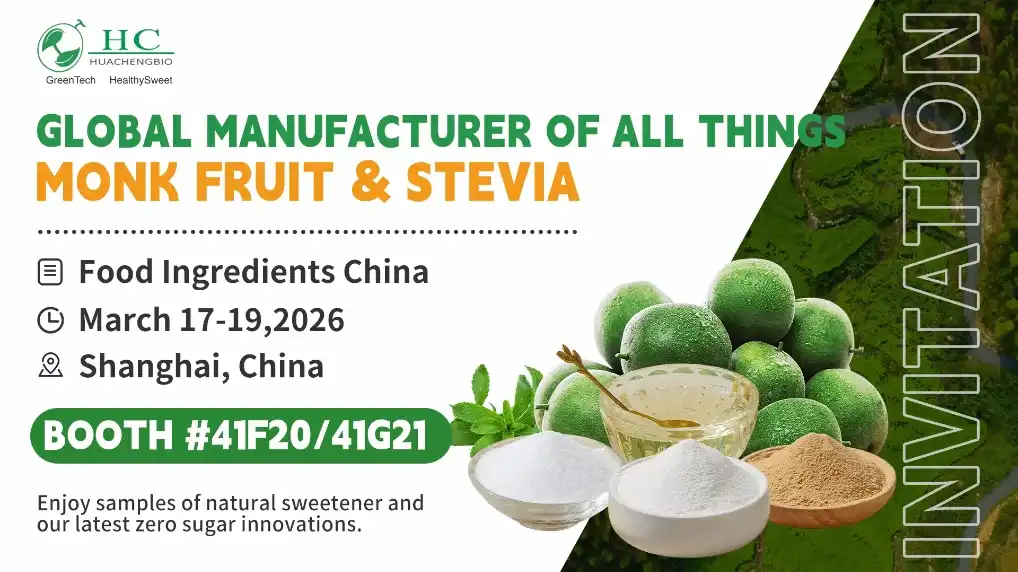
Join Us at Food Ingredients China (FIC) 2026! March 17–19, 2026 Hall 4.1 | Booth...

As a global leader in natural, health‑forward sweetening solutions, we will be present at ...
Products
FAQ
Rubusoside is about 200× sweeter than sucrose, close to Rebaudioside A. Many people find it has less lingering licorice note than typical stevia extracts, and it costs significantly less than mogroside-based sweeteners.
Yes, the solids dissolve well and the glycoside stays stable at the pH and pasteurization temperatures common for soft drinks. Pilot-scale trials with cola and citrus flavors haven’t shown precipitation or sweetness fading over 12-month accelerated testing.
We supply a standard package: CoA, flow chart, allergen statement, residual solvents, heavy metals, and microbiology. For international filing we can also provide the self-GRAS dossier and ingredient technical datasheets on request.
Absolutely. Starting quantities of 100 g to 1 kg are available through our sample program, shipped within 3 business days after confirmation, so you can run solubility and taste-modulation tests before committing to a batch.
We operate our own plantation bases and partner with contracted growers in Guangxi and Hunan, which gives us control over seasonal harvest timing and avoids middlemen—that’s a key reason our pricing stays stable even when commodity sweetener markets fluctuate.
Share your product type, target capacity, and application requirements. Our team can review the details and recommend a practical next step.