
 EN
EN EN
EN CN
CN ES
ES PT
PT SV
SV DE
DE TR
TR FR
FR AR
AR BG
BG HR
HR CS
CS DA
DA NL
NL FI
FI EL
EL HI
HI IT
IT JA
JA KO
KO NO
NO PL
PL RO
RO RU
RU CA
CA TL
TL IW
IW ID
ID LV
LV LT
LT SR
SR SK
SK SL
SL UK
UK VI
VI SQ
SQ ET
ET GL
GL HU
HU MT
MT TH
TH FA
FA AF
AF MS
MS GA
GA BE
BE UZ
UZ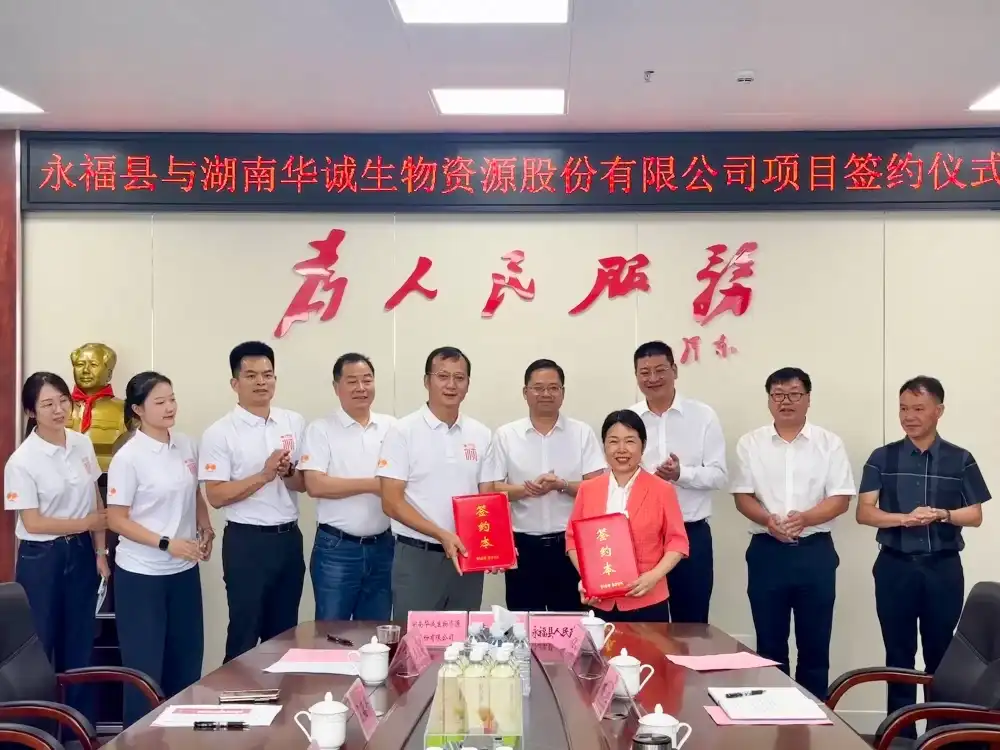
Huacheng Bio: Building Momentum for the Future, Sharing New Beginnings
Huacheng Bio has officially entered a new chapter with the formal establishment of its new...
Blueberry Extract Price: Technical Factors That Shape Real Cost
Price tags on blueberry extract can vary wildly – a quote that looks cheap might hide low anthocyanin content or solvent residues, while a premium offer doesn’t always guarantee better ROI. At Hunan Huacheng Biotech, we look at price through a technical lens: what you pay per kilo is only meaningful when tied to standardized potency and consistent supply. Our industry chain starts at the blueberry farm level, which cuts out middlemen and stabilizes raw material costs year-round. For buyers tracking COGS on nutraceutical or functional food lines, a few percentage points difference in anthocyanin assay can flip a formulation budget. This page unpacks how extraction methods, potency specs and supply chain integration influence the real price you pay – and why an integrated supplier like Huacheng often delivers a stronger value proposition than the lowest sticker price.
Technical Detail
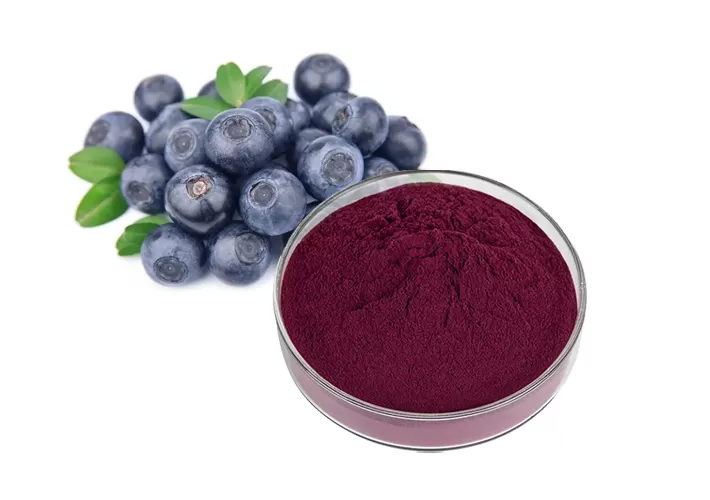
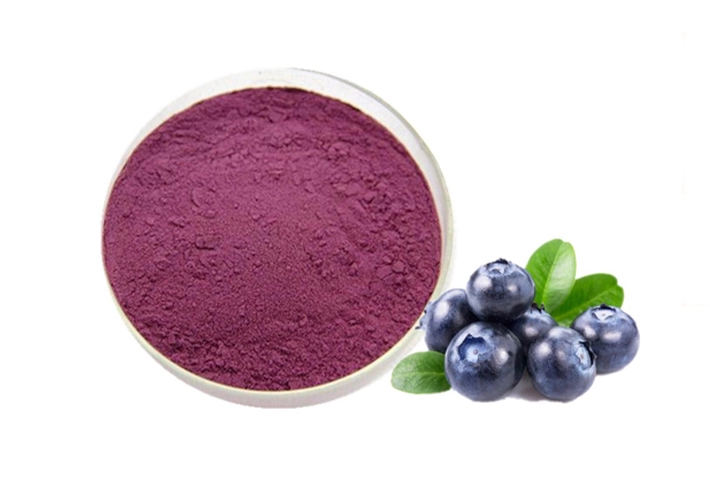
When a purchasing manager asks “what is the blueberry extract price,” the answer depends on variables like anthocyanin percentage (common grades are 5%, 10%, 25% by UV), the extraction solvent (water or ethanol-based), and order volume. Many suppliers quote a lower per-kilo price but deliver powder with less bioavailable anthocyanins or higher heavy metal risks. Hunan Huacheng Biotech focuses on cost control through vertical integration: we manage blueberry planting bases in China’s major berry regions, process fresh fruit within 24 hours of harvest, and use GMP-certified extraction lines. This chain shortens lead times and reduces loss of active compounds, meaning you get more anthocyanins per dollar. For example, a 25% anthocyanin extract using water extraction plus membrane concentration may cost $XX–$YY/kg (request latest quotation), but our direct-from-factory model often brings that below typical distributor markups seen in Western markets. We routinely test every batch for pesticides, solvent residues, and microbial limits under our BRC and HACCP systems – this compliance work prevents costly rejection of shipments later. From an ROI perspective, a slightly higher initial price backed by full traceability and consistent potency saves reformulation and testing dollars downstream. Our technical team also advises on optimal grade selection: sometimes a 10% extract yields better flow properties for dry blending than a higher-strength hygroscopic powder, influencing total process cost. Whether you need 25 kg for a pilot run or multi-ton annual contracts, we structure pricing tiers that reward long-term partnership while keeping quality parameters fixed.
News
Huacheng Bio has officially entered a new chapter with the formal establishment of its new...
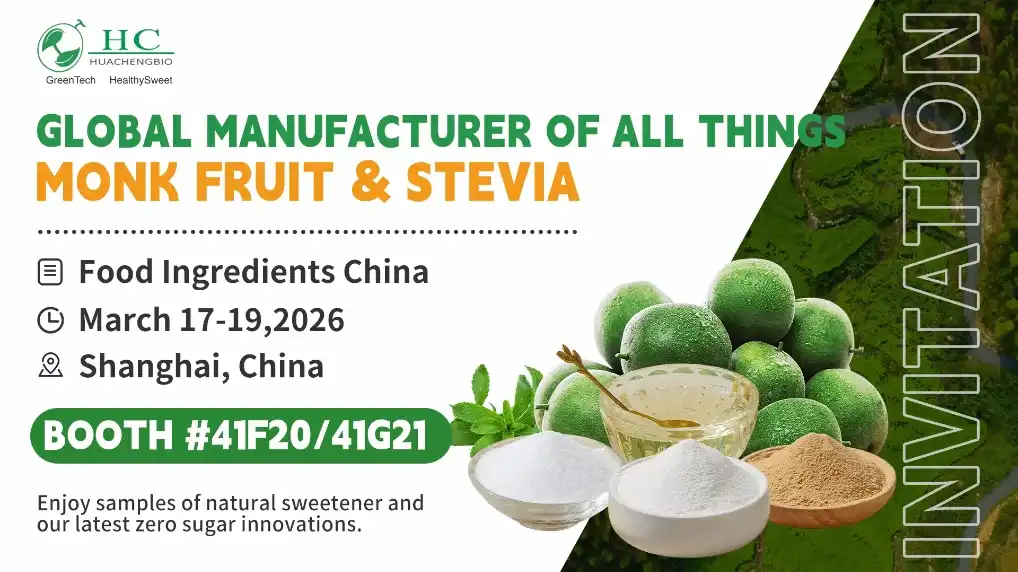
Join Us at Food Ingredients China (FIC) 2026! March 17–19, 2026 Hall 4.1 | Booth...
As a global leader in natural, health‑forward sweetening solutions, we will be present at ...
Products
FAQ
Prices usually range from $30 to over $150 per kg, largely driven by the anthocyanin content. A 5% UV powder might be on the lower end, while a 25% HPLC-verified extract with low solvent residue will be higher. Huacheng’s integrated supply often brings 25% material into a competitive mid-range that beats distributors’ prices for comparable quality.
Always request a certificate of analysis (COA) specifying anthocyanin percentage, test method (UV vs HPLC), heavy metals, and residual solvents. Ask for a third-party lab report if possible. We provide full documentation with every batch and encourage customers to run independent checks before commercial production.
Yes. Our pricing tiers are structured clearly around annual contracted volumes. Even for a first order, we align FOB or CIF quotes to your projected usage. Contact our sales team with your target potency and quantity, and we’ll work out a tailored price that reflects long-term partnership potential.
Water extraction followed by membrane concentration tends to be cost-effective while preserving a full spectrum of anthocyanins. Ethanol extraction can yield higher potency but adds solvent recovery costs. We often recommend the water-based route for nutritional supplements – it maintains a clean label and keeps the price per active unit low.
We routinely supply small evaluation samples (usually 20–50 g) so your R&D team can test solubility, color stability, and potency. Just share your shipping details and targeted specifications; we cover the sample and documentation, you cover courier charges.
Share your product type, target capacity, and application requirements. Our team can review the details and recommend a practical next step.