
 EN
EN EN
EN CN
CN ES
ES PT
PT SV
SV DE
DE TR
TR FR
FR AR
AR BG
BG HR
HR CS
CS DA
DA NL
NL FI
FI EL
EL HI
HI IT
IT JA
JA KO
KO NO
NO PL
PL RO
RO RU
RU CA
CA TL
TL IW
IW ID
ID LV
LV LT
LT SR
SR SK
SK SL
SL UK
UK VI
VI SQ
SQ ET
ET GL
GL HU
HU MT
MT TH
TH FA
FA AF
AF MS
MS GA
GA BE
BE UZ
UZ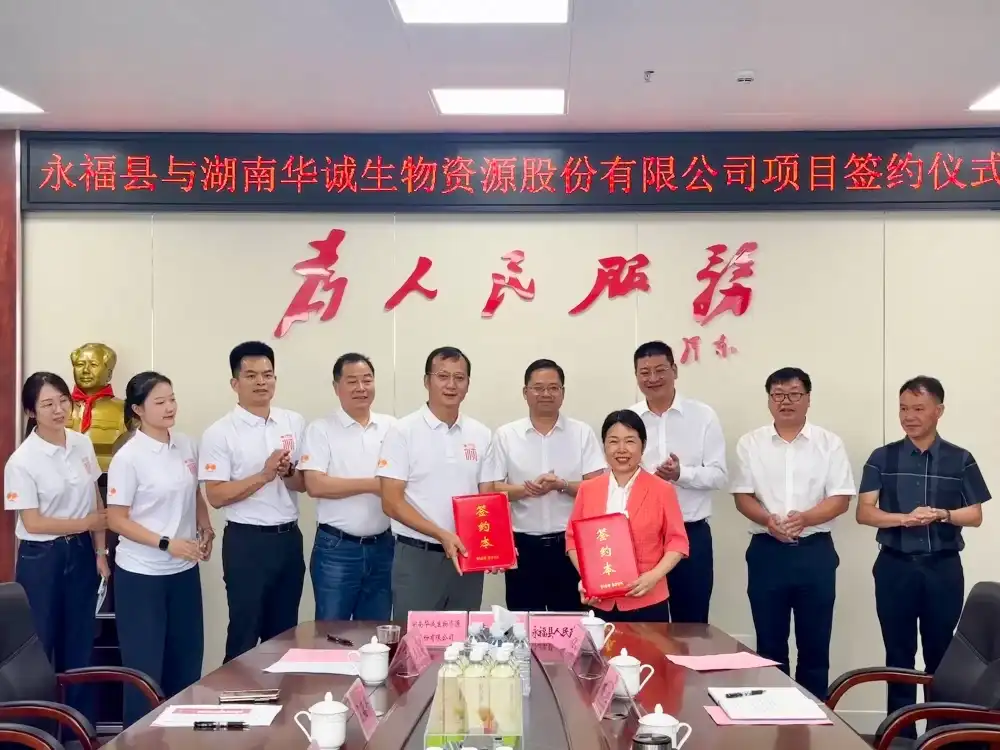
Huacheng Bio: Building Momentum for the Future, Sharing New Beginnings
Huacheng Bio has officially entered a new chapter with the formal establishment of its new...
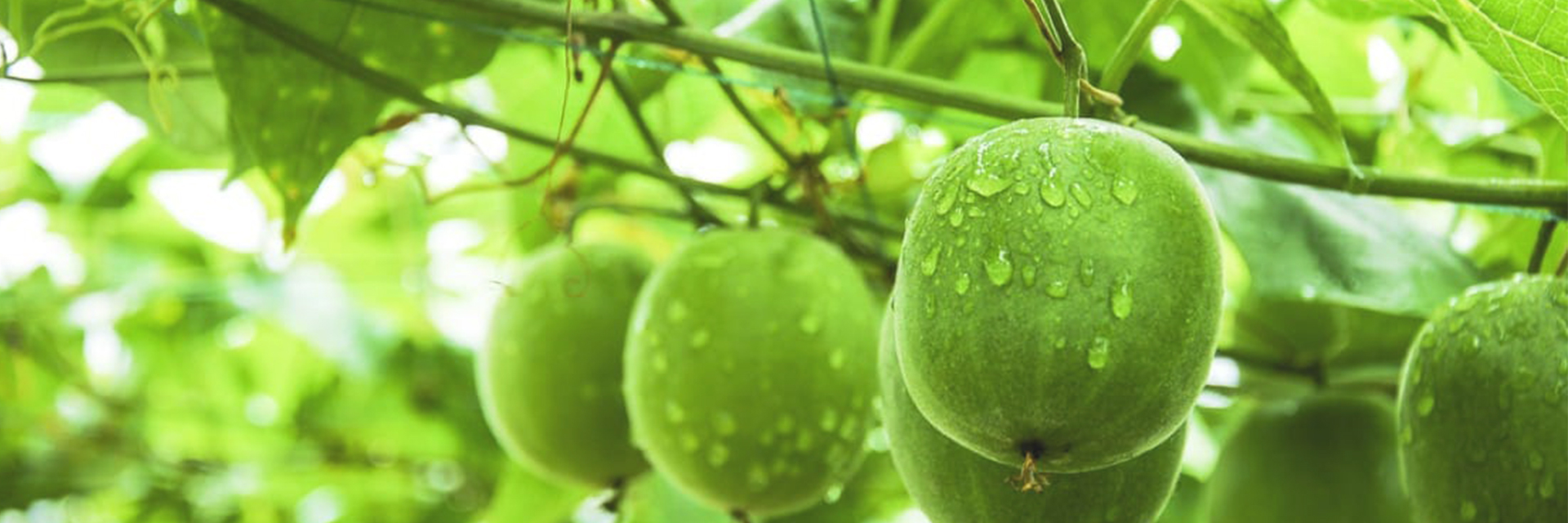
Green Leaf Stevia Extract: What the Technical Data Tells You
Most buyers look at the price tag and purity percentage. But what really drives cost and performance are a few upstream variables—like the stevia leaf variety, the extraction solvent, and the crystallization steps. Huacheng Biotech controls the chain from planting to powder, so those variables don't become surprises on your spec sheet. We'll walk through how green leaf stevia extract is characterized, where costs hide, and what the numbers mean when you're sourcing for a budget-conscious product line.
Technical Detail
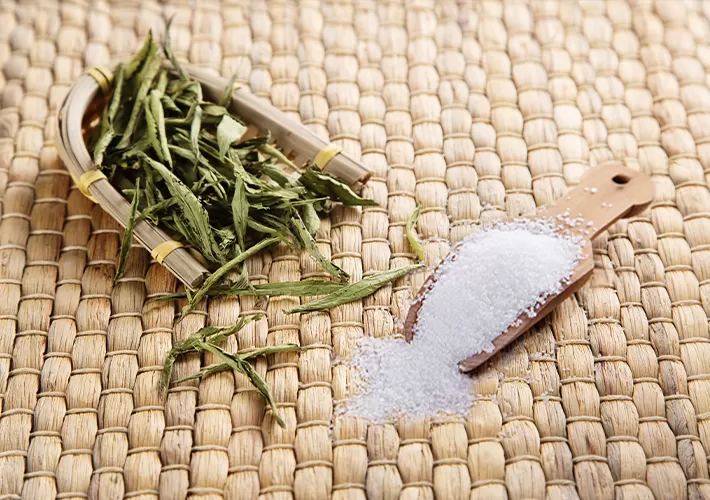
Hunan Huacheng Biotech leverages its integrated industry chain—from contracted leaf farms in China's stevia-growing regions to in-house extraction and refining—to deliver green leaf stevia extract that makes technical sense for cost-sensitive formulations. The product is standardized by total steviol glycosides and Reb-A content, available in common grades like 40%, 60%, or 90% purity. Reb-A 60%, for instance, provides most of the sweetness of a 90% grade at a fraction of the price per kilo, which adds up fast in high-volume beverages or dairy. Because we manage the early stages of leaf drying and primary extraction, lot-to-lot consistency in glycoside profile is tighter than many generic sources, and supply is more predictable. Technically, the extract appears as a fine white to light yellow powder, with solubility above 0.8 g/100mL in water at room temperature and a sweetness potency 200–300 times that of sucrose. Bitterness, mainly from stevioside, is minimized by leaf selection and crystallization controls. For developers, the practical advantage is that you can achieve target sweetness with fewer masking agents, keeping ingredient costs down. Every batch ships with a Certificate of Analysis covering total glycosides, Reb-A, ash, moisture, and microbial limits, plus documentation supporting FDA and EU regulatory clearance. By cutting out middle traders, we pass on the margin, making this extract a plug-in option for private-label sugar-free products that need to pass lab tests and quarterly budget reviews.
News
Huacheng Bio has officially entered a new chapter with the formal establishment of its new...
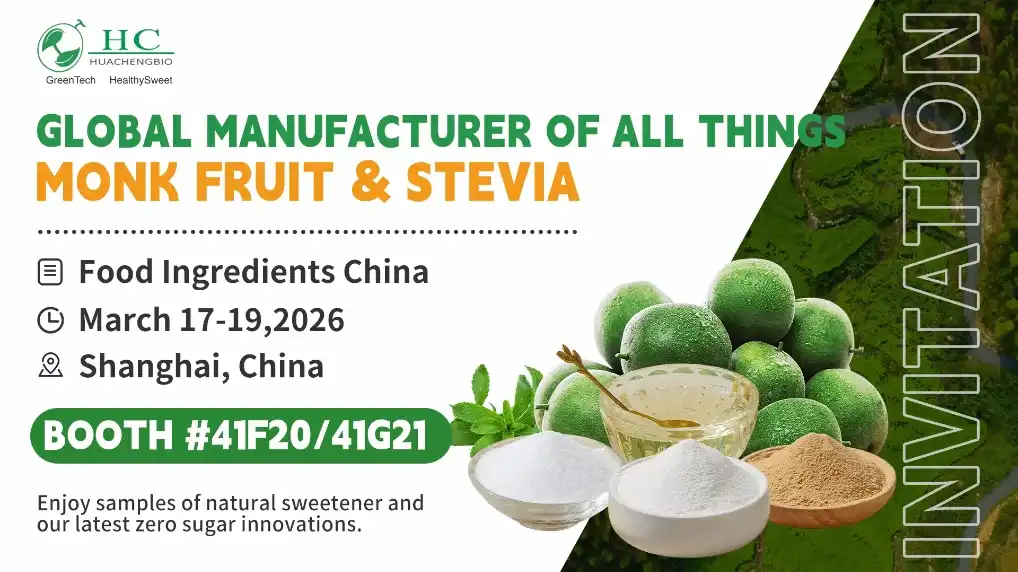
Join Us at Food Ingredients China (FIC) 2026! March 17–19, 2026 Hall 4.1 | Booth...

As a global leader in natural, health‑forward sweetening solutions, we will be present at ...
Products
FAQ
The price difference is not linear. Reb-A 60% typically costs 30–40% less per kilogram yet provides around 80% of the sweetness intensity of 90%. In a soft drink formulation, switching from 90% to 60% can cut sweetener cost by a quarter while the taste difference is often manageable with minor flavor adjustments.
Bitterness comes largely from the stevioside fraction. With 90% purity, most people perceive a clean sweetness. Lower purities have more stevioside, which can cause a slight aftertaste. Our process keeps stevioside content on the low end of the typical range for each grade, and we can advise on blending with erythritol or natural flavors to smooth the profile.
Every shipment includes a batch-specific Certificate of Analysis listing total steviol glycosides, Reb-A percentage, loss on drying, ash, heavy metals limits, and microbial counts. We also supply a technical data sheet and regulatory statements covering FDA GRAS and EU novel food status. Larger orders can include third-party lab reports if needed.
No, stevia is about 200–300 times sweeter, so you replace only 0.5% of the sugar weight by sweetness equivalence. You'll need a bulking agent like polydextrose or allulose to make up the lost mass and texture. We can share starting-point ratios for muffins, cookies, or cakes based on your desired calorie reduction.
Yes. The main steviol glycosides are stable up to about 200°C for short periods. In standard pasteurization (72–95°C) and UHT (135–140°C), there is no meaningful loss of sweetness. We've also verified stability in acidic conditions down to pH 3, so it works in carbonated drinks and fruit juices.
Share your product type, target capacity, and application requirements. Our team can review the details and recommend a practical next step.