
 EN
EN EN
EN CN
CN ES
ES PT
PT SV
SV DE
DE TR
TR FR
FR AR
AR BG
BG HR
HR CS
CS DA
DA NL
NL FI
FI EL
EL HI
HI IT
IT JA
JA KO
KO NO
NO PL
PL RO
RO RU
RU CA
CA TL
TL IW
IW ID
ID LV
LV LT
LT SR
SR SK
SK SL
SL UK
UK VI
VI SQ
SQ ET
ET GL
GL HU
HU MT
MT TH
TH FA
FA AF
AF MS
MS GA
GA BE
BE UZ
UZ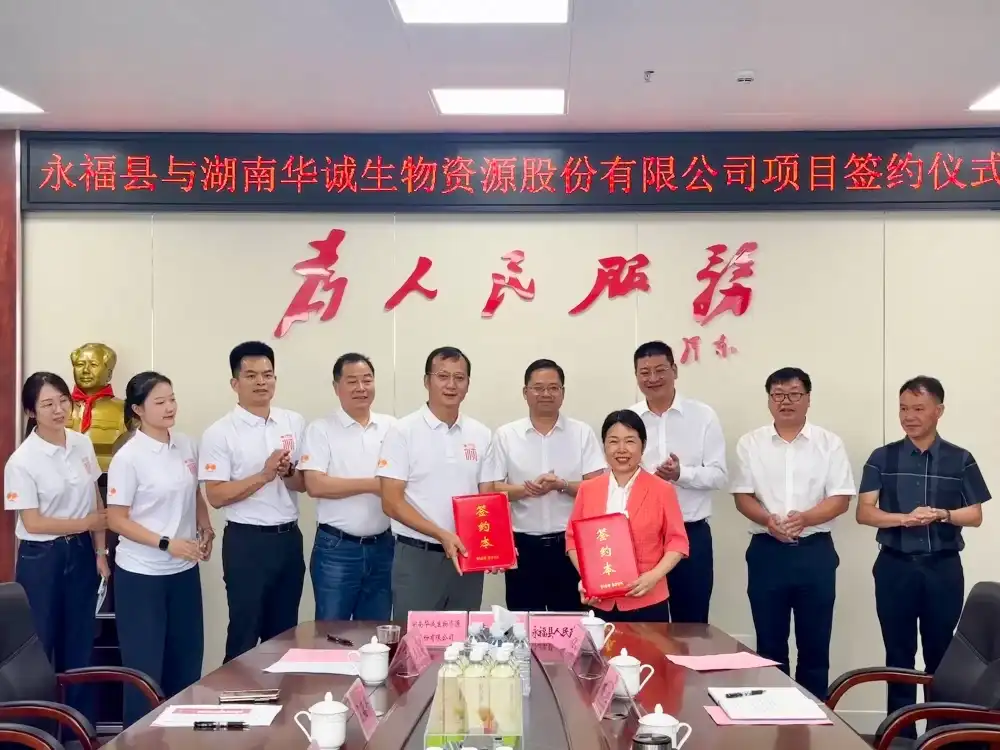
Huacheng Bio: Building Momentum for the Future, Sharing New Beginnings
Huacheng Bio has officially entered a new chapter with the formal establishment of its new...
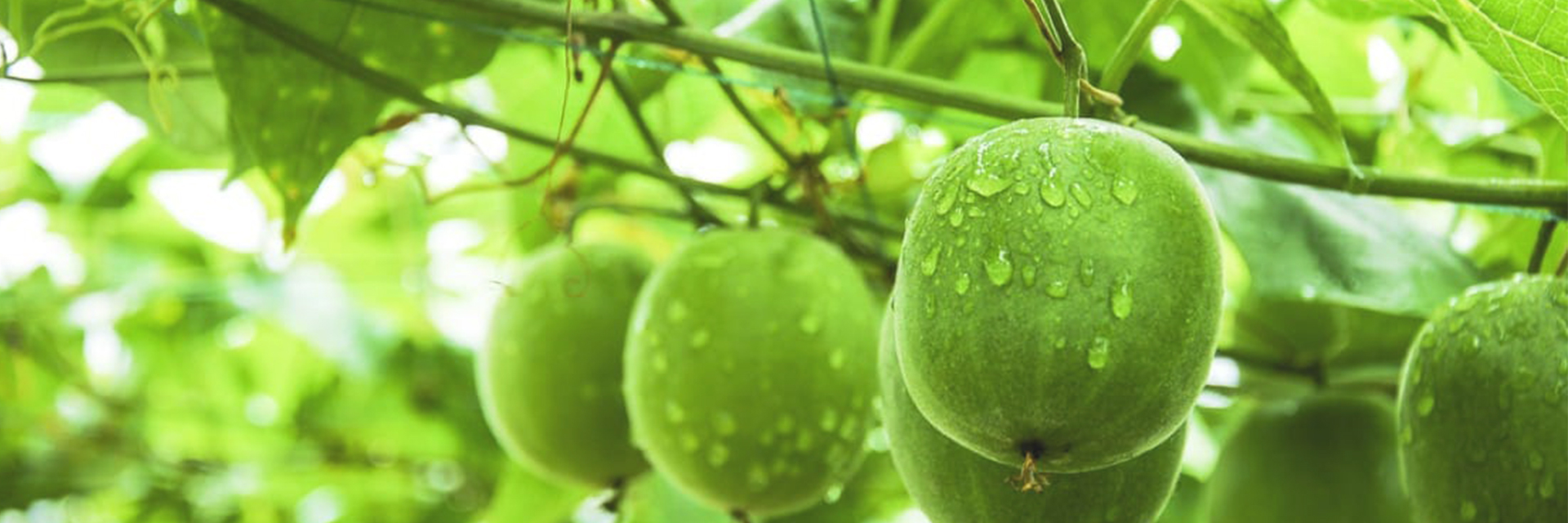
Pure Stevia Extract: Supply-Chain Efficiency Meets Flavor Consistency
Huacheng Biotech’s pure stevia extract comes from a vertically integrated supply chain—leaf sourcing, extraction, refining all in-house. That setup cuts out middlemen and let us keep prices practical, not premium. Most customers work with a 95% total steviol glycosides powder, but we also supply RA60, RA80, RA95, and enzyme-modified grades for projects that need specific sweetness profiles or faster dissolution. The team runs in-process checks under GMP, and every shipment gets a COA backed by ISO 17025 labs. If you’re reformulating to reduce sugar without the bitter aftertaste, our application notes cover pH, heat stability, and synergies with monk fruit or erythritol. No marketing fluff—just specs you can test yourself.
Technical Detail
Our stevia extract starts from leaves grown under long-term contract in southern China, where consistent rainfall and soil conditions keep glycoside profiles stable across harvests. Extraction uses only water and food-grade ethanol, followed by membrane separation and spray drying to a typical particle size of 80 mesh. The standard powder is >95% total steviol glycosides, with rebaudioside A content adjustable from 40% to 98% depending on your sweetness curve target. Solubility in water at 25°C is above 10 g/100 mL, and a 1% solution has a pH of 4.5–7.0—suitable for clear beverages. For bakery or dairy, the product withstands UHT and baking temperatures up to 200°C for 30 minutes with less than 5% sweetness loss in model systems. This temperature resilience, combined with its zero-glycemic impact, make it a practical sugar replacement in mass-market products. Our certifications—FDA, BRC, HACCP, GMP, CE—are maintained through annual audits, and traceability extends from field to final container. As a supplier that controls the full chain, including own patent for glycoside separation, we ship 20–25 metric tons per month across 40 countries. If you need a sample first, we dispatch 50–100 g within 72 hours. No minimum order on first trial, and our application engineers can pre-test your formula to flag sweetness synergy or masking needs before you commit.
News
Huacheng Bio has officially entered a new chapter with the formal establishment of its new...
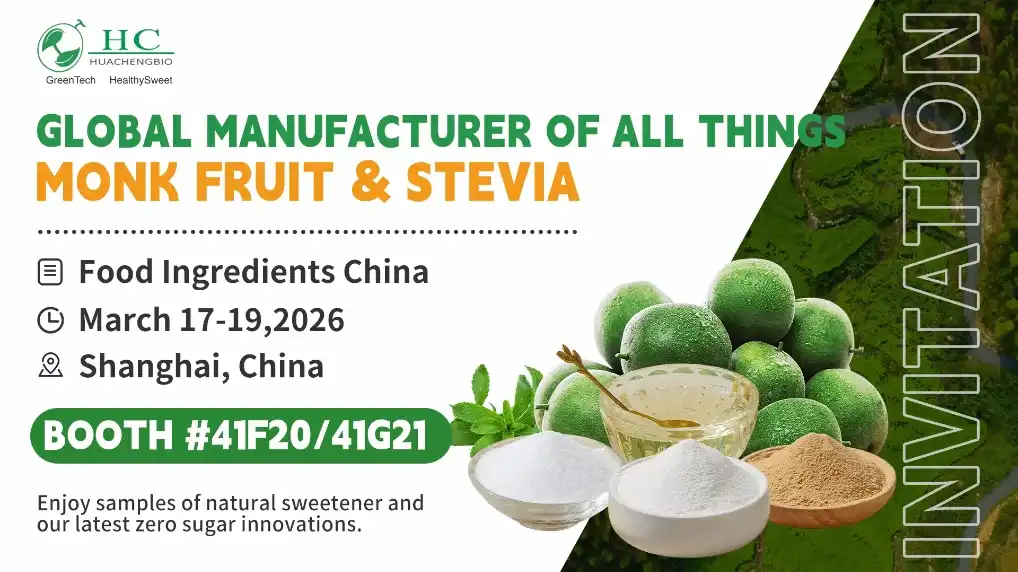
Join Us at Food Ingredients China (FIC) 2026! March 17–19, 2026 Hall 4.1 | Booth...

As a global leader in natural, health‑forward sweetening solutions, we will be present at ...
Products
FAQ
We supply Reb A from 40% up to 98%. Higher Reb A gives a cleaner, sucrose-like sweetness with less licorice aftertaste. For beverages, most brands use RA60–RA80; RA95–RA98 is common in tabletop sweeteners where aftertaste is more noticeable.
Yes, we share current FDA registration, BRC, HACCP, GMP, and CE certificates with every quote. Annual audits are performed by SGS or Eurofins, and we can send the latest report along with the COA of your batch.
Controlling leaf supply, extraction, and refining under one roof removes markups from intermediaries. That typically keeps our pricing 10–15% below competitors who buy semi-refined extract. Because we don’t wait on third-party toll processors, standard orders ship in 5–7 business days from our warehouse in Changsha.
Each batch is blended to meet the exact glycoside profile specified in your contract. We use HPLC fingerprinting to match rebaudiosides A, B, C, D, and stevioside ratios, then cross-check with a sensory panel calibrated against a sucrose reference. The tolerance is ±2% on total steviol glycosides.
In internal trials, a pH 3.0 citric acid solution with 200 ppm stevia showed no sweetness drop after 6 months at 25°C. HTST pasteurization (72°C/15s) and UHT (135°C/5s) also caused no significant degradation. For hot-fill applications up to 95°C, we recommend adding the extract after the heating step to minimize thermal exposure, though it tolerates brief heat well.
Share your product type, target capacity, and application requirements. Our team can review the details and recommend a practical next step.