
 EN
EN EN
EN CN
CN ES
ES PT
PT SV
SV DE
DE TR
TR FR
FR AR
AR BG
BG HR
HR CS
CS DA
DA NL
NL FI
FI EL
EL HI
HI IT
IT JA
JA KO
KO NO
NO PL
PL RO
RO RU
RU CA
CA TL
TL IW
IW ID
ID LV
LV LT
LT SR
SR SK
SK SL
SL UK
UK VI
VI SQ
SQ ET
ET GL
GL HU
HU MT
MT TH
TH FA
FA AF
AF MS
MS GA
GA BE
BE UZ
UZ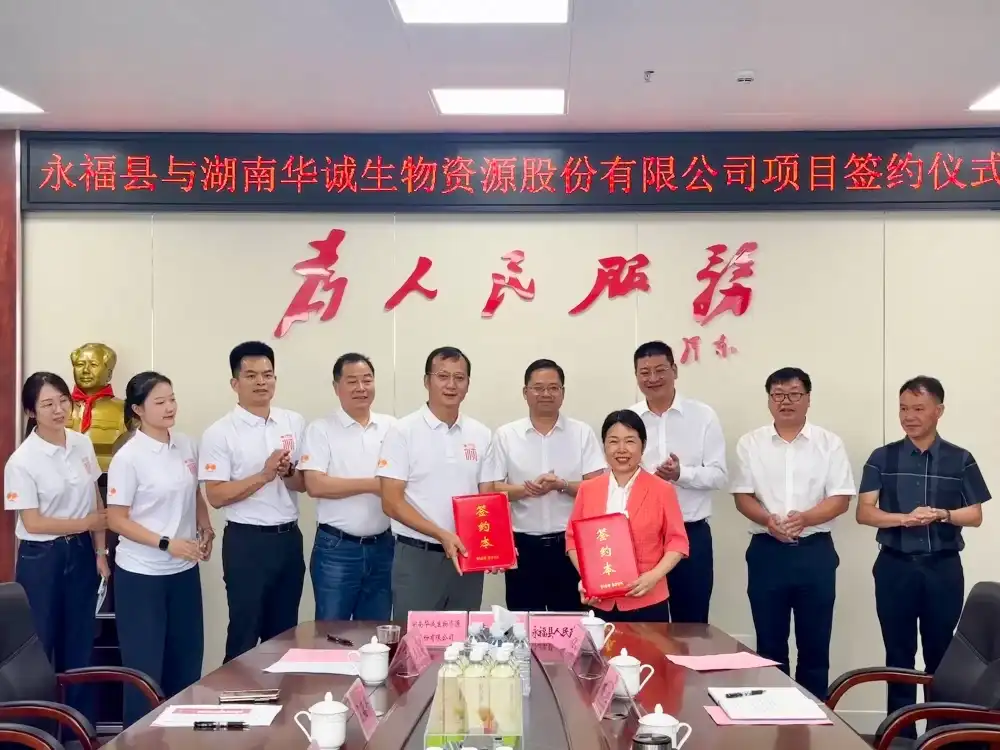
Huacheng Bio: Building Momentum for the Future, Sharing New Beginnings
Huacheng Bio has officially entered a new chapter with the formal establishment of its new...
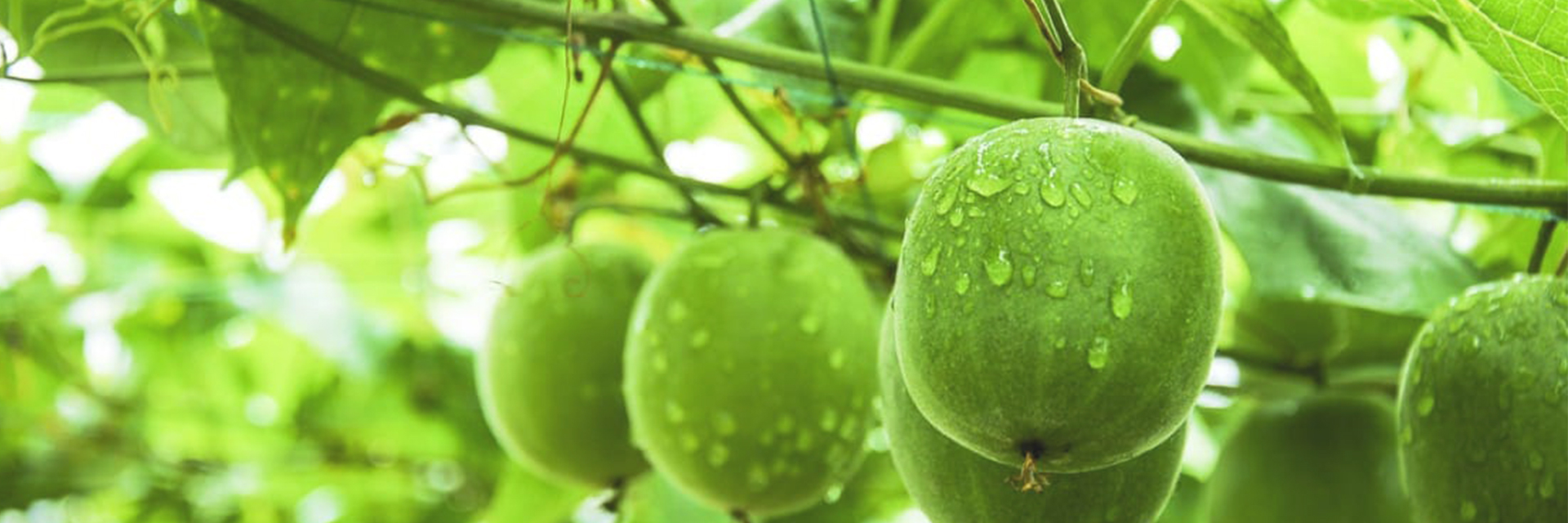
Stevia Leaf Extract Ingredients – What’s Inside
Stevia leaf extract ingredients boil down to a group of compounds called steviol glycosides. The leaf itself contains over 40 different glycosides, but the ones that matter commercially are stevioside and rebaudioside A (Reb A). Reb A tends to get the most attention because it delivers a cleaner sweetness without the licorice aftertaste that stevioside sometimes carries. When you look at a specification sheet, the total steviol glycosides content and the Reb A percentage tell you how the material will behave in a formulation. At Hunan Huacheng Biotech, we control these ratios through a fully integrated supply chain—from contracted leaf growers in China to in-house extraction and refining. That vertical setup lets us offer consistent stevia leaf extract ingredients at a cost that works for mid-sized brands who can’t absorb premium pricing. No marketing fluff, just the analytical data and batch records to back up what’s on the label.
Technical Detail
When you strip away the branding, stevia leaf extract ingredients are defined by two numbers: total steviol glycosides (TSG) and the fraction that is Rebaudioside A. A typical commercial extract might specify TSG ≥95% and Reb A ≥40%, but tighter profiles—like Reb A 60% or 80%—are available for applications where taste fidelity matters. The other glycosides (rebaudioside C, dulcoside A, etc.) are present in smaller amounts and can round out the sweetness profile if managed right. Hunan Huacheng Biotech has spent over a decade building a supply line that starts with non-GMO stevia leaves from contracted farms in Hunan and Jiangxi. Extraction uses hot water and membrane filtration, followed by purification through ion exchange and crystallization. No enzymes or synthetic modifiers—just physical separation processes that align with EU and FDA expectations. Our facilities hold BRC, GMP, HACCP, and FDA registrations, so the paperwork is in place for quality audits. From a cost angle, vertical integration cuts out middlemen. We press the leaves, refine the extract, and ship directly. For brands working on zero-calorie beverages, plant-based protein bars, or sugar-free dairy, that means a stable supply of stevia leaf extract ingredients at a predictable price. Technical support includes glycoside ratio optimization: if your product development team needs more Reb M for a cola application or a higher stevioside fraction for a cost-sensitive powder blend, we can adjust the extraction parameters accordingly. Samples with COA are available within a week.
News
Huacheng Bio has officially entered a new chapter with the formal establishment of its new...
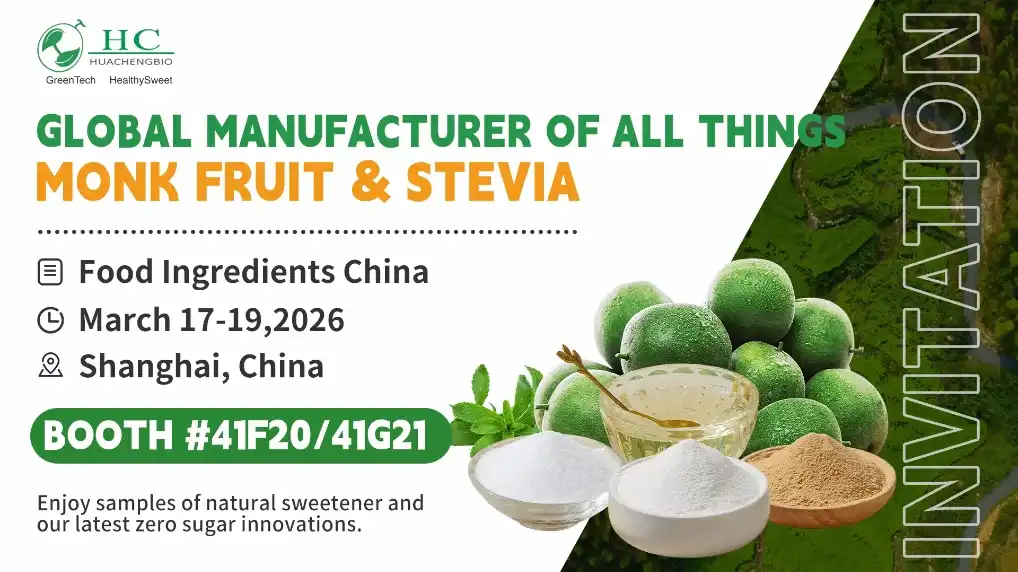
Join Us at Food Ingredients China (FIC) 2026! March 17–19, 2026 Hall 4.1 | Booth...
As a global leader in natural, health‑forward sweetening solutions, we will be present at ...
Products
FAQ
The sweet compounds are steviol glycosides, mainly stevioside and rebaudioside A. Other minor glycosides like rebaudioside C, D, and dulcoside A are also present but at lower levels. Total steviol glycosides content typically ranges from 80% to 98% depending on purification grade.
It starts with leaf variety selection—some cultivars naturally produce more Reb A. During extraction, we use membrane filtration and selective crystallization to enrich specific glycosides. For example, a Reb A 60% extract is achieved by stopping crystallization at a certain point, then blending back mother liquor if needed. This is standard industry practice.
Stevia provides sweetness but not bulk or browning. In baking, you usually combine it with a bulking agent like erythritol or inulin to mimic sugar’s functional properties. Stevia’s high heat stability means the sweet components don’t degrade, but the formulation needs to account for the missing volume and Maillard reaction.
Every batch ships with a Certificate of Analysis showing TSG, Reb A, stevioside, and other glycoside percentages by HPLC. We also include microbiological limits, heavy metal scans, and residual solvent data. Additional documents like non-GMO statements, BRC certification, and FDA registration can be shared upon request.
For standard grades (Reb A 40%, 60%, 80%), the MOQ is 25 kg. Custom profiles typically start at 100 kg because they require dedicated production runs. We can adjust ratios based on your target sweetness profile and cost constraints—just share the desired Reb A/stevioside split and we’ll confirm feasibility.
Share your product type, target capacity, and application requirements. Our team can review the details and recommend a practical next step.