
 EN
EN EN
EN CN
CN ES
ES PT
PT SV
SV DE
DE TR
TR FR
FR AR
AR BG
BG HR
HR CS
CS DA
DA NL
NL FI
FI EL
EL HI
HI IT
IT JA
JA KO
KO NO
NO PL
PL RO
RO RU
RU CA
CA TL
TL IW
IW ID
ID LV
LV LT
LT SR
SR SK
SK SL
SL UK
UK VI
VI SQ
SQ ET
ET GL
GL HU
HU MT
MT TH
TH FA
FA AF
AF MS
MS GA
GA BE
BE UZ
UZ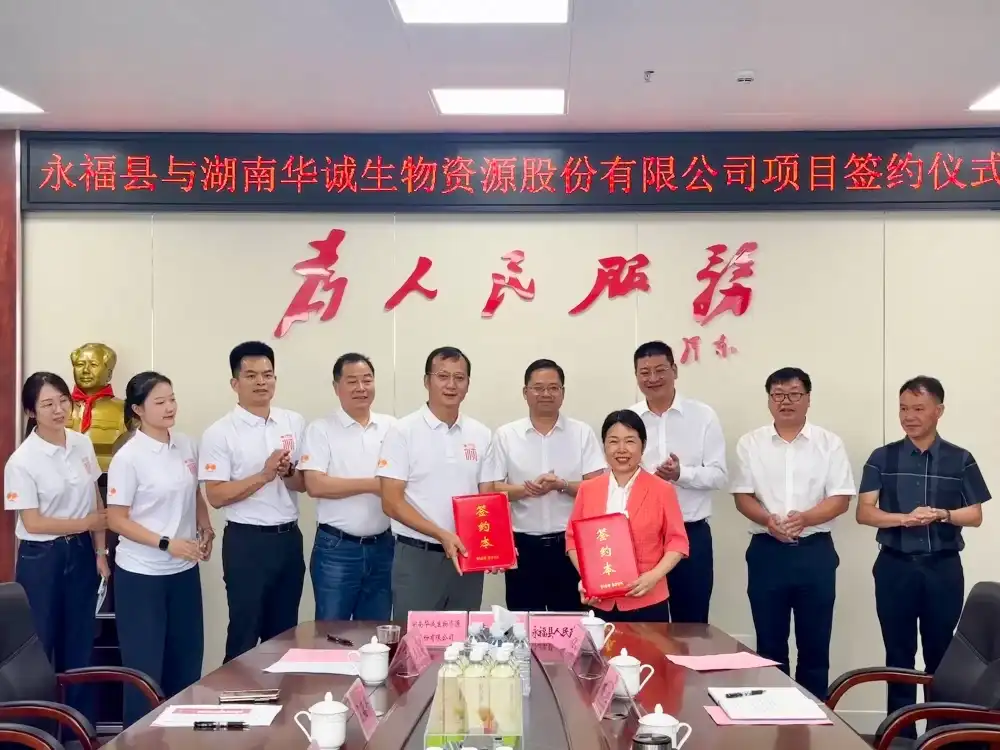
Huacheng Bio: Building Momentum for the Future, Sharing New Beginnings
Huacheng Bio has officially entered a new chapter with the formal establishment of its new...
Sweet Leaf Stevia Extract: Technical Data & Application Notes
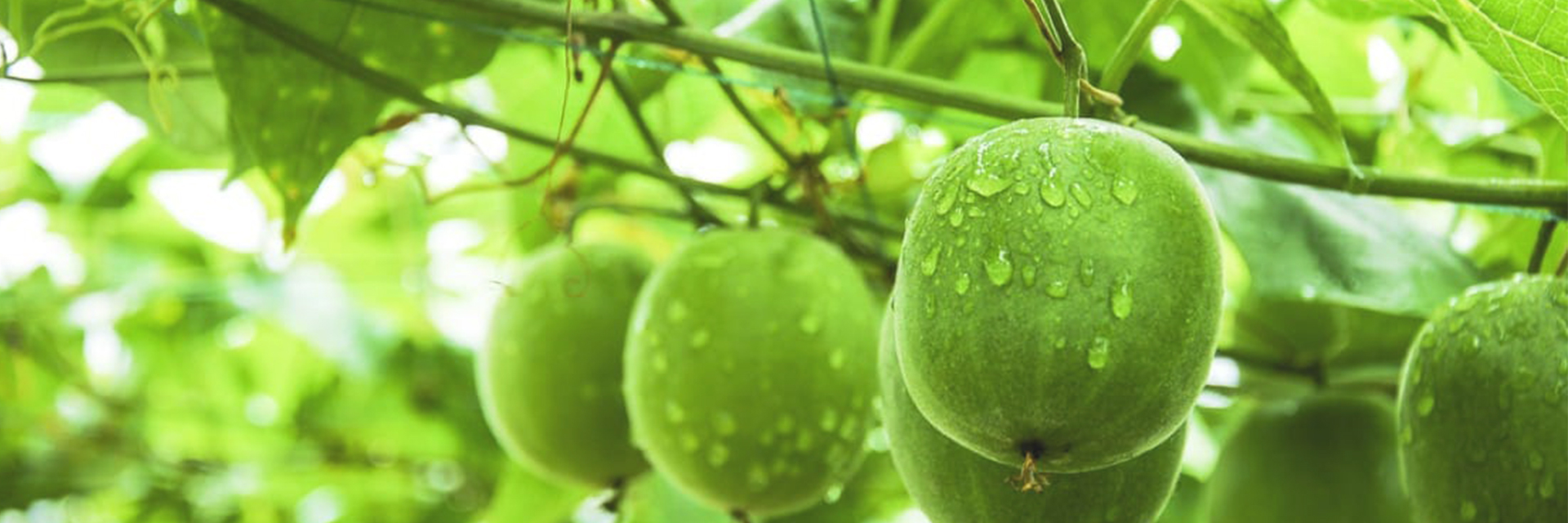
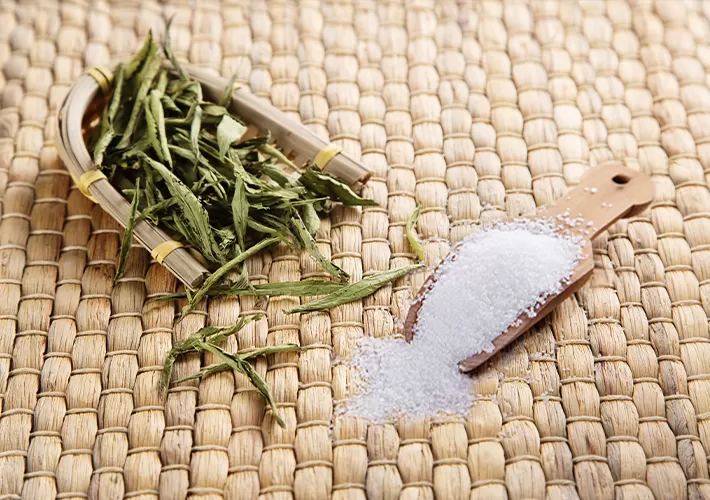
Most stevia discussions fixate on purity percentages, but when you’re running a production line, what matters is how the powder dissolves—and if it clogs the filters. Our sweet leaf stevia extract is milled to pass a 100-mesh screen as standard, with tighter options available, because a little extra sieving saves a lot of downtime. Huacheng Biotech operates its own stevia leaf supply chain in Hunan, which means we control extraction, refining, and final blending under one roof. That setup lets us deliver consistent Reb A levels—typically 95% or 97% by HPLC—without the premium that comes from sourcing intermediaries. For R&D teams targeting sugar reduction, the extract’s sensory profile is profiled every batch using an in-house panel, so you won’t be left guessing about lingering aftertaste or sweetness onset. And since we handle everything from leaf to powder, minimum orders start at just 25 kg, making it practical to test at pilot scale.
Technical Detail
Hunan Huacheng Biotech extracts sweet leaf stevia using a continuous countercurrent process—less solvent, lower temperature, and shorter residence time than batch methods. This approach preserves the steviol glycosides and reduces thermal degradation byproducts that contribute to bitterness. Our standard sweet leaf stevia extract typically runs 95% total steviol glycosides, with Reb A comprising the bulk, but we also supply customized blends (Reb A 60/97, Reb D 95, or enzyme-modified variants) when formulators need to fine-tune sweetness curves. All product ships with a certificate of analysis that includes moisture, ash, heavy metals, and microbial limits, backed by FDA, HACCP, GMP, CE, and BRC certifications. For budget-conscious projects, the real advantage is our vertical integration: owning the extraction facility and regional stevia leaf sourcing contracts compresses the supply chain, so the cost per kilo often runs 8–12% below market averages for comparable grades. Applications span beverages (especially clear RTD teas where solubility matters), dairy desserts (where the extract’s synergy with monk fruit can round out sweetness), and baked goods (where high-heat stability avoids breakdown). Our technical team can provide accelerated stability data and interaction notes for acidified systems, so formulation work doesn’t start from scratch.
News
Huacheng Bio has officially entered a new chapter with the formal establishment of its new...
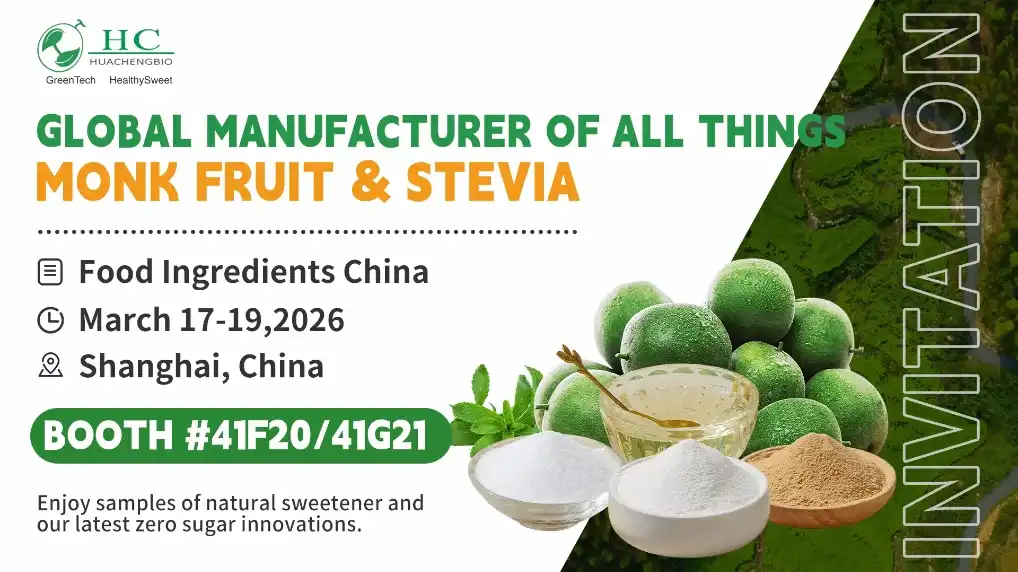
Join Us at Food Ingredients China (FIC) 2026! March 17–19, 2026 Hall 4.1 | Booth...

As a global leader in natural, health‑forward sweetening solutions, we will be present at ...
Products
FAQ
We test every batch against a sucrose reference using a trained sensory panel. The relative sweetness is reported as a multiple of sucrose at a standard use level—our 95% Reb A extract typically falls between 250x and 300x, but the exact number varies slightly with concentration and pH. The panel also rates bitterness and licorice notes on a scale from 0 to 5, so you’ll know upfront whether a masking agent might be needed.
Steviol glycosides generally hold up past 200°C without meaningful degradation. We’ve run oven-hold tests with cookies at 180°C for 25 minutes and saw less than 2% loss of Reb A. The bigger variable in baking is moisture; if you’re working with very wet dough, the extract’s fine particle size can attract humidity, so we suggest pre-blending with a dry carrier like maltodextrin to prevent clumping.
Variation usually comes from the ratio of minor glycosides—Reb C, dulcoside A, etc.—that shift subtly with different leaf sources. Our QC protocol blends bulk intermediate lots to normalize the sensory profile, so the batch-to-batch drift stays within a just-noticeable-difference of about 0.3 on a bitterness scale. If your application is especially sensitive, we can hold a larger lot or provide a glycoside fingerprint to match previous orders.
Yes. We ship 200 g samples free of charge to most regions, enough for benchtop trials. Just bear in mind that freight for small packages can take a week or two, so it’s helpful to plan ahead. We’ll include the lot’s COA and can also ship a few extra grams if you need to run duplicate shelf-life studies.
Our standard production minimum is 25 kg net, packed in 1 kg or 5 kg food-grade aluminum-foil bags inside a fiber drum. For new customers, we can start at 5 kg at a slightly higher unit price to help with market trials. Lead time is typically five working days after payment, and we ship via air or sea depending on urgency and cost.
Share your product type, target capacity, and application requirements. Our team can review the details and recommend a practical next step.