
 EN
EN EN
EN CN
CN ES
ES PT
PT SV
SV DE
DE TR
TR FR
FR AR
AR BG
BG HR
HR CS
CS DA
DA NL
NL FI
FI EL
EL HI
HI IT
IT JA
JA KO
KO NO
NO PL
PL RO
RO RU
RU CA
CA TL
TL IW
IW ID
ID LV
LV LT
LT SR
SR SK
SK SL
SL UK
UK VI
VI SQ
SQ ET
ET GL
GL HU
HU MT
MT TH
TH FA
FA AF
AF MS
MS GA
GA BE
BE UZ
UZ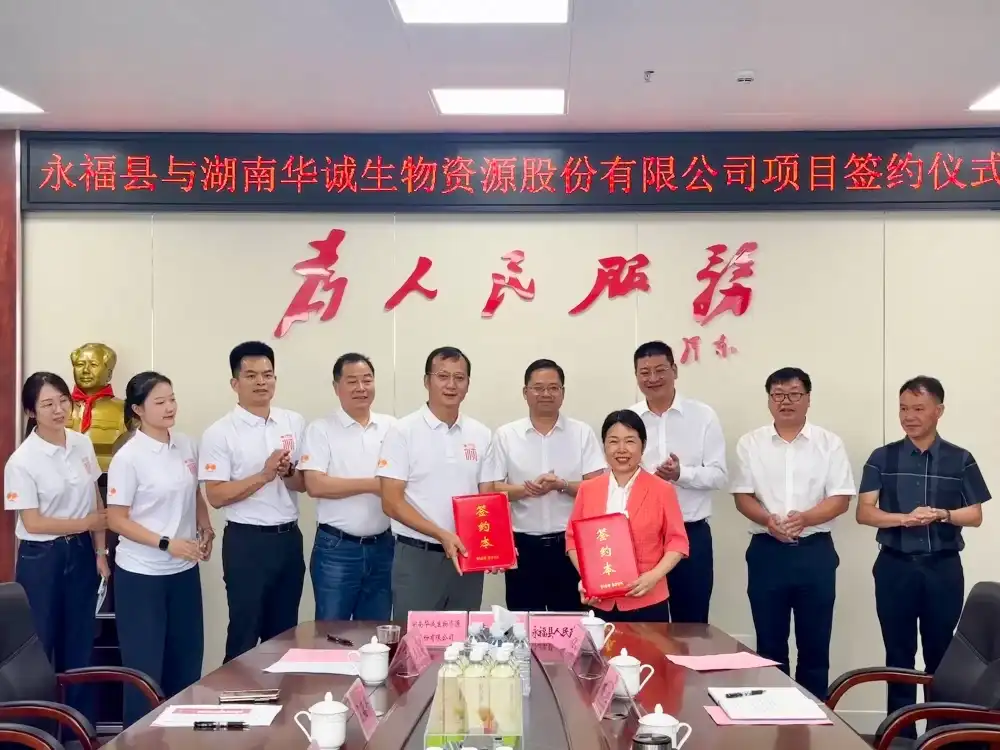
Huacheng Bio: Building Momentum for the Future, Sharing New Beginnings
Huacheng Bio has officially entered a new chapter with the formal establishment of its new...
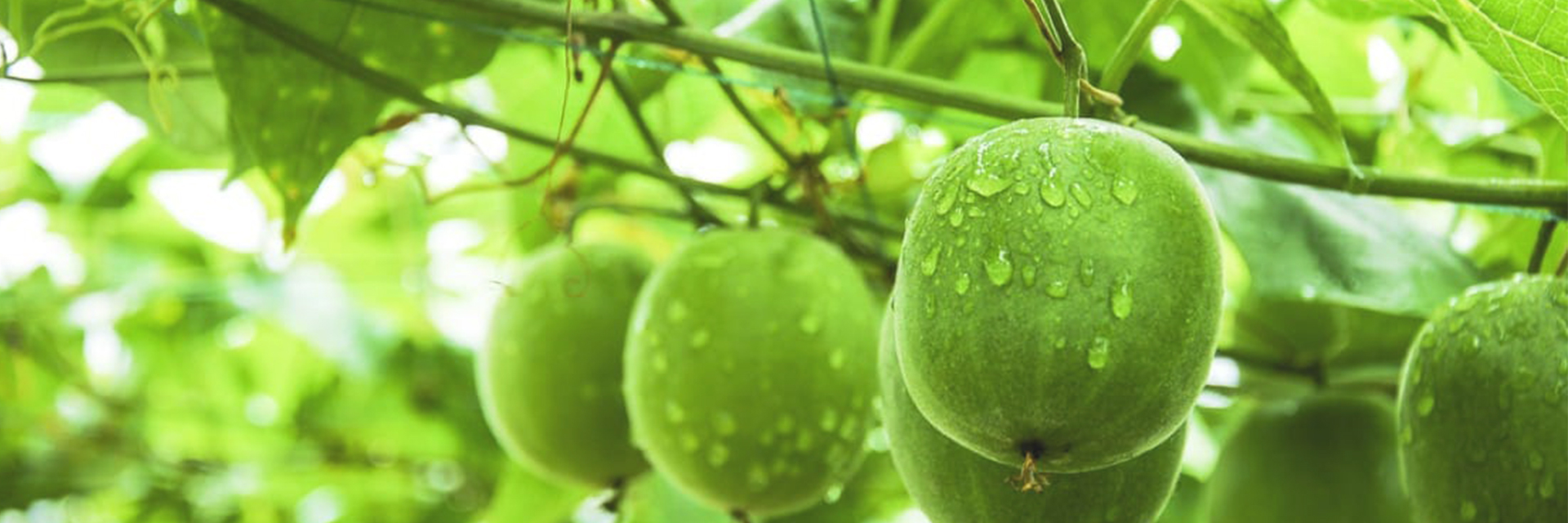
Sweet Tea Extract: Affordable Natural Sweetness
The shift toward clean-label products has put sweet tea extract on the radar of formulators looking for a natural, zero-calorie sweetener that doesn't break the budget. Derived from Rubus suavissimus, this extract delivers a clean sweetness profile that works well in teas, functional beverages, and even some dairy applications. At Hunan Huacheng Biotech, we focus on making these ingredients accessible—our integrated industry chain helps keep costs in check without cutting corners on quality. Backed by certifications like FDA, HACCP, and BRC, our sweet tea extract meets the consistency and safety standards that global buyers expect. Whether you're reformulating a popular RTD tea or developing a new sugar-free syrup, we can provide samples and technical data to support your project. Because we handle everything from raw material sourcing to final QC, you get a reliable supply and fast turnaround—no middlemen, no guesswork.
Technical Detail
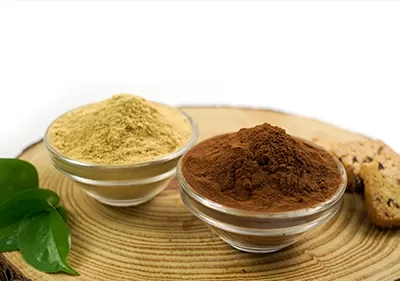
What makes the sweet tea extract from Huacheng Biotech a practical choice is the way we've structured our supply chain. We own and control key steps—from cultivating the sweet tea leaves to extraction and final testing—so there are fewer quality gaps and less cost passed along to you. That means you get an ingredient that's both budget-friendly and consistent batch to batch. The extract itself is standardized for rubusoside content, typically above 90% purity, though we can adjust specifications to meet your formula needs. It dissolves easily in water and withstands typical pasteurization and UHT conditions, making it suitable for bottled teas, instant drink powders, and flavored syrups. We've seen customers put it to work in everything from sugar-free iced tea concentrates to meal replacement shakes and even protein bars. Because the sweetness profile is clean—no lingering aftertaste like some other high-intensity sweeteners—it plays well with natural flavors and masking agents. With certifications including FDA, HACCP, GMP, CE, and BRC, plus in-house applications support, you're not just buying an ingredient; you're getting a partner who can help troubleshoot formulation challenges and scale efficiently.
News
Huacheng Bio has officially entered a new chapter with the formal establishment of its new...
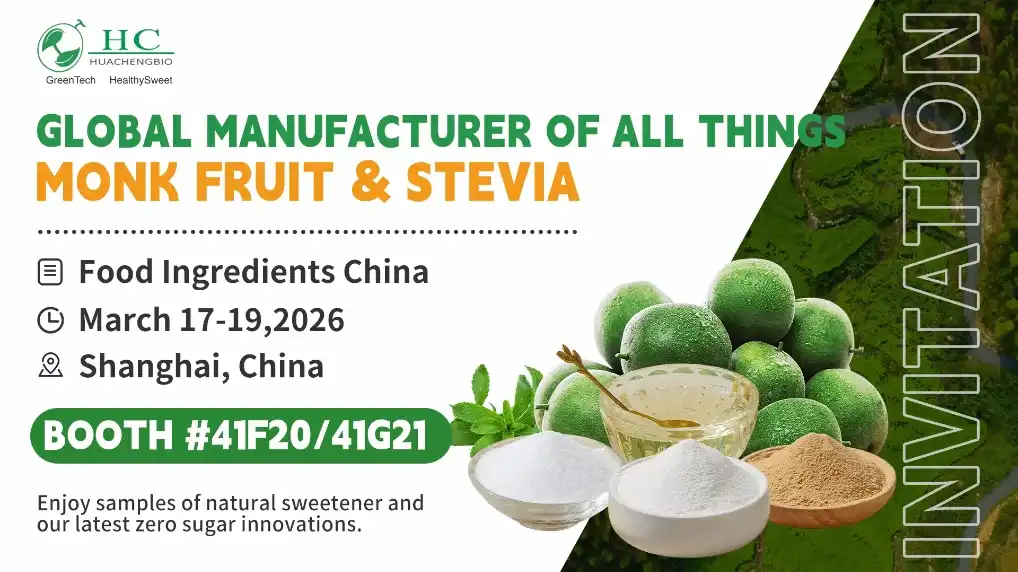
Join Us at Food Ingredients China (FIC) 2026! March 17–19, 2026 Hall 4.1 | Booth...

As a global leader in natural, health‑forward sweetening solutions, we will be present at ...
Products
FAQ
Both deliver zero-calorie sweetness, but sweet tea extract (rubusoside) has a faster sweetness onset and less lingering aftertaste than some monk fruit extracts. It also tends to have better acid stability in clear beverages, making it a strong candidate for citrus-flavored drinks.
Sweet tea extract has a relative sweetness several hundred times that of sucrose, so you'd start around 0.05% by weight and fine-tune based on your desired sweetness level. Our applications team can provide a guidance sheet and even bench-top samples for your initial trials.
Sweet tea extract demonstrates good stability under typical pasteurization and UHT conditions. For baked goods or extended high-heat processes, we recommend conducting pilot tests. Our applications team can assist with guidance and samples.
Share your product type, target capacity, and application requirements. Our team can review the details and recommend a practical next step.