
 EN
EN EN
EN CN
CN ES
ES PT
PT SV
SV DE
DE TR
TR FR
FR AR
AR BG
BG HR
HR CS
CS DA
DA NL
NL FI
FI EL
EL HI
HI IT
IT JA
JA KO
KO NO
NO PL
PL RO
RO RU
RU CA
CA TL
TL IW
IW ID
ID LV
LV LT
LT SR
SR SK
SK SL
SL UK
UK VI
VI SQ
SQ ET
ET GL
GL HU
HU MT
MT TH
TH FA
FA AF
AF MS
MS GA
GA BE
BE UZ
UZ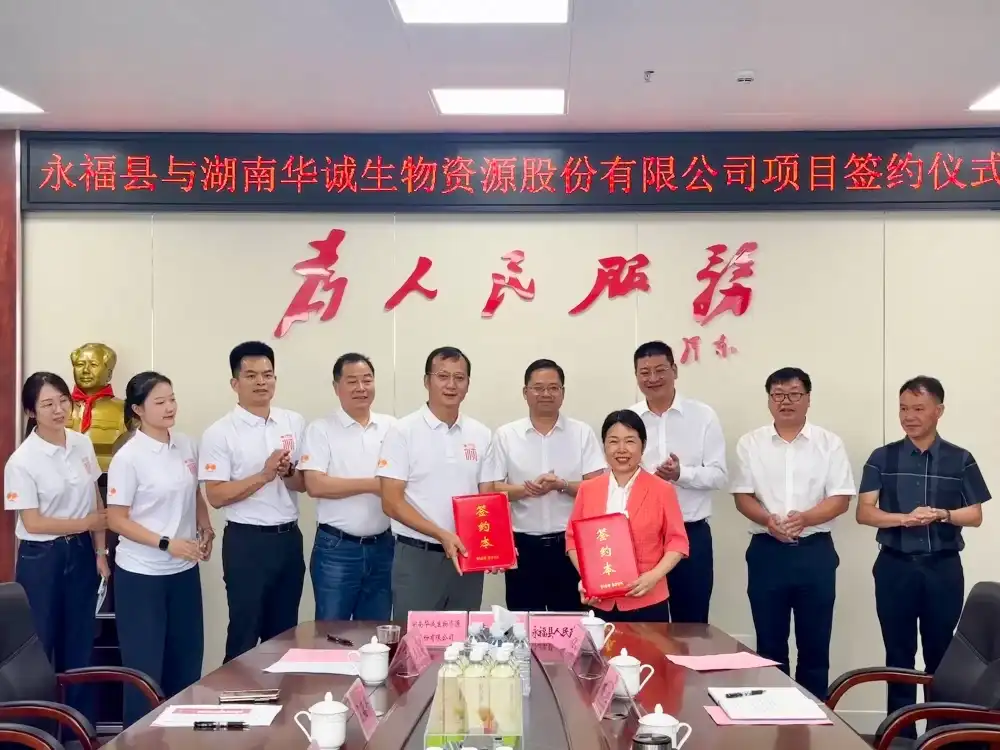
Huacheng Bio: Building Momentum for the Future, Sharing New Beginnings
Huacheng Bio has officially entered a new chapter with the formal establishment of its new...
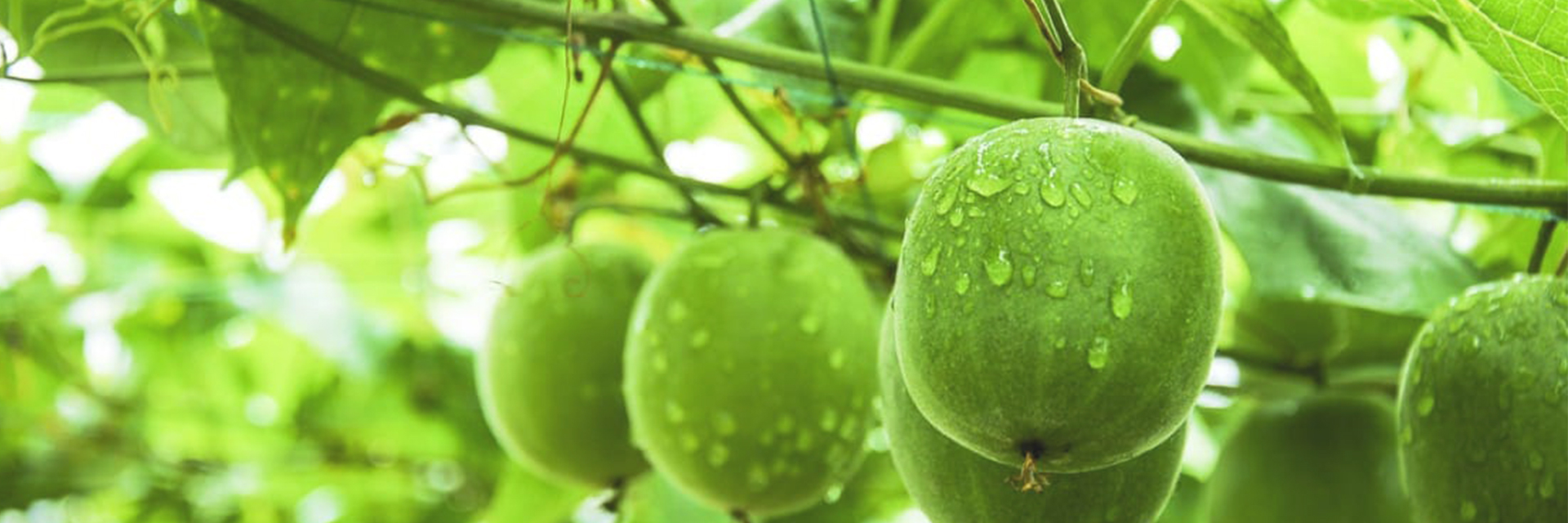
China Monk Fruit Fruit Sweetener: Supplier Built on Vertical Integration
Most monk fruit sweetener on the global market starts in Chinese orchards, and Hunan Huacheng Biotech runs its own plantation bases in Hunan. That direct farm-to-extract link isn’t just marketing—it means extraction lines don’t sit idle waiting for spot-market fruit when bulk orders come in. For buyers who measure lead time in production batches, the difference between a broker and an integrated manufacturer matters. This facility operates under multiple certifications (FDA, HACCP, GMP, BRC, CE), so documentation doesn’t become a bottleneck either.
Technical Detail
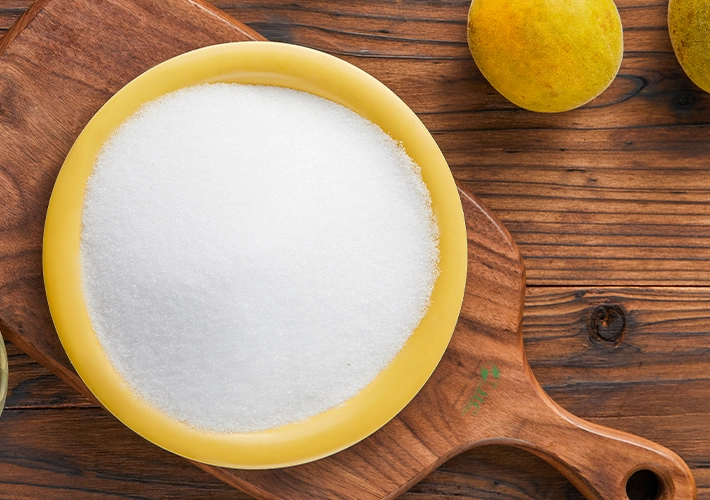
Monk fruit sweetener is derived from Siraitia grosvenorii, a cucurbit native to southern China. The main sweet components, mogrosides, are 200–350 times sweeter than sucrose and pass through the body without caloric load. Hunan Huacheng processes the fruit into standardized powder and liquid forms in Changsha. The extraction operation holds registrations that cover most food import compliance—FDA, HACCP, GMP, CE, and BRC—so paperwork is rarely the holdup. Buyers who compare multiple China monk fruit sweetener suppliers usually drill into two things: chromatographic profiles that stay within spec lot after lot, and reliable on-time shipments. Because Huacheng manages its own upstream orchards, supply is less exposed to the seasonal price swings that come from sourcing fruit on the open market. The output is a white to off-white powder with user-defined mogroside V content, commonly between 25% and 55%. Custom blending for private-label work is routine. The product is shipped in 25 kg food-grade fibre drums by sea from Shanghai or Guangzhou. Small-scale trial orders (5–10 kg) go out in vacuum-sealed aluminium bags.
News
Huacheng Bio has officially entered a new chapter with the formal establishment of its new...
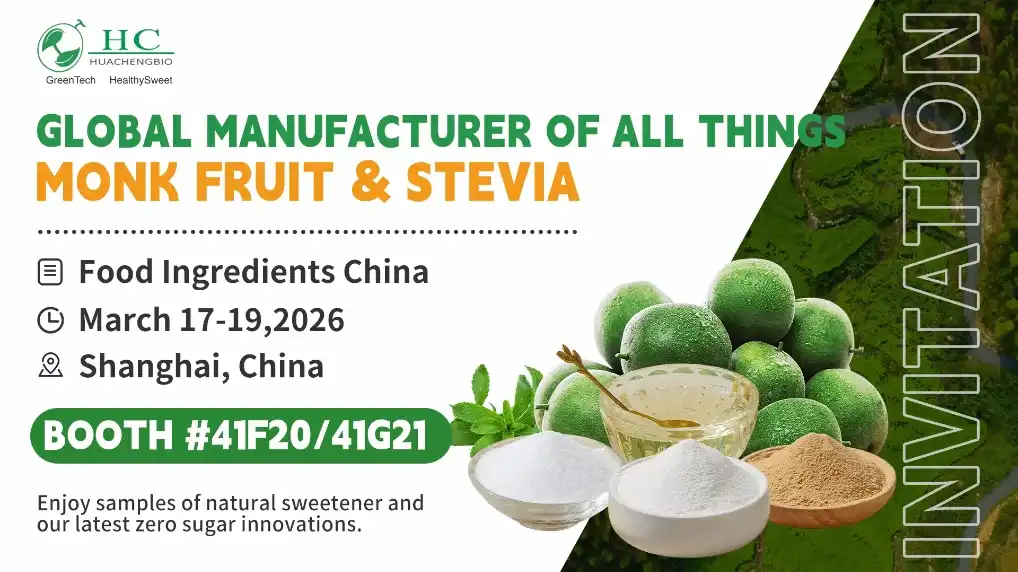
Join Us at Food Ingredients China (FIC) 2026! March 17–19, 2026 Hall 4.1 | Booth...

As a global leader in natural, health‑forward sweetening solutions, we will be present at ...
Products
FAQ
Every shipment includes a certificate of analysis (COA) with HPLC profiles. You can cross-check by sending a sample to a local food testing lab; most use the AOAC method. We keep retained samples from each batch for 24 months if a dispute ever comes up.
When stored in unopened, sealed drums at room temperature and away from direct sunlight and humidity, the powder stays stable for at least 24 months. Once opened, we recommend using the contents within 60 days and keeping the container tightly closed.
We blend multiple extraction runs to match the target specification and maintain extensive retention samples. The blending step is documented, and each final batch goes through HPLC before it’s released. That process flattens the natural variation you’d get if you relied on single-run extractions.
Share your product type, target capacity, and application requirements. Our team can review the details and recommend a practical next step.