
 EN
EN EN
EN CN
CN ES
ES PT
PT SV
SV DE
DE TR
TR FR
FR AR
AR BG
BG HR
HR CS
CS DA
DA NL
NL FI
FI EL
EL HI
HI IT
IT JA
JA KO
KO NO
NO PL
PL RO
RO RU
RU CA
CA TL
TL IW
IW ID
ID LV
LV LT
LT SR
SR SK
SK SL
SL UK
UK VI
VI SQ
SQ ET
ET GL
GL HU
HU MT
MT TH
TH FA
FA AF
AF MS
MS GA
GA BE
BE UZ
UZ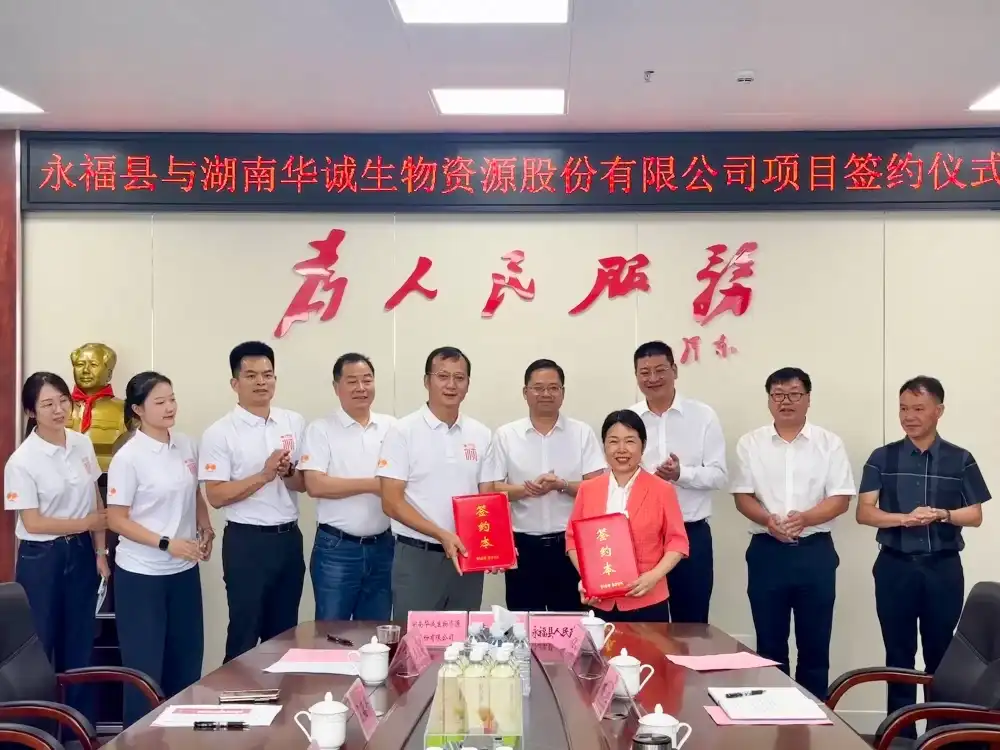
Huacheng Bio: Building Momentum for the Future, Sharing New Beginnings
Huacheng Bio has officially entered a new chapter with the formal establishment of its new...
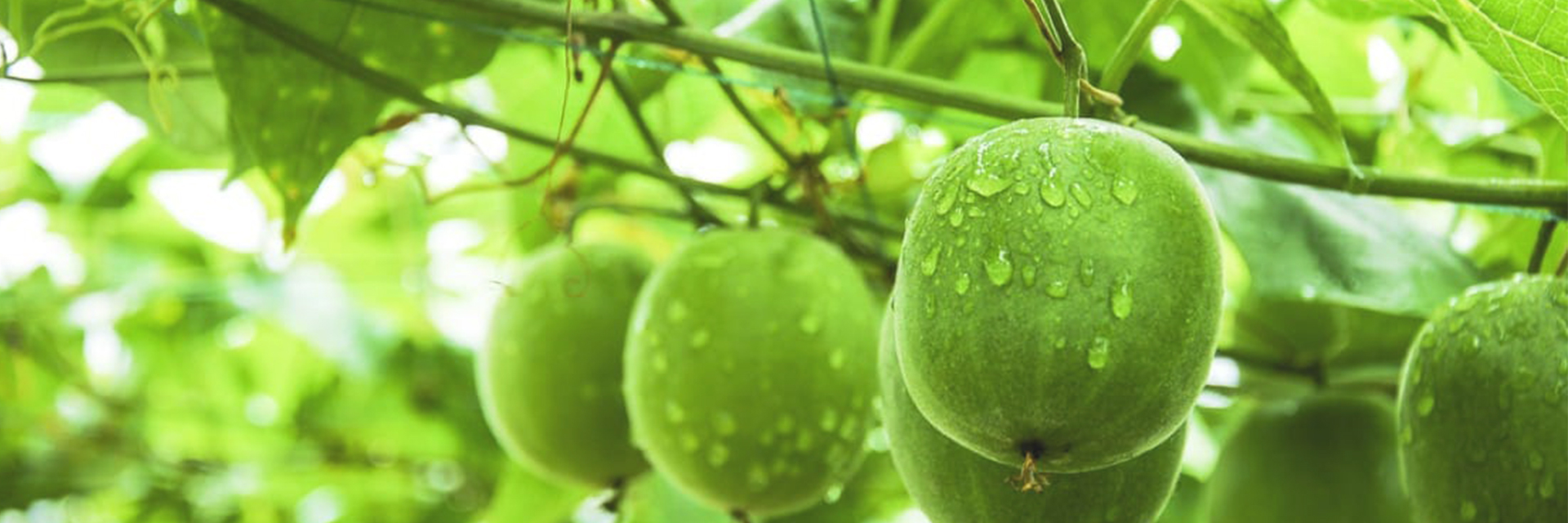
Pure Monk Fruit Extract: From Vines to Technical Specifications
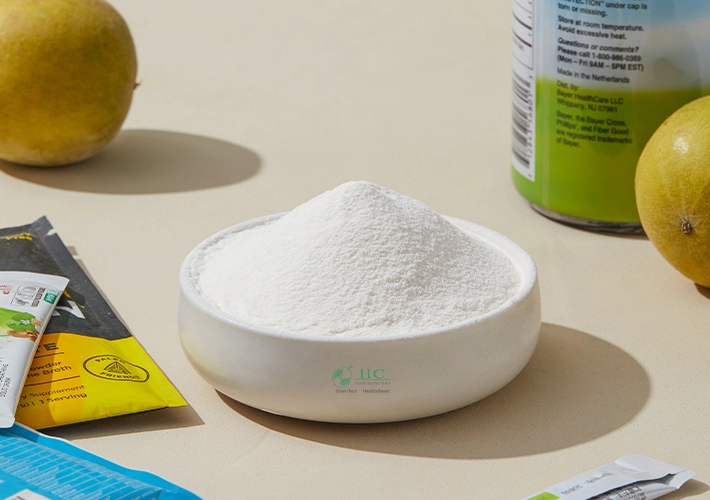
A few key numbers matter when evaluating monk fruit extract: mogroside content, solubility, and microbial limits. At Huacheng Biotech, we focus on the measurable side of this natural sweetener. Our extraction process draws from whole monk fruit, crushed and steeped in hot water, then filtered and concentrated. The result is a fine powder that is about 150–250 times sweeter than sugar. We keep the production straightforward, which helps us offer competitive pricing without cutting corners on safety protocols.
Technical Detail
Understanding monk fruit extract begins with mogrosides—the compounds behind the sweetness. Our powder typically contains 30–50% mogroside V, the main sweet component. This ratio directly affects how much you’ll need in a formulation. For liquid applications, the extract disperses readily in warm water, even without carriers. From a microbial standpoint, every batch is tested for total plate count, yeast, molds, and pathogens under our HACCP plan. We store the powder in double‑layer sealed bags at low humidity to preserve activity. Testing equipment includes HPLC for mogroside profiling and standard microbiological workstations. Since monk fruit extract carries zero calories and doesn’t spike blood glucose, it fits into a wide range of products: beverages, protein bars, baking mixes, and table‑top sweeteners. We have seen it used in powdered drink mixes where solubility was a deciding factor, and in confectionery where heat stability during cooking mattered. By controlling extraction parameters, we can adjust the final powder’s particle size and packing density to suit different manufacturing lines. Our factory runs on a batch‑based system, which makes tracing raw material lots fairly direct. The team also keeps records from incoming fruit inspection through finished‑product release, aligning with BRC requirements. For formulators looking to replace artificial sweeteners, the cost‑in‑use often depends on the blending ratio and desired sweetness profile, so we provide samples for small‑scale trials before committing to larger volumes.
News
Huacheng Bio has officially entered a new chapter with the formal establishment of its new...
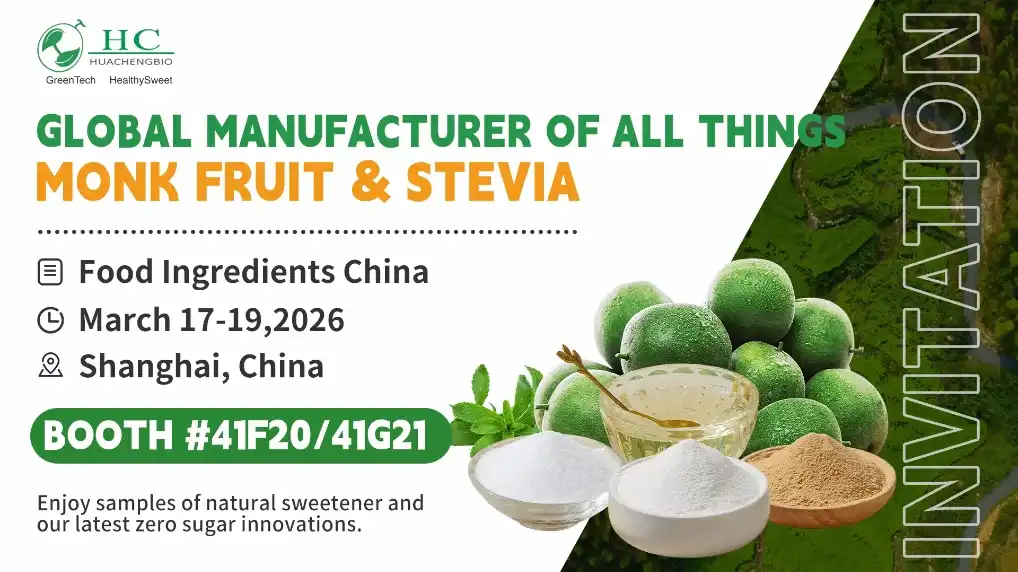
Join Us at Food Ingredients China (FIC) 2026! March 17–19, 2026 Hall 4.1 | Booth...

As a global leader in natural, health‑forward sweetening solutions, we will be present at ...
Products
FAQ
It means that in every 100 grams of powder, roughly 30 to 50 grams are pure mogroside V. The rest consists of other components from the fruit, like moisture and minor mogrosides. A higher percentage usually means less powder is needed to hit a target sweetness, but the exact amount depends on your recipe and the other ingredients.
Yes, it stays stable in acidic conditions down to a pH of about 2.5. We have seen it used in carbonated soft drinks and citrus blends without losing sweetness over typical shelf life. If you experience any off‑taste, it is more likely from the acid system than from the extract itself.
Standard packaging is a food‑grade PE liner inside an aluminum foil bag, then placed in a fiber drum. For larger orders, we also offer vacuum‑packed blocks to save space. A Certificate of Analysis and Certificate of Origin are included with each shipment.
We send out 50–100 gram samples for lab trials. You will receive the same lot documentation you would with a commercial order: mogroside V specification, microbial test results, and a moisture content reading.
When stored in a cool, dry place and kept in the original sealed bag, it usually stays within specification for about 24 months. After opening, re‑sealing promptly and using a desiccant can help maintain quality.
Share your product type, target capacity, and application requirements. Our team can review the details and recommend a practical next step.