
 EN
EN EN
EN CN
CN ES
ES PT
PT SV
SV DE
DE TR
TR FR
FR AR
AR BG
BG HR
HR CS
CS DA
DA NL
NL FI
FI EL
EL HI
HI IT
IT JA
JA KO
KO NO
NO PL
PL RO
RO RU
RU CA
CA TL
TL IW
IW ID
ID LV
LV LT
LT SR
SR SK
SK SL
SL UK
UK VI
VI SQ
SQ ET
ET GL
GL HU
HU MT
MT TH
TH FA
FA AF
AF MS
MS GA
GA BE
BE UZ
UZ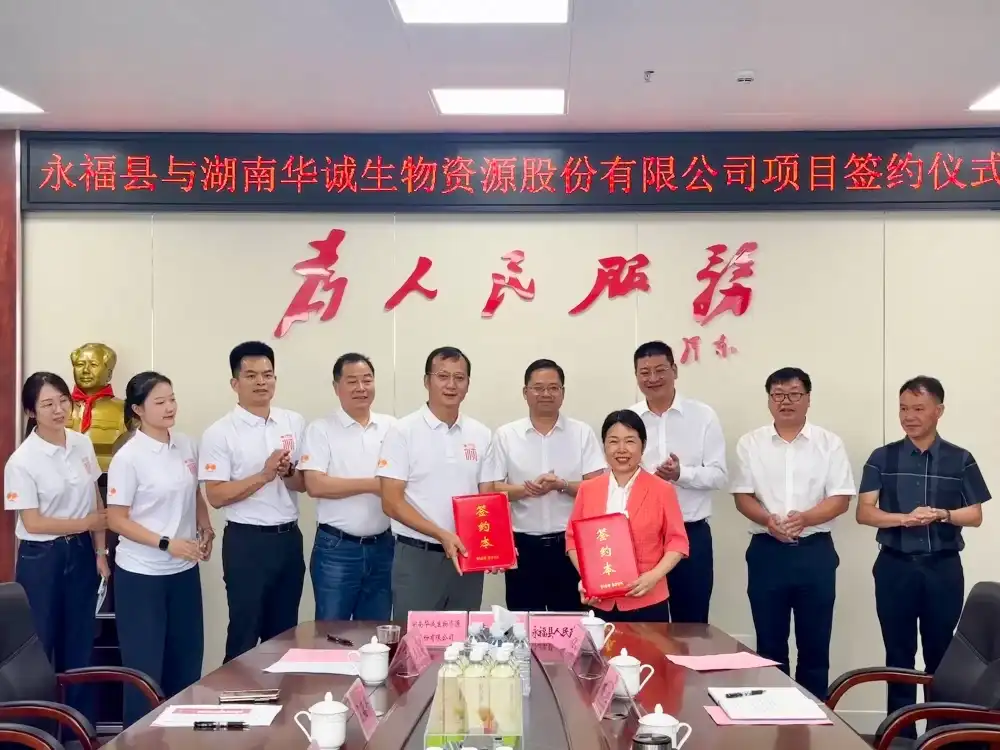
Huacheng Bio: Building Momentum for the Future, Sharing New Beginnings
Huacheng Bio has officially entered a new chapter with the formal establishment of its new...
Pure Stevia Extract Liquid: Zero Calorie, Cost‑Effective Sweetening
Liquid stevia can be a headache to dose in large batches – viscosity, settling, and inconsistent sweetness throw off production. Huacheng Biotech approaches the problem from the raw leaf up. We run the full chain, from our own stevia fields through membrane filtration and spray drying, then blend liquid extracts with tight Reb A specs. That vertical integration cuts out middlemen and keeps per‑liter costs predictable, even when you scale. This write‑up breaks down what’s actually in the bottle, how it behaves in different pH and temperature ranges, and where it slots into recipes without wrecking your margins.
Technical Detail
The liquid extract is a water‑based concentrate standardised to a minimum of 95% total steviol glycosides, with Reb A typically making up at least 60% of that total. In practical terms, one drop replaces roughly a teaspoon of sugar’s sweetness, though exact equivalences depend on the matrix you are working with. It dissolves instantly in cold and hot mixes, remains stable at pH 2.5–8.0, and survives UHT and retort processes without off‑notes. These numbers come from ongoing in‑house QC runs; we batch‑test viscosity and microbial counts before every shipment because settling can skew potency if storage conditions aren’t tight. Operationally, the big draw is the chain’s length—or rather its shortness. Huacheng controls planting, harvesting, extraction, and blending under one roof in Hunan. No third‑party intermediaries, no markups on semi‑refined intermediates. The facility holds FDA registration, HACCP, GMP, CE, and BRC certifications, which means the documentation trail is already in place for most food safety audits. For manufacturers running tight COGS, the liquid form eliminates dust, reduces waste from weighing errors common with powdered high‑intensity sweeteners, and blends uniformly in syrup lines. It also simplifies inventory: one SKU covers both sweetening and flavour‑masking when combined with our monk fruit extract range, letting you drop masking agents from the bill of materials.
News
Huacheng Bio has officially entered a new chapter with the formal establishment of its new...
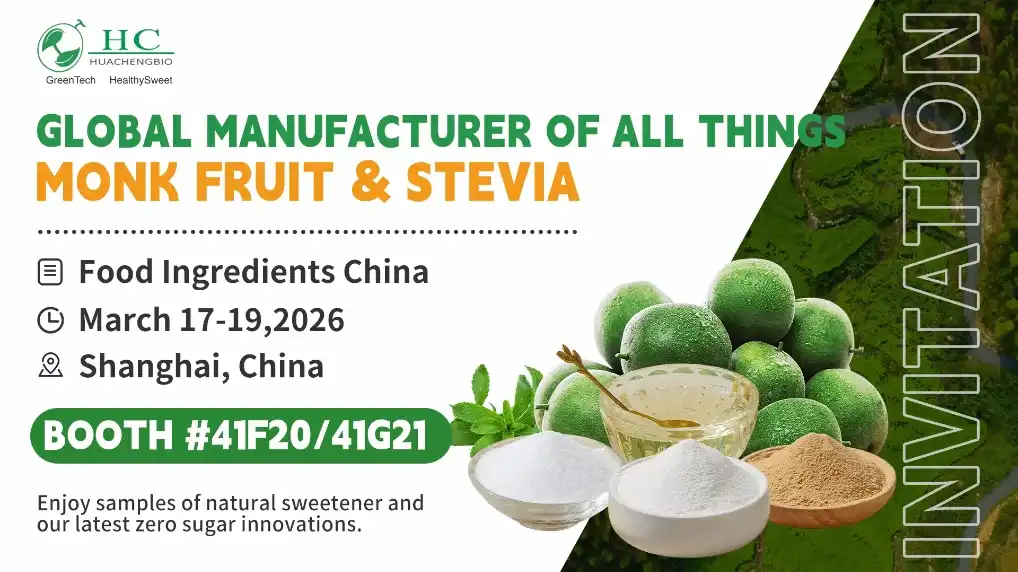
Join Us at Food Ingredients China (FIC) 2026! March 17–19, 2026 Hall 4.1 | Booth...

As a global leader in natural, health‑forward sweetening solutions, we will be present at ...
Products
FAQ
Start with a sample at 95% total glycosides and run a dilution series in your target pH. Most still drinks land around 200–400 ppm final concentration, but carbonation, pulp, and flavour systems shift perception, so we usually send three standardised concentrations for benchtop trials rather than guessing from a datasheet.
Yes, within pH 2.5–8.0. Our test batches at pH 3.0 and 37°C show less than 5% Reb A degradation over 12 months. Acidity can accelerate sedimentation if the extract wasn’t properly filtered, so we run sub‑micron filtration and a quick shake resuspends if any floc forms after months of still storage.
Per sweetness unit, liquid stevia extract typically edges out sucralose when you factor in bulk handling and dust control, and it can land below spray‑dried stevia because we skip the final drying and agglomeration steps. The exact numbers depend on your target sweetness and volume, but we can model the total delivered cost against your current sweetener spend if you share a typical BOM.
Absolutely. Our liquid line can be blended with monk fruit extract (also in‑house) or with carrier‑free erythritol solutions. Custom blends ship in 20‑liter jerrycans up to 1,000‑liter IBC totes, with MSDS and spec sheets matching your internal supplier portal format.
For first‑run trials, we supply 1‑liter samples at no charge for the product itself; you cover freight. Production MOQ starts at 100 liters, which keeps entry costs low for pilot batches and co‑packing runs.
Share your product type, target capacity, and application requirements. Our team can review the details and recommend a practical next step.